


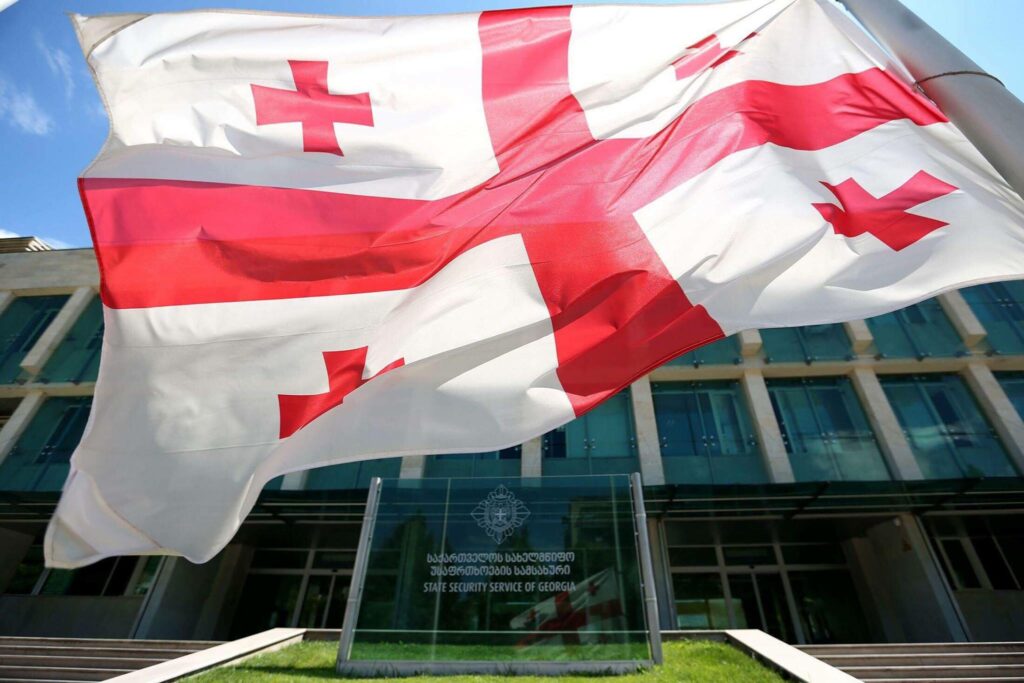
The State Security Service of Georgia (SSG), in its activity report for 2025, states that the occupation of Abkhazia and the Tskhinvali region, along with the accompanying destructive processes, remained one of the key challenges for Georgia.
The report emphasizes that due to Russia’s direct involvement in the processes occurring in occupied Abkhazia, a dynamic growth of anti-Russian sentiments was recorded. Meanwhile, the heavy socio-economic situation persisted in the occupied Tskhinvali region.
The document states that the policy aimed at the discrimination of Georgians living in the occupied regions continued.
The SSG reports that the occupying forces actively use the processes taking place in the occupied territories of Georgia as a tool of pressure on Tbilisi, while simultaneously creating a basis for potential annexation at an opportune moment.
“During the reporting period, the occupation of Abkhazia and the Tskhinvali region, as well as the accompanying destructive processes, remained a key challenge for Georgia. In particular, illegal militarization and military exercises, which in some cases were conducted using unmanned aerial vehicles, should be noted.
As in previous years, the use of hybrid warfare components continued, including illegal detentions and so-called ‘borderization,’ aimed at deteriorating the humanitarian and security environment on the ground.
Processes aimed at the annexation of Georgia’s occupied territories continued with high intensity—to achieve this goal, in particular, attempts to use so-called educational programs were recorded.
Simultaneously, the policy of discrimination against Georgians living in the occupied regions continued. Notably, against the backdrop of Russia’s direct involvement in the processes in occupied Abkhazia, a dynamic growth of anti-Russian sentiments was recorded. In the occupied Tskhinvali region, the heavy socio-economic situation persisted.
A significant milestone was the latest ruling by the European Court of Human Rights on October 14 in the case of ‘Georgia v. Russia (IV),’ concerning the ongoing occupation. As a result, Russia is obligated to pay compensation in the amount of 253,018,000 euros to more than 29,000 affected Georgian citizens,” the SSG reports.
The agency indicates that the implementation of the Russian Federation’s policy in the occupied regions of Georgia was entrusted to the First Deputy Chief of Staff of the Presidential Administration, Sergey Kiriyenko.
“Kiriyenko’s policy was aimed not only at full control over the processes but also at forming a favorable ground for annexation in public sentiment and the perception of the population.
Two key directions emerged in the activities of the new ‘curator’ of the occupied regions. On one hand, Russia expressed support for the occupation regime in various forms, including through financial aid; on the other hand, it continued to use various tools of pressure against individuals critical of the annexation processes.
Specifically, criminal prosecutions were initiated against so-called opposition-minded individuals, including journalists; they were stripped of Russian citizenship and included in the register of ‘foreign agents.’
Furthermore, a trend toward the purposeful strengthening of ‘links’ between Russia and the occupied regions via air, rail, and sea routes was recorded,” the document notes.
The SSG of Georgia paid special attention to the issue of restoring the so-called airport in occupied Sukhumi, which, as noted in the report, is viewed by Russia as an additional lever of control over the region.
“Notably, since its opening, the occupying forces have artificially maintained the relevance of the ‘airport,’ as indicated, in particular, by Russia’s subsidizing of flights. Despite these efforts, during the reporting period, the launch of the ‘airport’ did not bring significant political or economic benefits to the occupation regime,” the agency reports.
The document emphasizes that against the backdrop of the annexationist policy and Russification carried out in the occupied region, the occupying forces have intensified pressure on Georgian teachers living in occupied Gali.
“Information was spread about attempts to tighten control over their professional activities and personal lives. A case of illegal detention on fabricated charges of ‘espionage’ was also recorded. Social networks were also used to increase pressure, where it was noted in a negative context that some teachers and school directors provide Gali residents with the opportunity to study in their native language,” the agency reported, emphasizing:
“Russia’s goal is the linguistic, cultural, and ideological assimilation of local youth, including Georgians, as well as the alteration of their identity.”
The SSG of Georgia also states that the occupying forces actively use the processes occurring in the occupied territories of Georgia as a tool of pressure on Tbilisi and “simultaneously create a basis for carrying out annexation at an opportune moment.”
According to the document, during 2025 in the direction of the occupied Tskhinvali region, 34 cases of illegal detentions were recorded, and 40 in the direction of occupied Abkhazia. As of the end of last year, a total of 15 Georgian citizens were in illegal custody.
Regarding the illegal so-called “borderization,” 3 cases were recorded in the direction of occupied Abkhazia and 55 in the direction of the occupied Tskhinvali region during the reporting period.