


SOVA News spoke with Shota Utiashvili, former head of the Information and Analytical Department of the Ministry of Internal Affairs of Georgia.
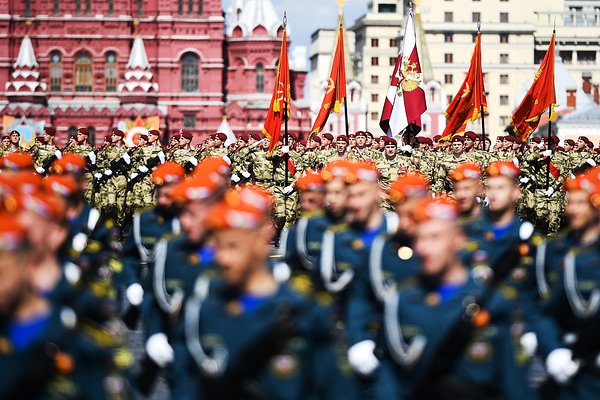
Russia traditionally uses May 9 not only as a day of remembrance but also as a tool for demonstrating power—both domestically and internationally. In your view, what is the real reason behind the decision to forego a full-scale parade with military equipment in Moscow this year?
It is difficult to judge this from Georgia, but the main issue is likely security. They do not want the parade to be subject to a Ukrainian raid; they are nervous about potential attacks, so they decided that security concerns are currently more important than propaganda.
Despite the war, parades have continued since 2022 and remained an important element of visualizing Russian military power. Can we assume that the current reduction of the parade is linked not only to security but also to a change in the strategy of demonstrating force?
I would say that this is a combination of security issues and the situation at the front. It is already clear to everyone that, to put it mildly, things are not going exactly well for Russia on the front lines this year. A demonstration of military force on Red Square against the backdrop of such events would look paradoxical.
It could turn not into a show of strength, but rather into a parody that would no longer make the desired impression on anyone.
Moscow has long been considered one of Russia’s most protected cities in terms of PVO (Air Defense) and protection against drones. Can we say that even this security system has changed during the war?
I don’t think Russia would be unable to protect the parade specifically in Moscow if they truly wanted to. There hasn’t been a large-scale raid on Moscow yet.
But another question arises: if the parade is held only in Moscow while attacks occur and there are casualties in other cities, how will that be perceived? Therefore, the main issue is still different: there is a shortage of people at the front, yet large-scale symbolic events are being held here. This is the primary paradox.
For Georgia, the theme of May 9 and the memory of World War II has also long remained part of Russian soft power. Could the weakening of this symbol within Russia itself influence its perception in Georgian society?
I think the significance of May 9 has already been gradually decreasing in recent years. For many, it is no longer so much a military parade as a day of memory and respect for those who fought. And there are almost no veterans left.
In many regions of Georgia, especially in Eastern Georgia, they are almost gone. Without them, large-scale events lose their meaning.
And those who perceive May 9 specifically as an element of Russian soft power are also becoming fewer. In my view, people in Georgia do not fear Russian soft power, but Russian hard power.
And it is precisely this hard power that has become less convincing in recent months. This is much more important than how exactly May 9 will be celebrated.
Can it be said that, against this background, the government’s narrative about the Russian threat—for example, linked to the risk of a repeat of the 2008 war—might gradually lose its influence within Georgia?
For now, this narrative, on the contrary, remains the primary one. After all, the talk in the country was not that Russia poses no threat, but that if the opposition comes to power, it would become a “red rag” for Russia, and then something might happen.
But if the perception of Russia’s military strength weakens, if it turns out that Ukraine was indeed able to defend itself, then this narrative will, of course, become much less potent.
However, this will not depend on May 9 itself. What is happening on the fronts in Southern and Eastern Ukraine is much more important. It is this that will predetermine not only the fate of Ukraine but also the framework within which Georgia can maneuver.
Could the scaling back of the parade also serve as a political signal for “Georgian Dream,” which continues to balance between the West and Russia?
Yes, I think this is important. But the context in which the parade is cancelled is what matters—and that is again the context of what is happening on the fronts.
This will directly influence what “Georgian Dream” does. Throughout this time, Russia, despite very slow but still existing progress on the front, created a certain backdrop for the authorities in which they could maneuver.
If this backdrop disappears and the situation becomes less straightforward, then the room for maneuver for “Dream” will narrow.
Speaking more broadly about the South Caucasus: could the weakening of Russia’s symbolic demonstration of power also mean a further reduction of its influence in the region?
I think that in the broader context, Russia’s influence in the South Caucasus is indeed decreasing. This is evident from what is happening in Armenia, the relations with Azerbaijan, the Zangezur corridor project—all of this points to it.
The fact that Georgia has become more pro-Russian was the choice of “Georgian Dream” itself, not the result of Russian pressure. They chose this path themselves.
Their main motivation is the preservation of power. If flirting between the West and Russia helps achieve this, they will do it.
But, again, everything will depend on the outcome of the war in Ukraine. It is this that will determine to what extent Russia can maintain or restore its influence in the South Caucasus.