


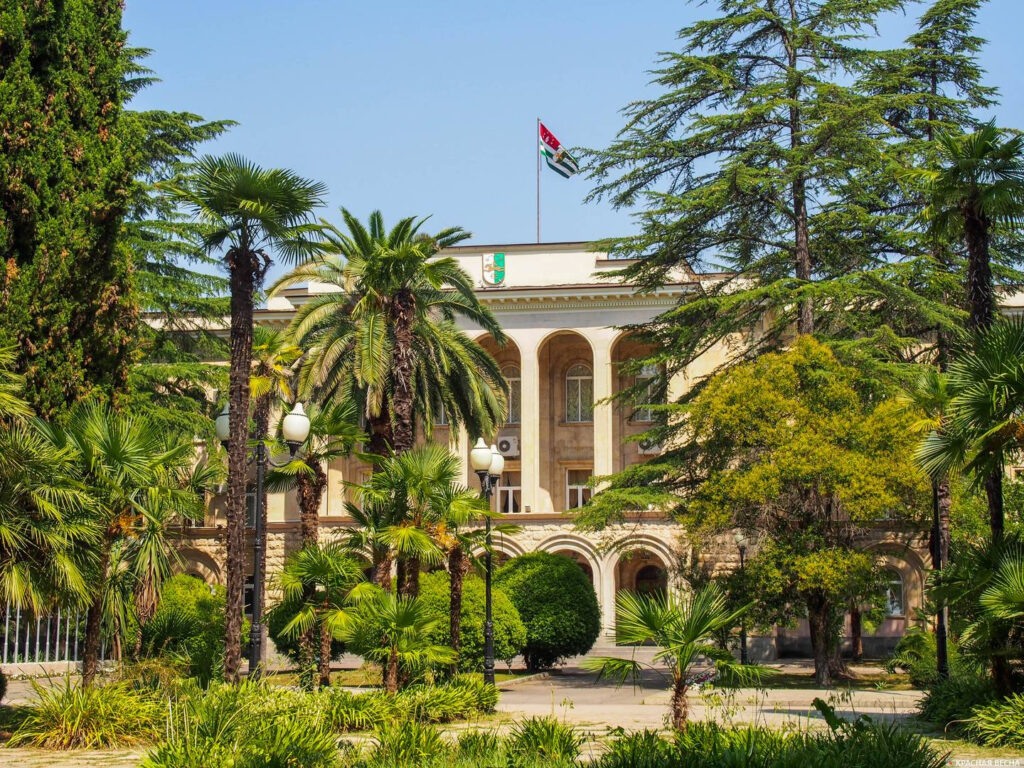
The de facto Ministry of Foreign Affairs of Abkhazia has criticized the 2025 report of the State Security Service of Georgia (SSS), stating that it contains “politicized assessments” and distorts the situation in the region.
Sukhumi emphasized that the document reflects “outdated political approaches” and misrepresents real regional processes, while also containing “politicized clichés” aimed at discrediting Abkhazia’s sovereignty.
In the occupied region of Georgia, it was stated that Tbilisi continues to use the term “occupation,” which Sukhumi describes as untenable.
Abkhazia asserts that its relations with the RF (Russian Federation) constitute a “full-scale interstate partnership” based, as claimed, on the self-determination of the Abkhaz people.
Sukhumi noted that military and other cooperation with Russia, including the deployment of Russian military bases and the conduct of joint exercises, is viewed by Abkhazia as an element of ensuring security. Such measures are framed as a response to “long-term forceful approaches” from Georgia and as a tool for strategic deterrence.
It is claimed that Georgia applies economic pressure and restricts investment in Abkhazia, which Sukhumi regards as attempts to hinder the region’s development.
Sukhumi also highlighted issues regarding transport and infrastructure policy: it is alleged that Tbilisi obstructs the development of Sukhumi airport and transport links. In the occupied region of Georgia, this was labeled an “air blockade” and linked to the restriction of the right to freedom of movement.
Furthermore, it is claimed that in the past, Georgia restricted the access of Abkhazian residents to international educational programs, which the so-called MFA describes as “intellectual isolation.”
The de facto agency paid particular attention to reforms within Georgia’s security structures, including the merger of the Foreign Intelligence Service and the SSS in 2025 and plans for further centralization in 2026.
Sukhumi believes that the persistence of the “occupation” theme in official documents indicates that these reforms may be aimed at strengthening Georgia’s capabilities regarding Abkhazia.
In the occupied region, it was emphasized that such centralization is perceived as a sign that Tbilisi has not abandoned a forceful scenario for resolving the conflict.
“The fact that the official reporting of the Georgian SSS continues to proclaim the ‘occupation’ of Abkhazia as one of the main ‘threats to national security’ clearly demonstrates: these reforms reflect Georgia’s plans to consolidate resources against the sovereign status of the Republic of Abkhazia.
Such a concentration of managerial and operational capabilities indicates that Georgia is not abandoning plans for a forceful solution to the conflict, systematically building an updated vertical of management for this purpose,” the statement from the de facto MFA of the occupied region of Georgia reads.