


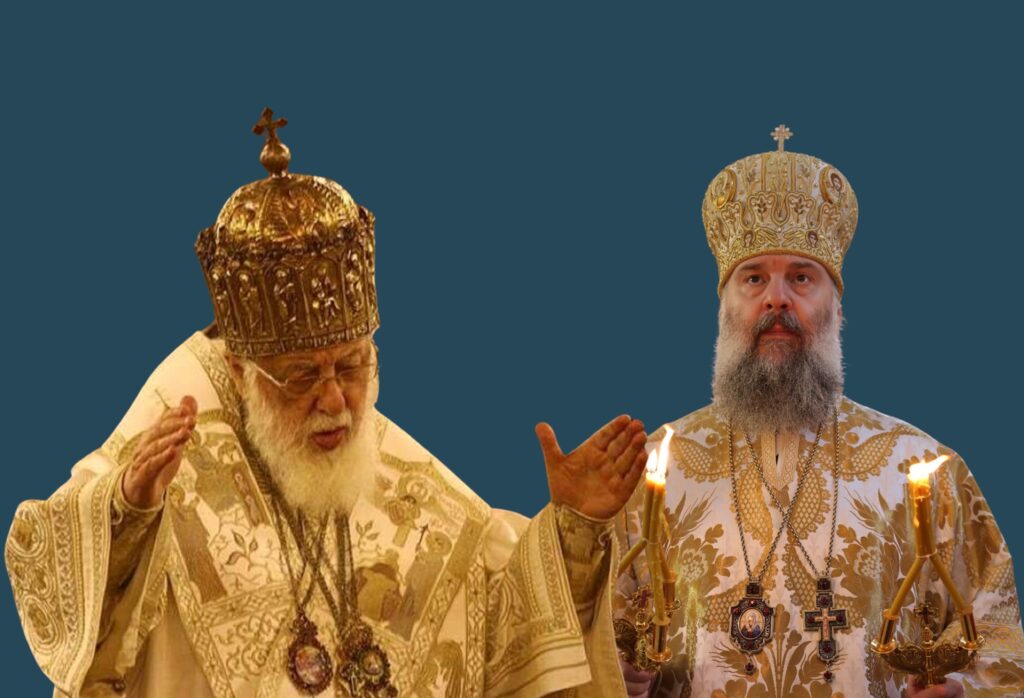


Ilia II led the Georgian Orthodox Church for nearly half a century—from 1977 until his death in March 2026. During this time, his figure transcended the church hierarchy: he remained one of the few public authorities whose status endured through various governments, political crises, and social divisions.
The scale of this influence was confirmed by sociology. In polls by the International Republican Institute (IRI), Ilia II consistently outpaced political leaders: in 2022, 88% of respondents viewed him positively, and in 2023, that figure rose to 91%. The Caucasus Research Resource Center (CRRC) also noted that the Patriarch was the most trusted figure in the country.
However, this authority is not passed down as a bonus along with the rank, as influence and reputation were primarily built around Ilia’s persona.
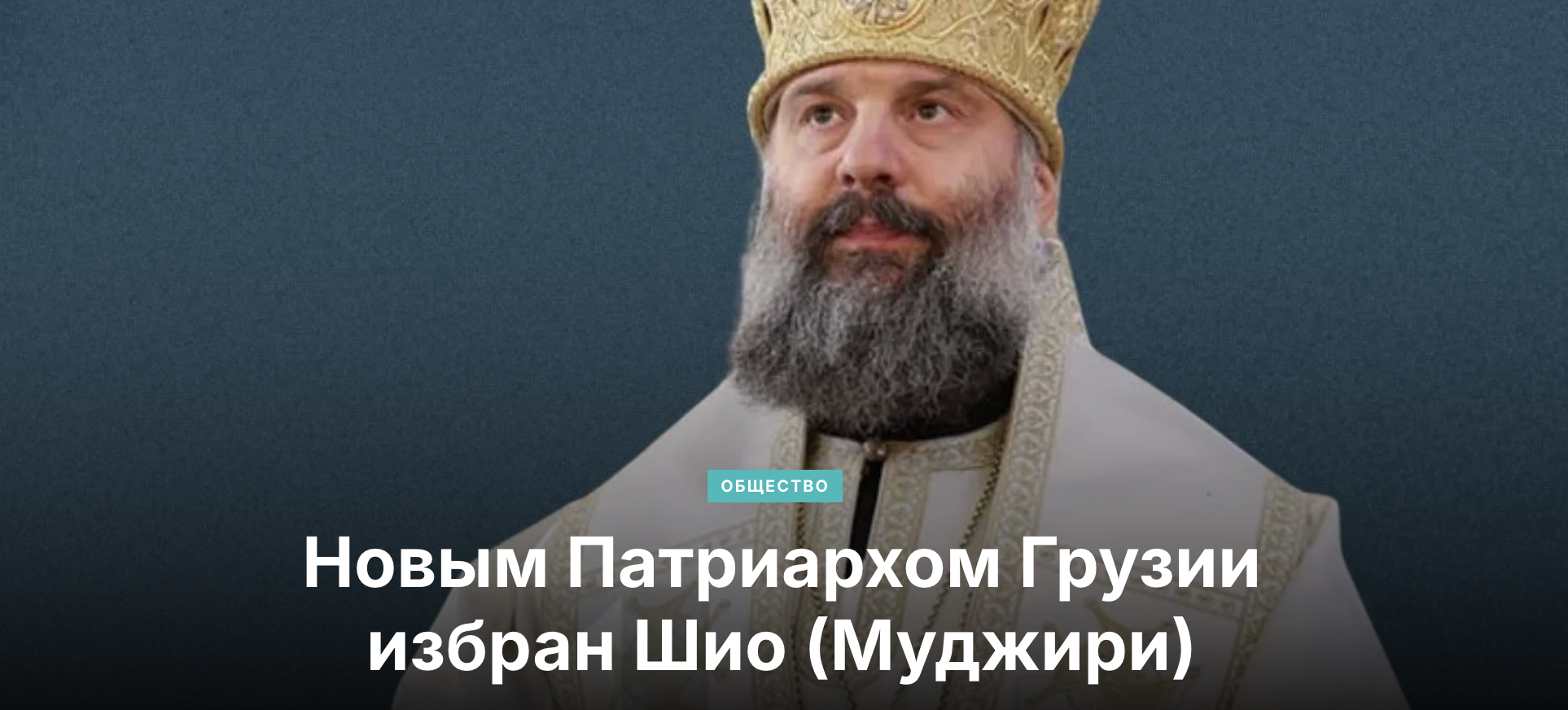

The Election of Shio
In 2017, Catholicos-Patriarch Ilia II appointed Metropolitan Shio of Senaki and Chkhorotsqu (born Elizbar Mujiri) as his locum tenens (acting representative). Nearly 10 years later, following a vote by the Holy Synod, he received a majority and officially became the new Patriarch of Georgia.
At the same time, media and expert assessments often linked Shio with a harder, more government-oriented line within the Church. Particular attention was drawn to publications based on leaks from the State Security Service of Georgia (SSG): according to these materials, his 2017 appointment as locum tenens may have occurred under the influence of external actors, including representatives of the Russian Orthodox Church (ROC) and political circles linked to Russia.
These assessments were bolstered by the visit of Metropolitan Hilarion Alfeyev, the former head of the ROC’s Department for External Church Relations, to Tbilisi in November 2017—shortly before Shio’s appointment as locum tenens. At the time, media speculation arose regarding a possible link between this visit and the Patriarch’s decision, with some sources labeling Metropolitan Shio as a figure loyal to the Moscow Patriarchate.
After being elected head of the Georgian Orthodox Church, Shio III immediately positioned himself as a successor to Ilia II’s line. In his first sermon as Catholicos-Patriarch, he referenced the biblical story of the prophets Elijah and Elisha, emphasizing that a successor should not compete with his predecessor but should instead recognize the magnitude of the inherited responsibility.
The new Patriarch was congratulated by the heads of local Orthodox churches. One of the first was Patriarch Kirill of Moscow and All Russia. In his letter, he emphasized the “deep spiritual closeness” between the Georgian and Russian peoples and expressed hope that the new patriarch would continue the tradition of “brotherly relations” established under his predecessors, particularly Ilia II.
Shio III was also congratulated by Metropolitan Epiphanius of Kyiv and All Ukraine. He wished the new head of the GOC wisdom, spiritual strength, and God’s grace, specifically noting the legacy of Ilia II, whose life, he said, was an example of service to the Church and spiritual care for the people.
A message of congratulations was also sent by Ecumenical Patriarch Bartholomew, whom Russian intelligence had previously accused of planning to interfere in the election of the Georgian Patriarch. He called Shio III’s election “joyful news” and wished him a long and fruitful service “in the name of peace and stability for the Georgian people,” as well as cooperation with other Orthodox churches for the sake of Orthodox unity.
Notably, in almost all the congratulations, the new primate of the GOC remains, in one way or another, in the shadow of his predecessor.
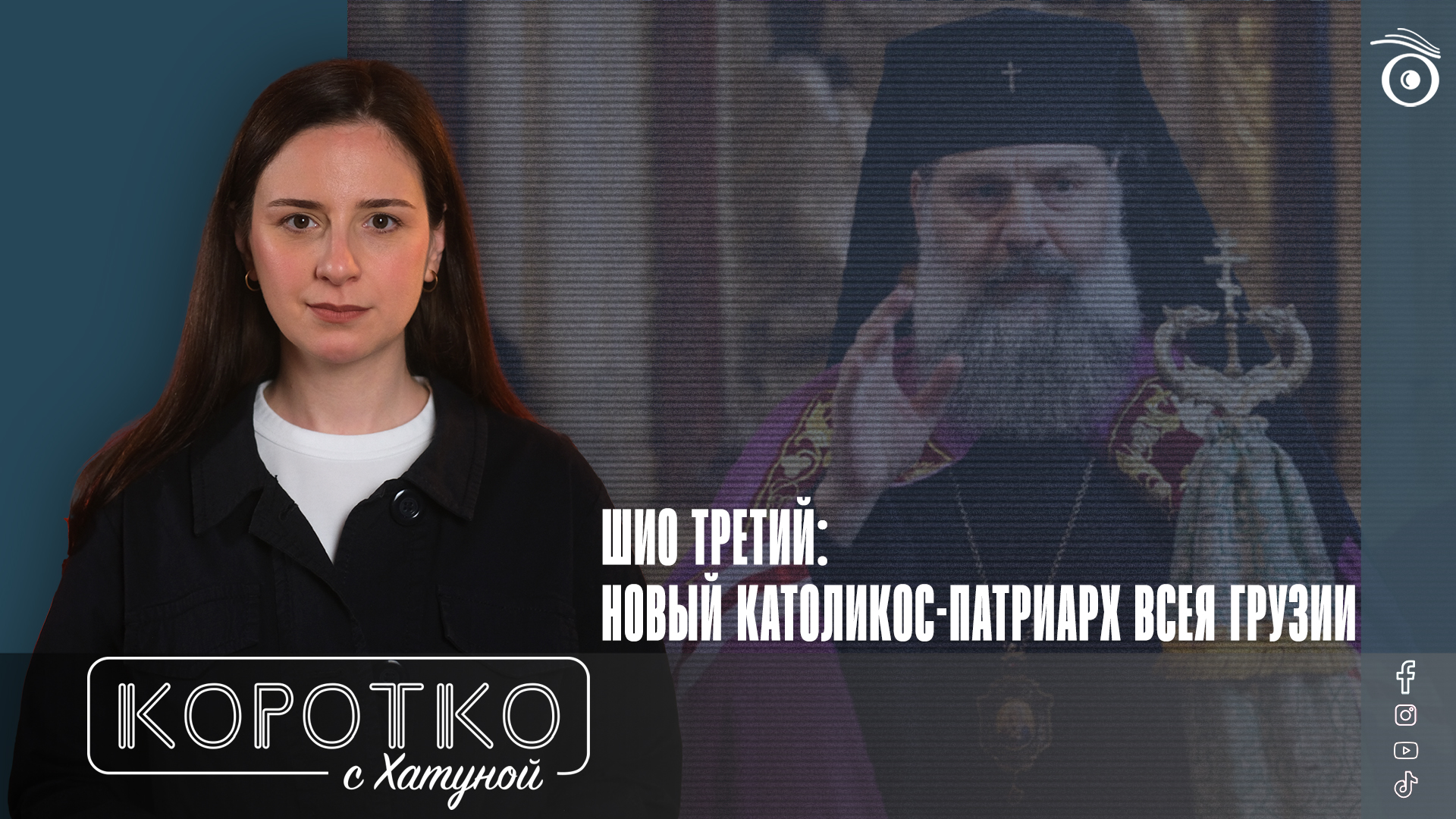

Prospects for Shio’s Patriarchate
Levan Sutidze, editor-in-chief of Tabula and a religious commentator, notes that Shio was elected by a margin of only a few votes beyond the required majority. In his assessment, this does not look like an unconditional result for a figure who served as locum tenens for nine years, was perceived as the candidate supported by Ilia II, and enjoyed noticeable support from the authorities and pro-government media.
Sutidze also points out that supporters of other candidates showed resilience: if one considers the votes cast against Shio and one spoiled ballot, the opposition to the new Patriarch could constitute a significant group within the church hierarchy. In his view, if this position is maintained, it could become a faction within the Synod capable of at least partially balancing the new primate.
The issue, however, is not limited to the Church’s internal structure. According to Sutidze, following Shio III’s election, a level of skepticism emerged in society that was previously rarely directed at the Patriarch himself. Under Ilia II, dissatisfaction with the Church was more often transferred to his inner circle, while the Catholicos-Patriarch himself remained an almost sacred figure. Now, Sutidze believes, the new head of the GOC is no longer protected by the same level of public piety.
“To put it plainly, if someone doesn’t stand up during a toast in honor of Shio III, there is less chance they will find themselves in insurmountable isolation. In some circles, they might even gain a moral advantage.”
Sutidze describes this as a gap between title and authority: after nearly 50 years of his patriarchate, for many in Georgia, the very word “Patriarch” was effectively synonymous with Ilia II. Therefore, in the expert’s view, Shio III received the rank but did not automatically inherit the respect associated with his predecessor. He will have to earn this respect on his own—not through political calculation, but by returning to Christian principles.
Theologian and religious scholar Beka Mindiashvili, for his part, does not believe that the Church’s influence will drop sharply just because of Ilia II’s departure. According to his assessment, beyond the figure of the Patriarch, a strong social and cultural influence of religion persists in Georgia, and mass superficial religiosity has a stable foundation in the weakness of educational institutions, the spread of superstitions, and a public sense of hopelessness.
“When educational institutions do not work, but are instead consciously destroyed, magical religiosity and the superstitions of the majority begin to answer the fundamental questions in a person’s mind.”
At the same time, Mindiashvili sees the main risk not so much in Shio’s personal rating as in the Church’s ability to maintain autonomy from the state and external influences. According to him, in the post-Soviet period, the Georgian Church gained significant institutional independence from the state but failed to sufficiently distance itself from Russian ecclesiastical-political and ideological influence.
In this sense, the election of the new Patriarch becomes a test: whether the GOC can maintain its independence, avoid becoming an appendage to political projects, and conceptualize itself as a universal Christian institution rather than part of someone else’s geopolitical space.
Analyst Gia Khukhashvili, a former advisor to oligarch Bidzina Ivanishvili, sees risks associated with the strengthening of state influence over the church. According to him, the founder of “Georgian Dream” (the ruling party), Ivanishvili, strives for absolute power and total control over all institutions. Spiritual institutions are no exception.
“The Church, in principle, was already controlled to a certain extent—through the security services, etc. But while Patriarch Ilia II was alive, he possessed a kind of moral capital, a great political weight. He could not be viewed simply as an executor. But today, I believe this process has been completed.”
Khukhashvili notes that since Shio III does not possess the same authority that Ilia II had, he will have to travel a long road to achieve legitimacy in the eyes of society.