

Vladimir Putin “received his ticket to The Hague today.” This was how Ukrainian Foreign Minister Andrii Sybiha commented on the signing of an agreement in Chisinau to establish a special tribunal to examine Russia’s crimes of aggression. This event became one of the key highlights of the 135th session of the Committee of Ministers of the Council of Europe.
“Today we have passed the point of no return. The special tribunal is becoming a legal reality. Few believed this day would come. But it has. Putin always wanted to make history, and this tribunal will help him achieve that. He will go down in history as a criminal,” Sybiha stated.
The consent of 17 states was required to form the tribunal. In the end, twice as many joined—36 countries plus the European Union. Alain Berset, Secretary General of the Council of Europe, stated:
“To those who have not yet joined: the door is open. Justice needs you.”
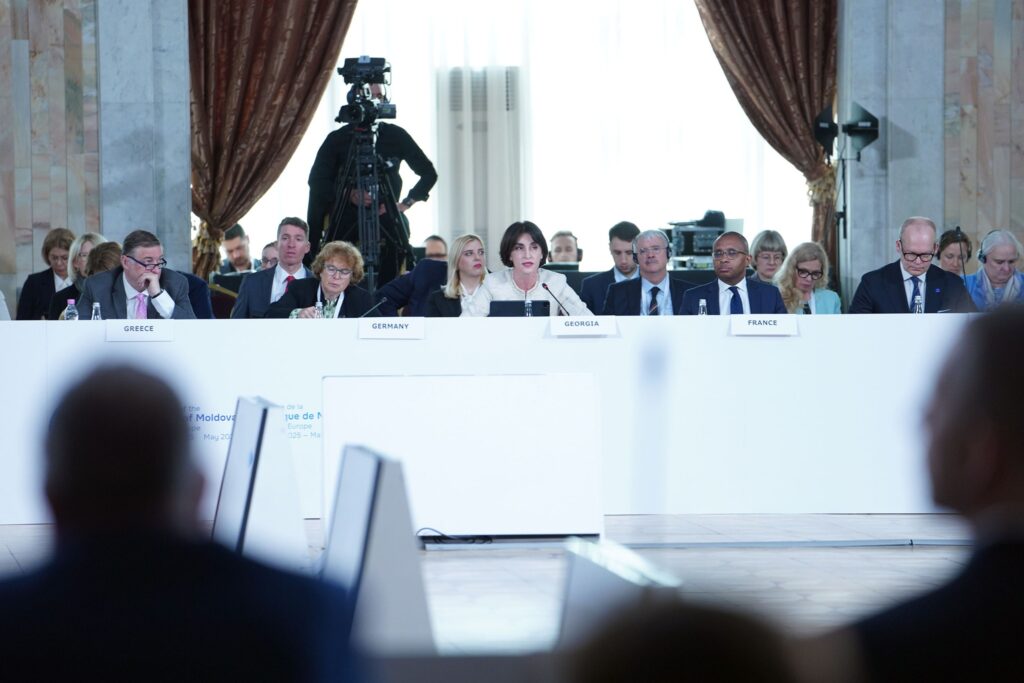
Georgia did not enter that door—Foreign Minister Maka Bochorishvili, who arrived in Chisinau, did not sign the document. At the same time, she began her speech at the session of the Committee of Ministers of the CoE with words of solidarity for the people of Ukraine.
In general, the speech by Georgia’s top diplomat, delivered in the Moldovan capital, was somewhat pretentious and moralizing. Addressing her European colleagues, Bochorishvili stated that the continent today faces numerous challenges. However, wars and conflicts are not the only threats undermining the foundation upon which Europe is built.
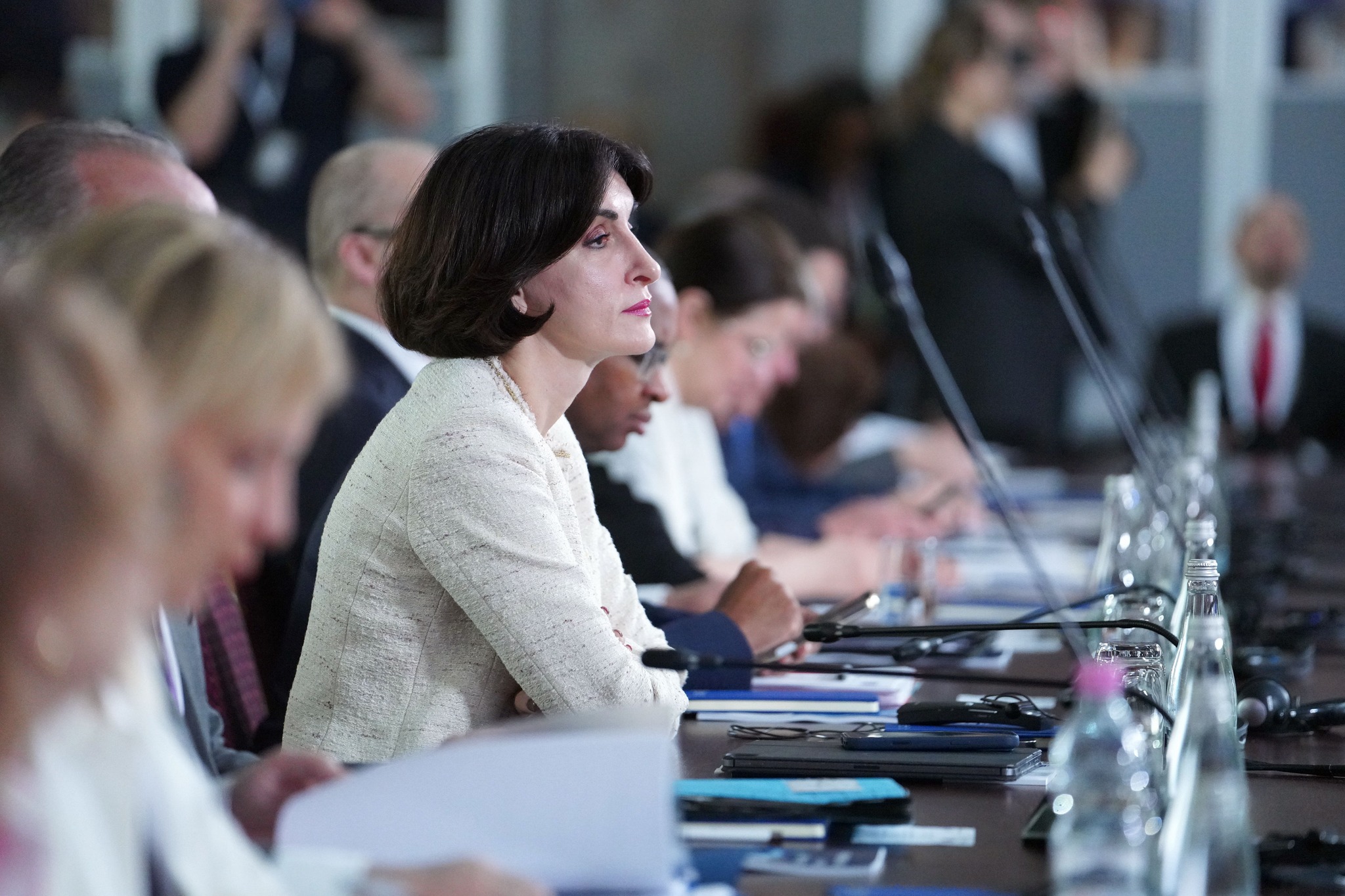

In this regard, the Foreign Minister criticized the event’s hosts—the Moldovan authorities. Earlier, they had denied accreditation for the Committee of Ministers meeting to three pro-government Georgian TV channels—Imedi, Rustavi 2, and PosTV. In Europe, these media outlets are considered part of a propaganda machine working in favor of the Kremlin. Bochorishvili, however, viewed Moldova’s decision as a restriction on freedom of speech:
“Journalists from three different Georgian TV channels who wanted to cover our meeting today were denied entry to Moldova and the right to carry out their professional activities. The selective interpretation of freedom of speech and media freedom is alarming.”
During her speech, the Foreign Minister also complained that double standards are being applied to Georgia in the West. As the minister put it, although criticism is a natural part of the democratic process, “when political goals are placed above facts, it leads to the erosion of trust rather than the strengthening of democracy.”
“It is hypocrisy to speak of democratic backsliding while simultaneously encouraging radical forces that refuse to participate in elections; to declare support for the Georgian people while demonstratively rejecting the government elected by the Georgian people; to speak of the rule of law while simultaneously seeking ways to bypass the law.”
However, Bochorishvili also criticized Russia, stating that it continues its occupation of Georgian regions and fails to fulfill its international obligations. In particular, the policy of annexation is evidenced by the so-called “Treaty on Deepening Allied Cooperation” between Moscow and de-facto Tskhinvali.
At the same time, the minister again voiced the main political narrative of the ruling “Georgian Dream” (Kartuli Otsneba) party: that “Georgia is doing everything possible to maintain peace, stability, and security in the region.” She concluded her speech with the words:
“We know the price of war well and understand that peace is not only the absence of military escalation but also a responsibility to our own people, the region, and our common European future.”

The Georgia-Ukraine Crisis
Exactly five months ago, on December 16, 2025, Maka Bochorishvili participated in a diplomatic conference in The Hague. There, she signed a convention establishing an International Commission to review Ukraine’s claims for reparations for Russian aggression. However, on May 15, 2026, the Foreign Minister did not sign the document providing for the creation of a special tribunal for Russia.
In a conversation with journalists, the minister stated that the attitude of some EU countries toward Georgia “does not allow us to make certain decisions that would create additional risks and threats for our country.”
These words likely reflect one of the key theses of “Georgian Dream”—that certain external forces are trying to drag the country into a war with Russia and open a “second front” in the South Caucasus. Ukraine has long been one of the primary targets of these accusations.
Following the full-scale Russian invasion, relations between the two countries became effectively frozen—there were not even ambassadors in the respective capitals. Therefore, there was special interest in the meeting between Bochorishvili and her colleague Sybiha in Chisinau.
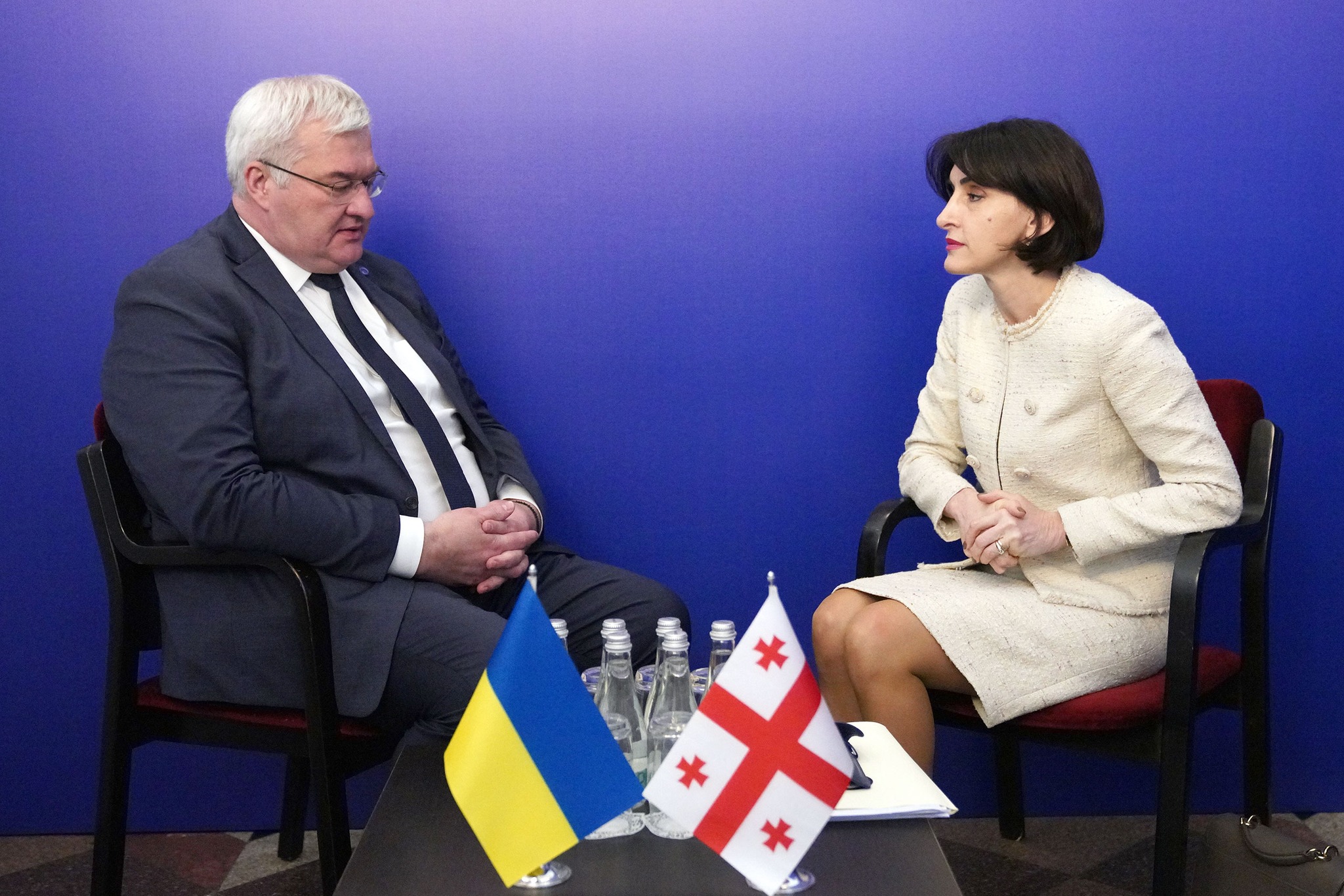

The short press release from the Georgian Ministry of Foreign Affairs regarding the negotiations is mostly protocol-based: “this is another step in the development of relations,” “consistent political and humanitarian support for Ukraine by Georgia was discussed,” “the parties reaffirmed the importance of restoring healthy diplomatic relations and expressed readiness to continue the dialogue.”
But in Tbilisi’s statement, there was also a message suggesting that Kyiv, not Tbilisi, was responsible for the interstate crisis:
“The Georgian side emphasized existing problems in Georgia-Ukraine relations, including steps taken by the Ukrainian authorities in recent years and positions that continue to hinder the normalization of bilateral relations.”
Andrii Sybiha was more delicate in his commentary and avoided sharp edges:
“We discussed a wide range of bilateral issues, our cooperation within international organizations, particularly GUAM, as well as recent political developments in the space of shared values from Europe to the South Caucasus. We continue to develop a transparent, pragmatic, and constructive Ukrainian-Georgian dialogue.”
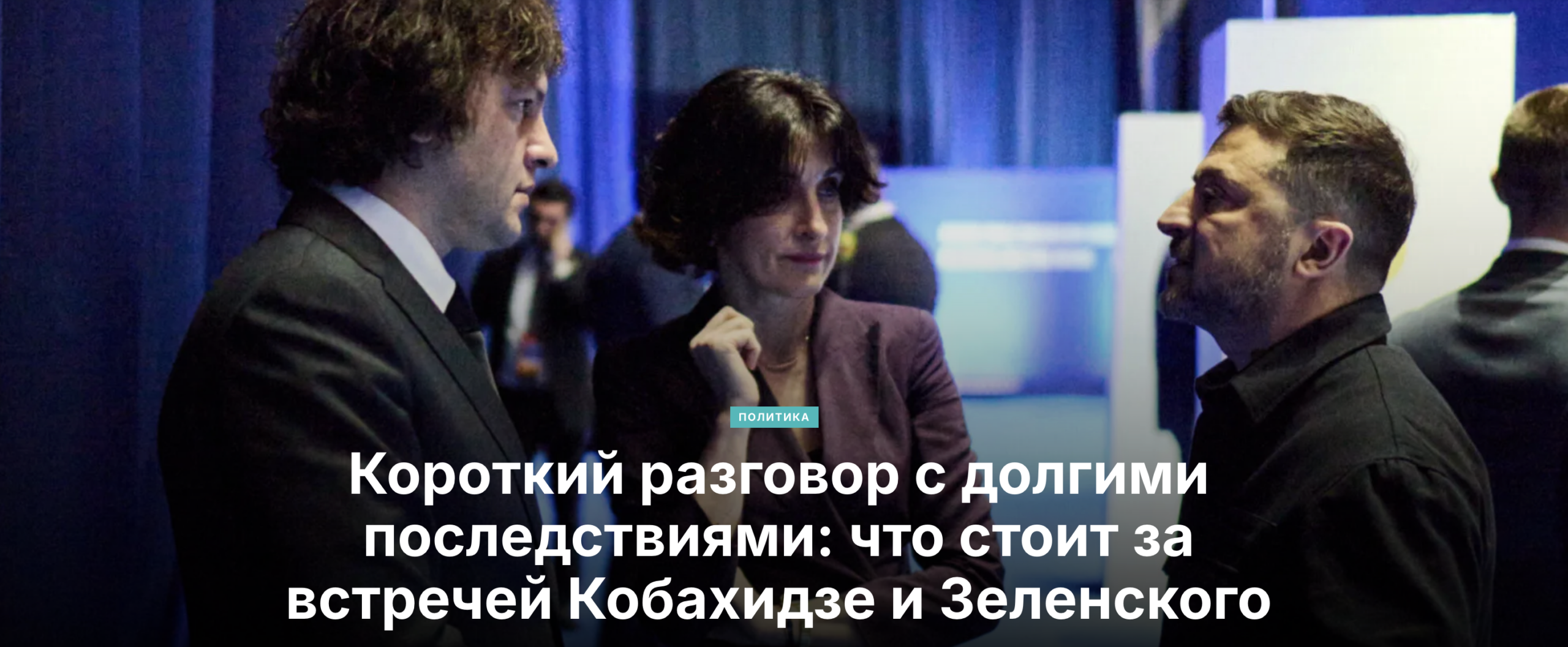
According to Sybiha, the conversation in Chisinau was a direct continuation of the recent dialogue between Ukrainian President Volodymyr Zelenskyy and Georgian Prime Minister Irakli Kobakhidze, which took place on the sidelines of the European Political Community summit.
This refers to a brief conversation between the two leaders on the sidelines of the summit in Yerevan on May 4. The “on-the-go” conversation took place at the initiative of the Ukrainian side. The content is unknown, but a short video published by the Georgian government shows that only Zelenskyy is speaking, while Kobakhidze merely listens. Foreign Ministers Bochorishvili and Sybiha also participated in that meeting.

Within Georgia, that conversation was presented as an attempt by Kyiv to correct its own mistakes in relations with Tbilisi. The statement by Irakli Zarkua, an MP from the ruling party, was particularly sharp when journalists asked him to comment on the current meeting of foreign ministers in Chisinau. According to him, Kyiv is forced to make concessions, and the first sign of this was the conversation in Yerevan: “Zelenskyy will have to speak to us respectfully.”
“Zelenskyy was forced first to ask for a meeting and then to come to him [Kobakhidze]. This is how it will be with all unworthy, unauthoritative, and artificially installed leaders. ‘Leaders’ in quotation marks.”
Kobakhidze himself was more cautious regarding the latest meeting of the top diplomats of Georgia and Ukraine. According to the Prime Minister, despite Kyiv’s “extremely unfriendly steps,” Tbilisi will remain in a “mode of unilateral friendship.” Although the Prime Minister added that until peace is restored in the “friendly country,” Georgia will not set preconditions for normalizing relations, this could also be seen as a signal that no normalization will occur for the time being.