


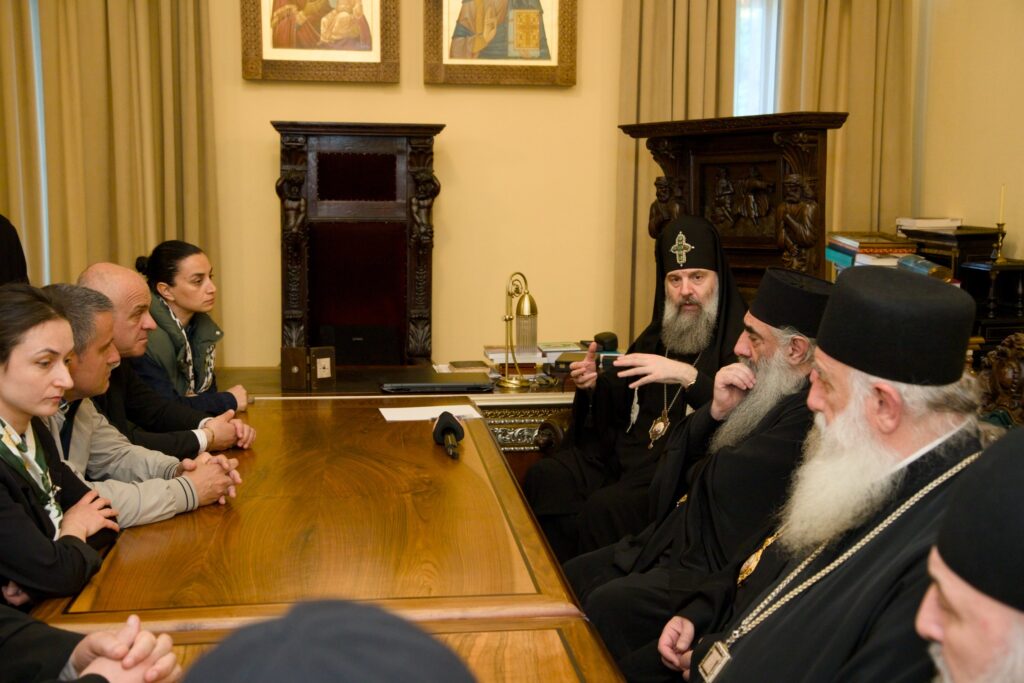
The Patriarchal Locum Tenens of All Georgia, Shio, met with parents of children suffering from Duchenne muscular dystrophy—a severe genetic disorder that gradually weakens muscles and significantly impacts quality of life.

The Public Relations Service of the Georgian Patriarchate stated that the meeting addressed the primary challenges faced by these families. Parents spoke about the difficulties regarding treatment and care, as well as the lack of systemic support.
Following the meeting, it was decided to initiate more practical efforts:
- at the initial stage, separate working meetings will be held with the participation of doctors and relevant specialists;
- the Patriarchate, its clinic, and experts from various fields will be involved in the process.
The Patriarchate intends to organize close cooperation with government agencies on this matter to ensure that assistance to children and their families is more effective and systemic.
“His Holiness listened to the problems faced by parents and children with Duchenne. As noted during the meeting, this disease is insufficiently studied in Georgia and requires greater attention—at medical, social, and institutional levels—as well as coordinated efforts.
<…> The goal of further work is a deeper study of the needs of children with Duchenne dystrophy and their families, as well as the search for possible solutions that will help provide them with support and necessary assistance in the future,” the statement noted.
The meeting was attended by the Chorepiscopus (vicar bishop) to the Catholicos-Patriarch of All Georgia, Metropolitan Theodore (Chuadze) of Akhaltsikhe and Tao-Klarjeti; Metropolitan David (Maharadze) of Alaverdi; Metropolitan Andria (Gvazava) of Gori and Ateni; Metropolitan Gerasime (Sharashenidze) of Zugdidi and Tsaishi; Secretary to the Catholicos-Patriarch, Archpriest Michael Botkoveli; Head of the Public Relations Service of the Patriarchate, Archpriest Andria Jagmaidze; Director General of the Saint Joachim and Anne Medical Center of the Georgian Patriarchate, Vephvia Odisharia, and others.