


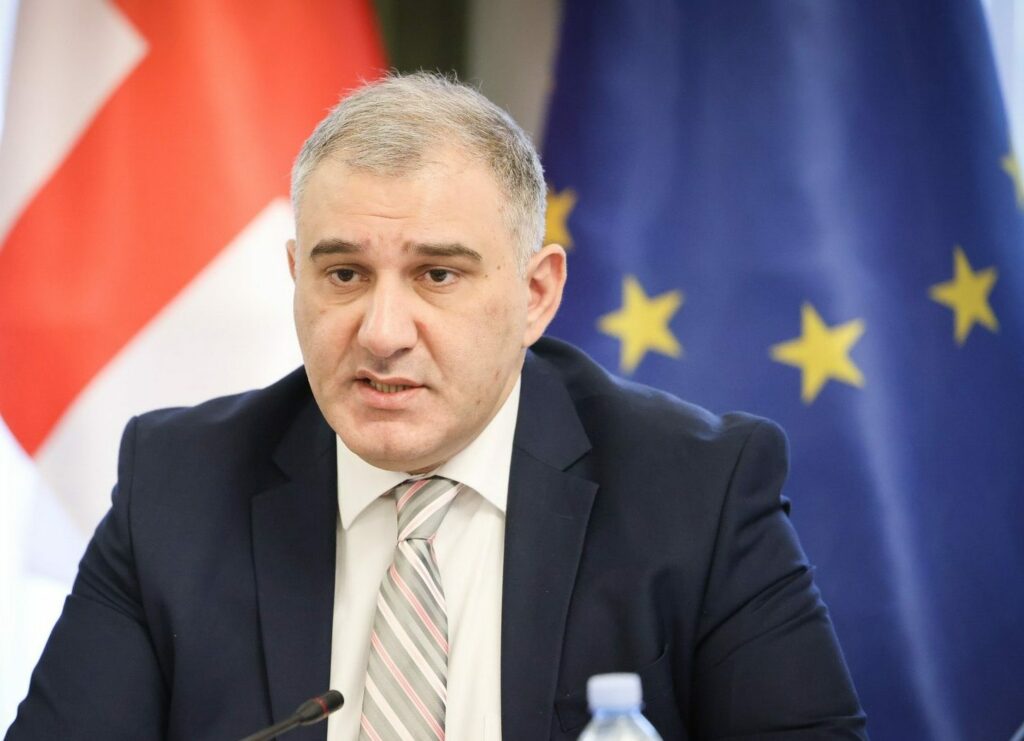
Georgian Health Minister Mikheil Sarjveladze is currently in Geneva for the World Health Assembly, organized by the WHO, where he is discussing the accessibility of new drugs for the treatment of Duchenne muscular dystrophy (DMD) and the experience of other nations in utilizing these medications.
Sarjveladze stated that he has already met with representatives of the healthcare systems of Belgium and Poland, as well as international organizations. The Minister emphasized that Georgia is currently studying the practical experience of other countries, real-world clinical outcomes, and data regarding the efficacy of the drugs.
“Virtually no one in the world has definitive answers today. Everyone is in the process of searching. We are also participating in this process and are waiting for the moment when more specific information on these medications becomes available. This is precisely what will make it possible to reach final decisions,” he noted.
Sarjveladze pointed out that questions regarding these drugs persist even in EU countries with the strongest healthcare systems. Therefore, according to him, consultations with specialists, the exchange of experience, and professional discussion of the topic are particularly important now. He added that work on this issue will continue, as the decision to fund drugs for children with Duchenne muscular dystrophy cannot be made solely under the pressure of emotions and public outcry.
The authorities, he emphasized, must rely primarily on scientific data and confirmed research results.
“This is not a sphere where decisions should be made on emotions alone. Scientific evidence is extremely important here; otherwise, the risk of error is very high,” he stated.
It should be noted that parents of children with Duchenne disease held a meeting with the new Patriarch Shio III.
Earlier, during an interpellation (a formal parliamentary request for information) hearing regarding children with Duchenne disease in Parliament, Georgian Health Minister Mikheil Sarjveladze stated that the ministry’s “door has never been closed” to parents and remains open. He emphasized that the agency would continue its continuous work on these issues and expressed hope that a fully-fledged drug that is truly accessible and safe would soon emerge.
Sarjveladze stressed that those who think he does not realize when an article by a sponsored doctor praising a certain drug is circulated on social media, or when praise is heard from any particular organization, are mistaken.
What is the conflict about?
Since April 20, parents of children with Duchenne muscular dystrophy in Georgia have been demanding that the state import drugs to slow the progression of the disease in children, as well as provide state funding for these medicines. Furthermore, they are calling for the creation of a multidisciplinary team of doctors in the country to monitor and treat such patients.
According to open sources, a number of drugs have been approved in the US and the EU, yet the situation remains ambiguous and depends on the specific medication.
For instance, regarding the drug Elevidys—the most expensive gene therapy in the world ($3.2 million)—it has not received approval in the European Union but was approved in the US. This is the medication most frequently requested by parents.
However, the Georgian Ministry of Health cites the EU’s position and argues that it cannot be used in Georgia under state funding—the authorities consider such therapy to be “experimental.”
Parents, meanwhile, insist that this is the only chance for their children and cite the drug’s approval in the US as a key argument.
The condition is a severe genetic disorder that progresses rapidly and leads to the loss of motor functions, which is why families are insisting on the urgency of these decisions.
Read more about the issue in the SOVA blog.