


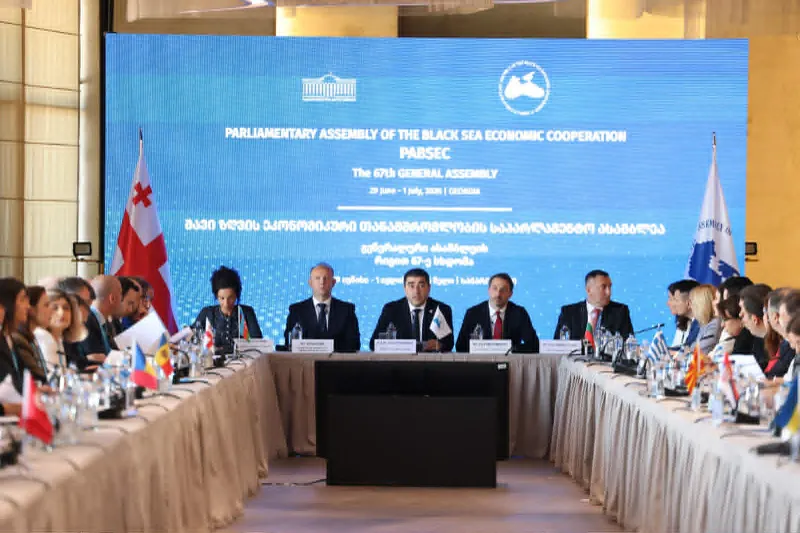
The Parliamentary Assembly of the Black Sea Economic Cooperation (PABSEC) has always been an important regional pillar of interparliamentary cooperation, and today its role has become particularly relevant, said the Speaker of the Georgian Parliament, Shalva Papuashvili, at the 67th PABSEC plenary session.
Currently, according to Papuashvili, the Black Sea region is in a critical phase of development.
“Current geopolitical processes, growing economic uncertainty, and new technological transformations are reshaping both our region and the broader international order. In an environment where global organizations do not always guarantee peace, cooperation, and stability, regional formats such as PABSEC have a unique opportunity to unite us in protecting the common pragmatic interests that our parliaments represent on behalf of our peoples…
We value each other’s peace and security far more than external forces do, especially amid the significant geopolitical upheavals caused by the Russian invasion of Ukraine more than four years ago, which directly affected the entire Black Sea region, turning it into one of the key hubs of global politics.
Even in these difficult conditions, geopolitics must serve the economic interests of our peoples, and not vice versa. Therefore, PABSEC must maintain a clear focus on economic cooperation, trade, and developing ties—in other words, on human well-being. The wise founders of BSEC and subsequently PABSEC made the economy the cornerstone of the organization’s mission, which is also reflected in its name. When international forces use organizations for their narrow political interests, prioritizing geopolitics over the interests of the people, it damages peace, security, and stability.
This also leads to economic stagnation—ignoring the needs of people in favor of geopolitical games. Such processes deepen the gap between elites and society, which ultimately leads to a loss of public support and fosters radicalization as the basis of political polarization,” Papuashvili said.