


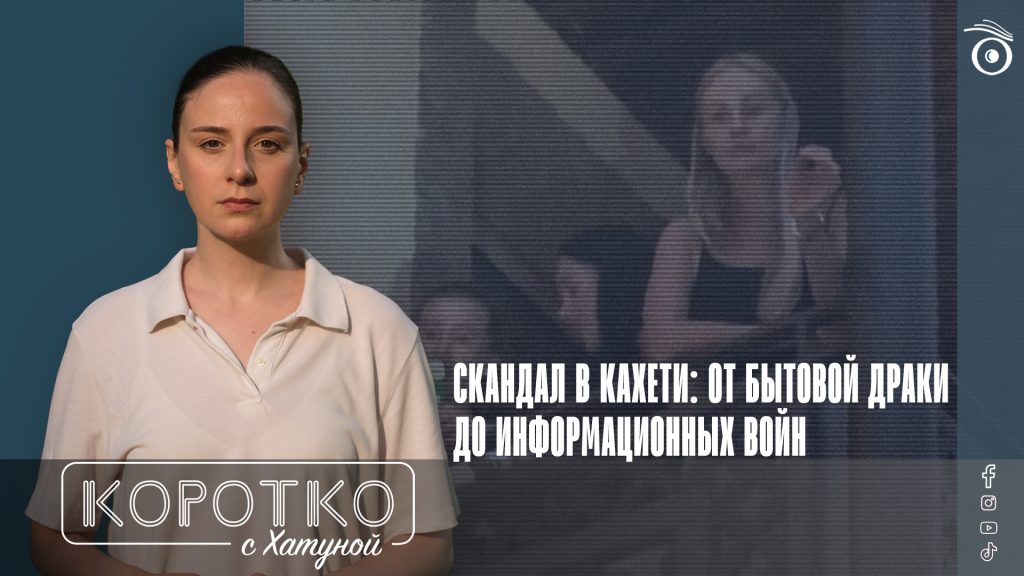
Last weekend, an incident in Kakheti ruined a wedding for dozens of Georgians and a vacation for five Russian women. A verbal altercation escalated into a physical confrontation, and opinions on who started it still diverge. The conflict itself has already been dissected from every angle, so I will not recount it here. Instead, I suggest examining what it turned into afterwards—and the narratives that have since grown around it.
An official statement from the Ministry of Internal Affairs (MIA) noted that, based on witness testimony, investigators established the conflict arose because “foreign citizens insulted guests from their room balcony and poured water over equipment.”
At the same time, according to one account, the women were having a good time and even tried to join the celebration by shouting “Gorko!” [a traditional Russian wedding chant] to the newlyweds, but grew angry after failing to receive a warm welcome. According to another version, the tourists had been complaining about the noise from the start. The outcome is well known: the groom’s brother went up to their room, an argument ensued, and it ended in violence.
Instantly, both sides began framing the incident in various political and emotional terms.
Wedding guests, for example, claimed that the conflict started because the tourists called Georgians “Papuans,” mocked Georgia and Georgian music, spat from the balcony, and repeatedly poured liquid—some even mentioned urine. These allegations stirred up Georgian social media.
Meanwhile, the Russian segment of the internet was equally outraged. One of the tourists, Polina Kurta, who was the first to report the incident, posted a video for her nearly 40,000 Instagram followers with the caption: “In Georgia, men break into rooms and beat up women for speaking Russian.” Kurta employed what is known in media studies as framing. The initial description of an event sets the narrative framework through which the audience perceives all subsequent facts. In this case, the conflict was immediately presented as an act of Russophobia.
However, the incident took an unexpected plot twist when the women themselves and sympathetic public pages began mentioning their Ukrainian roots. This was done perhaps in hopes of defusing tensions, or perhaps to add more drama to the story.
Either way, the focus in the public sphere gradually shifted from the circumstances of the brawl to the origin and citizenship of those involved. For instance, TASS wrote: “All five women are Ukrainian and are Russian citizens.”
Thus, a local dispute transformed into a major story about chauvinism and geopolitics—and given the broader context, ignoring it proved impossible.