


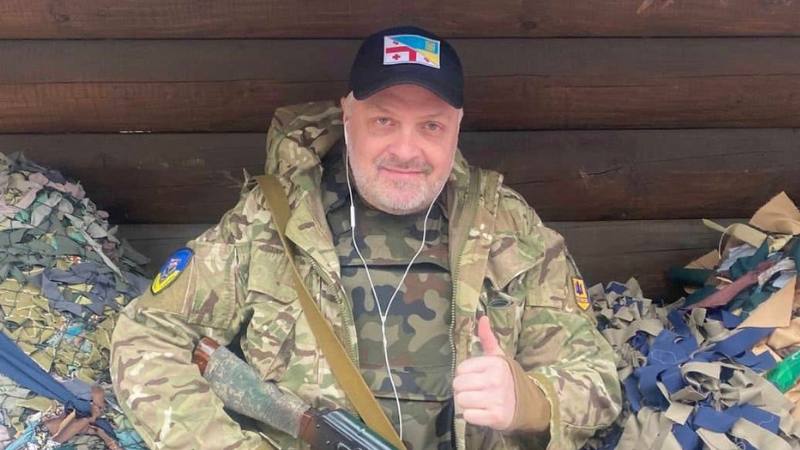
“Russophile traitors and political jackals! I mourned the mother of a fighter who was far more worthy of Georgia than you are! The Kots [Georgian Dream] prosecutor’s office has opened a case against me for ‘treason against Georgia’!
I am afraid neither of your persecution nor, even less, of your dirty propaganda! Before my homeland, God, and my conscience, I have always been right, and no one will take this truth away from me,” Baramidze wrote on social media.
What did Baramidze say?
Baramidze: They stopped giving us prisoners, and we had no prisoners. Our people didn’t take prisoners.Khvichia: Why?Baramidze: Finished them off.Khvichia: Our people?Baramidze: Ours.Khvichia: Why was that necessary?
Baramidze: It wasn’t absolutely necessary, of course, but when a person… when your cousin was killed, your brother was killed, your friend was killed, right? It’s very hard to hold back emotions there, and I’m not saying now that those who finished them off…
Khvichia: The same thing was happening on that side, wasn’t it?
Baramidze: There was discipline over there. Because there was Russian discipline. And they took prisoners. Far more of them. And from that side, Beslan Kobakhia was my, so to speak, counterpart from the side of the so-called separatists—actually the Russian side—who used to tell me: ‘Okay, I’ll give you 10, but you have to give me one.’
A short while ago, Baramidze released a video address on social media explaining his words once again. He recounted that when the war broke out in Georgia, he was the head of the department in the then-active Human Rights Committee directly responsible for human rights protection.
According to Baramidze, when the war started and the enemy attacked Gagra, members of the “Meparishvili Battalion” were taken prisoner on the Georgian side.
“Who fought courageously against the enemy until the end, and when their ammunition ran out and they had no means left to offer resistance, well, the enemy took them prisoner. Incidentally, those men were later forced to build a concentration camp for prisoners with their own hands in the Gudauta district, near Gudauta, which I later visited. And I will add here that thanks to our efforts, together with my deputy Paata Zakareishvili and with the help of the Red Cross, all 45 of these fighters were evacuated to a safe zone.”
According to Baramidze, during the broadcast he was referring to the fact that during the initial weeks, when the opposing side asked to exchange someone, they had no prisoners to offer.
“I fully expected the ‘Kots’ media (media aligned with Georgian Dream) to start nitpicking and clinging to my words, but what is particularly hurtful and troubling is that even non-Kots public figures, a part of society, misunderstood what I said.
All the more so because many haven’t actually watched the interview. It was shared out of context, and people started discussing how I supposedly claimed that during the first weeks of the war—in the early days when I was managing prisoner exchanges and realized at the start of the process that we had no captives—I allegedly said that the other side, meaning the Russian, separatist side, was taking prisoners, while we had none because our men were finishing them off.
I did use that word. ‘Finished off’ does not mean that the Georgian state finishes people off, nor does it mean that the Georgian army does so, right?! We were locked in a mortal struggle with the enemy, and our fighters simply didn’t have prisoners. That is a common occurrence, and I said right there that when a person’s father, son, cousin, or close friend has been killed, it is hardly surprising that they would act in such a way—sparing no enemy—and that is a normal occurrence in war. This is not the fault of the Georgian army, which didn’t really exist back then, let alone a crime that anyone can spin into charges against Georgia or the Georgian state, right?”
