


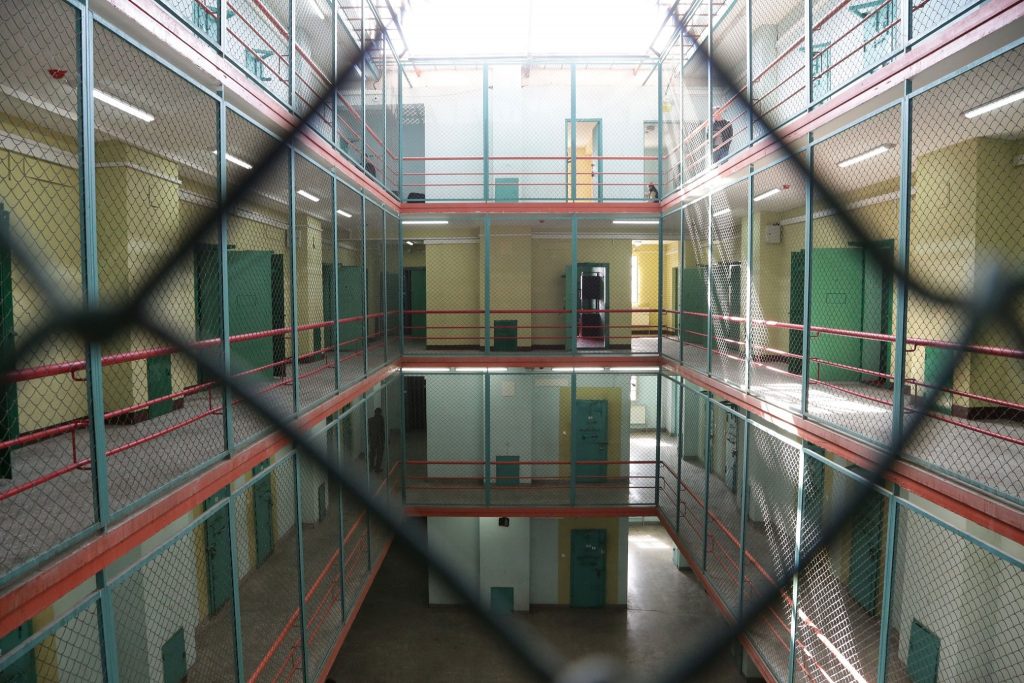
Women’s Penitentiary Facility No. 5 in Rustavi refused to hand over Lasha Bugadze’s novel The Observer to Nana Sander, who was convicted in the “October 4 case” and has been serving a 7-year prison sentence since 2025, Netgazeti reports.
Activist Giorgi Romelashvili attempted to deliver the book on August 6. As he later informed the author himself, Lasha Bugadze, the reason for the refusal was that the book was “political” and “cannot be passed to a prisoner.”
According to PEN Georgia—an organization uniting over 70 writers that has been a member of PEN International, the world’s oldest international association of writers and journalists, since 1991—the incident represents a troubling case of literary censorship, linked not only to the novel’s content but also to the author’s political and civic stance.
“Censorship of fiction as an attempt to restrict freedom of expression is unacceptable in a democratic society.”
“In essence, there is no literary text that is not political—take even The Odyssey… Let us not reconcile with the regime’s absurd ‘laws,’ or with the fact that even the definition of ‘political’ itself becomes a problem for someone… And why should a ‘political’ text be an issue, even if it is one? Suppose it is political—what right do they have to deny a convicted citizen the opportunity to read a novel?! We cannot allow the regime to normalize the practice of banning texts,” stated the book’s author, Lasha Bugadze.
Under the Imprisonment Code of Georgia (Penitentiary Code) and regulations governing penitentiary facilities, an accused person/convict:
- has the right to receive information through the press and other mass media, and to access fiction and other literature;
- has the right, at their own expense, to subscribe to scientific, popular science, religious, and fiction literature, magazines, and newspapers in reasonable quantities, and to receive writing supplies, except for items prohibited by order of the Minister;
- may simultaneously possess no more than 3 books, excluding books that might pose a threat to the security of the accused/convict or the normal functioning of the facility.