


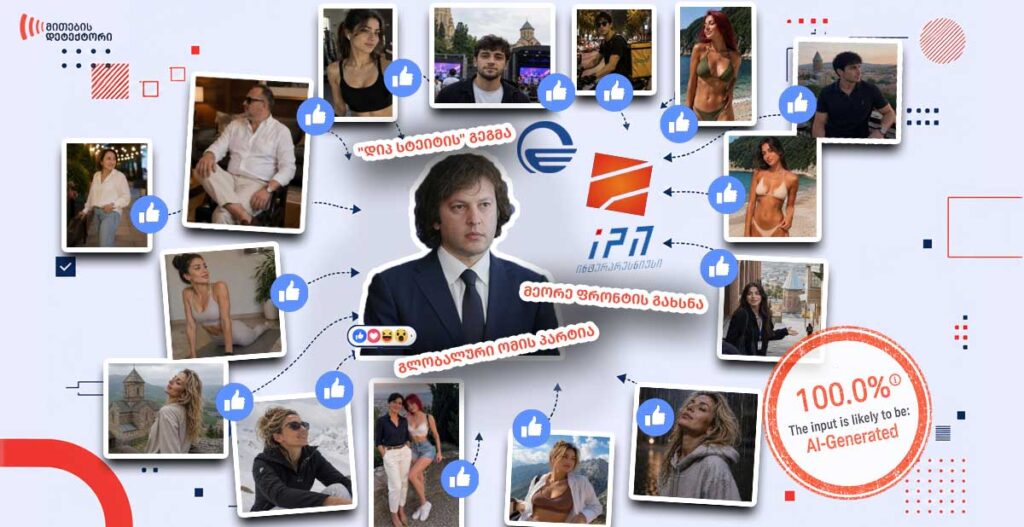
A total of 230 fake Facebook accounts are allegedly part of an artificially created network supporting the ruling Georgian Dream party, according to an investigation by the Myth Detector platform. The study found that the profile pictures of these accounts were generated by artificial intelligence, with their activity primarily focused on amplifying specific talking points from the ruling party and its chairman, Irakli Kobakhidze.
According to Myth Detector’s analysis, the fake accounts share similar photos, names, and behavioral patterns. Several accounts also listed authentic workplaces and educational institutions in their profiles, designed to increase their credibility.
On August 12, marking the 18th anniversary of the Russia–Georgia war, Georgian Dream Chairman Irakli Kobakhidze held a briefing focused on what he termed rising “Russophobia” in Georgia. According to the organization, Kobakhidze linked the 2008 war to the “deep state” and cited rallies against Russian tourists and protests over the arrival of Russian citizens in Georgia as examples of Russophobia.
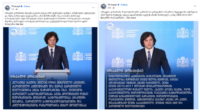

Following the briefing, pro-government television channels Imedi and Rustavi 2, along with the Interpressnews agency, published informational cards on Facebook focusing on the alleged stoking of anti-Russian sentiment in Georgia and the role of the “deep state” in that process.
Myth Detector examined the “likes” on these posts and identified profiles with suspicious photos and identical behavioral patterns. The organization’s analysis revealed signs of coordinated inauthentic behavior (CIB), indicating that the accounts operated in concert to artificially boost support for specific government narratives.
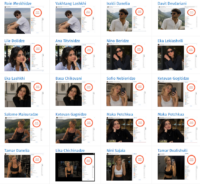
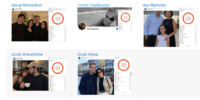


The investigation uncovered 230 fake accounts whose shared characteristics indicate coordinated inauthentic behavior, including AI-generated profile pictures, identical images across different pages, and activity focused around the same topics.
1. Profile pictures generated by artificial intelligence (AI):
According to the AI-detection tool Hive Moderation, the profile pictures of all 230 accounts have a greater than 90% probability of being AI-generated, reaching 100% in some cases. In addition, characteristic AI artifacts—such as unnaturally shaped hands and fingers, along with distinct visual distortions—were confirmed through visual inspection.
2. Duplication of photos and compositions:
Some accounts used identical or highly similar imagery, including the exact same photographs with minor edits. The visual composition across different pages repeated identical camera angles and details. In several instances, identical first and last names appeared on separate accounts.
3. Illusion of support created through artificial demographic diversity:
The network created the appearance of endorsement from people of varying ages, appearances, and lifestyles: profiles of young and elderly users, conservative and alternative-looking citizens, believers, family-oriented individuals, athletes, and vacationers.
4. Real workplaces and educational institutions listed to build credibility:
Most accounts listed legitimate educational institutions and employers, including Tbilservice Group, the Tbilisi Transport Company, Georgian insurance companies, commercial banks, microfinance organizations, state agencies, and municipal services.
5. Identical behavioral patterns:
Most profiles listed their move to Georgian cities as occurring between July 20 and July 24, 2026, though some older accounts were also identified.
6. Activity focused on identical talking points:
Reactions from the suspicious accounts concentrated on posts promoting conspiracy statements by the ruling party chairman regarding the “Global War Party,” “deep state plots,” and “opening a second front,” alongside narratives about “Russophobia”—pointing collectively to artificially inflated engagement.
As Myth Detector noted, this is not the first time AI-generated imagery has been detected in such operations. The organization observed similar AI-profile activity in April 2026, when 75 fake pages actively reacted to posts by Rustavi 2 concerning treatments for Duchenne muscular dystrophy. Of those 75 accounts, 47 used modified versions of the exact same AI-generated photo. Several of these accounts had previously participated in various smear campaigns.