


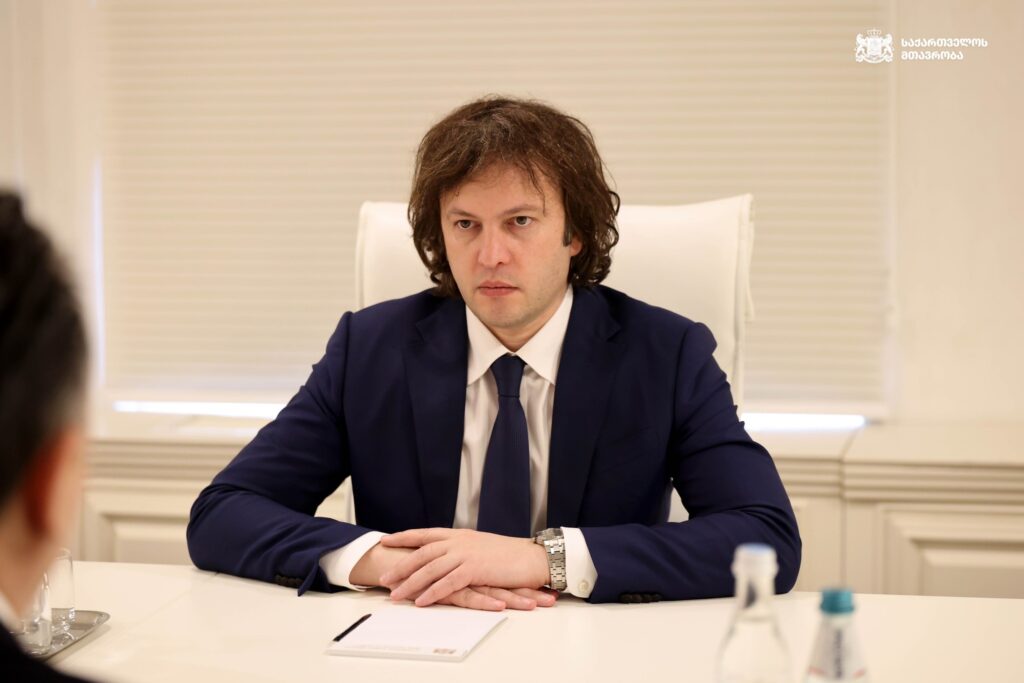
Georgian Prime Minister Irakli Kobakhidze has once again commented on the events of 250 years ago, asserting the historical benefits of the Treaty of Georgievsk for the country. About a week ago, Kobakhidze already noted that the treaty concluded by King Erekle II of Kartli-Kakheti with Russia in 1873 played a crucial role in saving Georgia. At a briefing on the morning of August 18, the Prime Minister revisited the topic:
«By signing the treaty, whether the Russian Empire intended it or not, Georgia nevertheless gained a fundamental benefit — at a time when we were on the verge of existence and non-existence, thanks to this step by Erekle II, we not only survived as a nation, but ultimately prevailed, which is best evidenced by the fact that today Georgia is a distinct country founded on Christian values, national roots, and traditional European culture.»
According to Kobakhidze, the step taken by the King of Kartli-Kakheti ultimately proved to be not merely justified, but the only right and non-alternative solution.
«If we look at our past, specifically at the period when Erekle II had to make a critical decision, we clearly see the dire, tragic situation in which our country and people found themselves at that time. As a result of years of brutal confrontation with Persia, the Ottoman Empire, and other states, not only Georgian statehood, but the Georgian people themselves faced a real threat of annihilation. Georgia existed under constant attacks, wars, and political pressure, which called the country’s state and demographic future into question.
It is precisely in light of this historical reality that we must evaluate the decision made by Erekle II, especially against the backdrop of the fact that Christianity, both in the past and today, was and remains one of the primary pillars of the Georgian people’s national and cultural identity.»
According to the Prime Minister, «despite the fact that every state, including the Russian Empire, acted out of its own interests and saving Georgia was by no means their baseline starting point,» taking into account the factors of Christianity and demography, Georgia gained a fundamental benefit as a result of the Treaty of Georgievsk.
As a reminder, the Treaty of Georgievsk was concluded in the fortress of Georgievsk in the North Caucasus in 1783 between the Russian Empire and the Kingdom of Kartli-Kakheti. Under the treaty, Moscow pledged to defend Kartli-Kakheti; however, when the need arose in 1795, it left Erekle II and his army to face the forces of Agha Mohammad Khan alone.
In 1801, Russia issued a manifesto on the annexation of Kartli-Kakheti — an action not provided for by the agreement. Furthermore, in 1811, in violation of the treaty, Russia abolished the autocephaly of the Georgian Orthodox Church, which, according to the document, was to remain inviolable.