


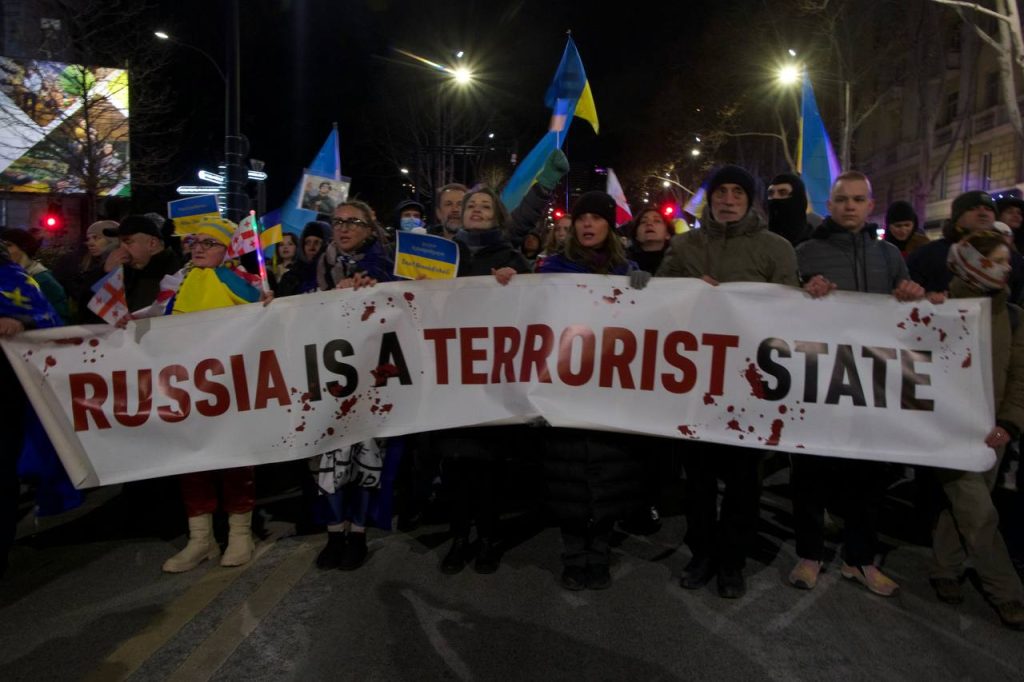
Russians remain one of the most prominent groups of foreigners in Georgia: in the first half of 2026 alone, Russian citizens made over 600,000 visits to the country. Their growing presence is evident not only in tourism, but across the economy as well. At the same time, fierce debates have long been underway across various political levels. Yet what truly made the “Russian question” resonant in Georgia was an incident at a wedding in Kakheti. A wave of commentary reached the very ordinary citizens whom political tensions in both countries had, for various reasons, largely bypassed until now. It seemed virtually everyone had an opinion to share, both online and offline. SOVA sought to examine how an everyday altercation escalated into a political scandal.


Russia–Georgia relations have once again become the subject of heated debate following an incident at the Agarani Estate hotel in Kakheti. A man burst into one of the hotel rooms and struck a woman. The parties offer differing accounts of what sparked the dispute. While the incident triggered widespread controversy, both Georgians and Russians found common ground on one point: violence of any kind is unacceptable. Nevertheless, the Kakheti scandal seemed to reopen old wounds and traumas. Beneath this reaction lie deeper political, social, and historical currents. Let us examine them in turn.
The 2022 Turning Point
Prior to the full-scale Russian invasion of Ukraine, Georgia served as a welcoming hub of sorts for opponents of the Putin regime. Dissent over the annexation of Crimea and the looming threat of repression brought the first wave of Russians to the country.
Russians became truly conspicuous in 2022, as Georgia emerged as one of the primary migration destinations. According to the 2024 population census, 133,857 foreign nationals were residing permanently in the country. Russian citizens formed the largest single group, totaling 37,715 people, while Ukrainian nationals numbered 11,542. Together, they accounted for over a third of all foreign residents permanently settled in Georgia. These figures reflect specifically the resident population captured by the census, rather than the total tally of incoming tourists, transit migrants, or individuals periodically undertaking “visa runs” to reset their visa-free stay.
The presence of a Russian-speaking population in Georgia is not new in itself. Under the same census, 54,460 individuals named Russian as their mother tongue—an 18.6% increase compared to a decade prior. However, the post-February 2022 migration wave differed substantially from previous ones: it was rapid, concentrated primarily in Tbilisi and Batumi, and unfolded against the backdrop of the ongoing war in Ukraine, alongside the three-decade-long Russian occupation of Georgian territories.
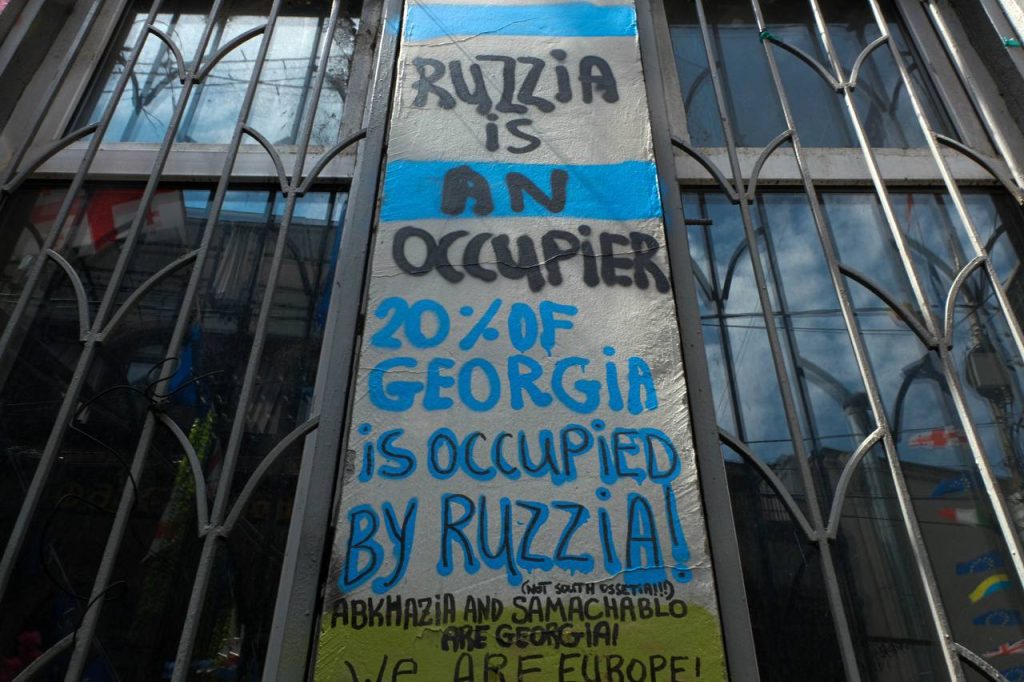
For a significant portion of Georgian society, Russia is not an abstract country of origin for newcomers, but a state that poses an active threat to Georgia’s national security.
Tsypylma Darieva, a researcher at the Centre for East European and International Studies (ZOiS), describes the position of Russian migrants in Georgia as fundamentally ambivalent. Many left the Russian Federation due to opposition to the war, mobilization, or political persecution. Yet within the host society, they are often perceived not as individuals with diverse viewpoints, but as conduits of the Russian state’s interests and bearers of its political and economic influence. Even openly anti-war, pro-European migrants have frequently been lumped into the generic category of “relocants,” irrespective of their backgrounds or political stances.
One of the most telling sources remains the CRRC-Georgia study titled “Enemy or Friend? What Georgians Think of Russian Migrants and Vice Versa.” It reveals that mistrust toward arrivals from Russia is widespread rather than episodic.
The Trust Deficit
According to CRRC survey data, roughly 70% of Georgian residents do not trust Russian citizens who have left their country. Moreover, 52% of respondents opposed allowing Russians to work in Georgia under the regulations in place at the time, compared to 41% who supported that right.
Furthermore, the study indicates that relocants and the local population barely interact in daily life. In Tbilisi, only 11% of respondents reported daily interaction with Russian citizens; in other towns and rural areas, that figure stood at around 5%.
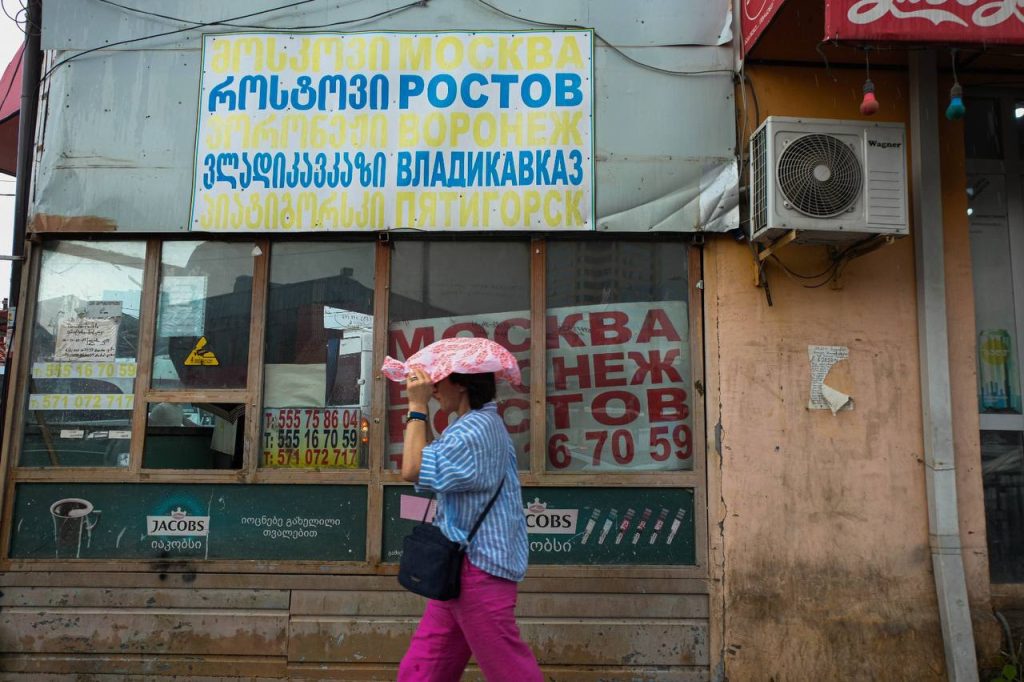
At the same time, CRRC points out that a substantial share of the new migrants settled in the most affluent neighborhoods of Tbilisi and Batumi, continuing to work remotely for foreign or Russian companies and earning incomes significantly higher than the wages of many local residents. Their arrival coincided with surging rent prices, heightened real estate demand, and the rapid expansion of Russian-speaking businesses—cafés, bars, shops, studios, and service providers catering primarily to consumers within their own community.
In public perception, these dynamics fostered the image of an affluent migrant enjoying relatively low living costs, making no effort to learn Georgian, dwelling exclusively within a Russian-speaking bubble, and showing little genuine interest in the host nation. Darieva notes the emergence of a monolithic stereotype casting Russians as well-to-do lifestyle migrants or “political hipsters” who chose an affordable country while evading any responsibility for events in Russia.
A Parallel Society
Some Russian migrants did indeed establish a relatively self-contained ecosystem in Georgia: Russian-speaking professional and social circles, dedicated venues, events, services, and communication channels. In the words of one participant in Darieva’s study, Georgian society and a “parallel expat world” coexist, allowing individuals to live comfortably while barely integrating into the local environment.
The researcher characterizes the outcome of this process as mutual distancing. Russian activists often view Georgian society as a “non-audience” that is unwilling to distinguish them from the Russian state or heed their anti-war stance. In turn, many Georgians have observed predominantly insular Russian-speaking enclaves and commercial venues, while migrants’ political, volunteer, and anti-war efforts have largely flown under the radar.
The Legal Assessment
In legal terms, discrimination does not encompass every unpleasant, rude, or hostile interaction. It typically requires several constituent elements: an individual is placed at a disadvantage; this treatment is linked to a protected characteristic—such as ethnic background, citizenship, nationality, or language; and the differential treatment lacks an objective and proportionate justification.
The Constitution of Georgia enshrines the equality of all before the law and prohibits discrimination. Nevertheless, a rude remark, a language dispute, or a derogatory statement may constitute an expression of xenophobia, animosity, or inappropriate conduct without necessarily amounting to an actionable legal case of discrimination.
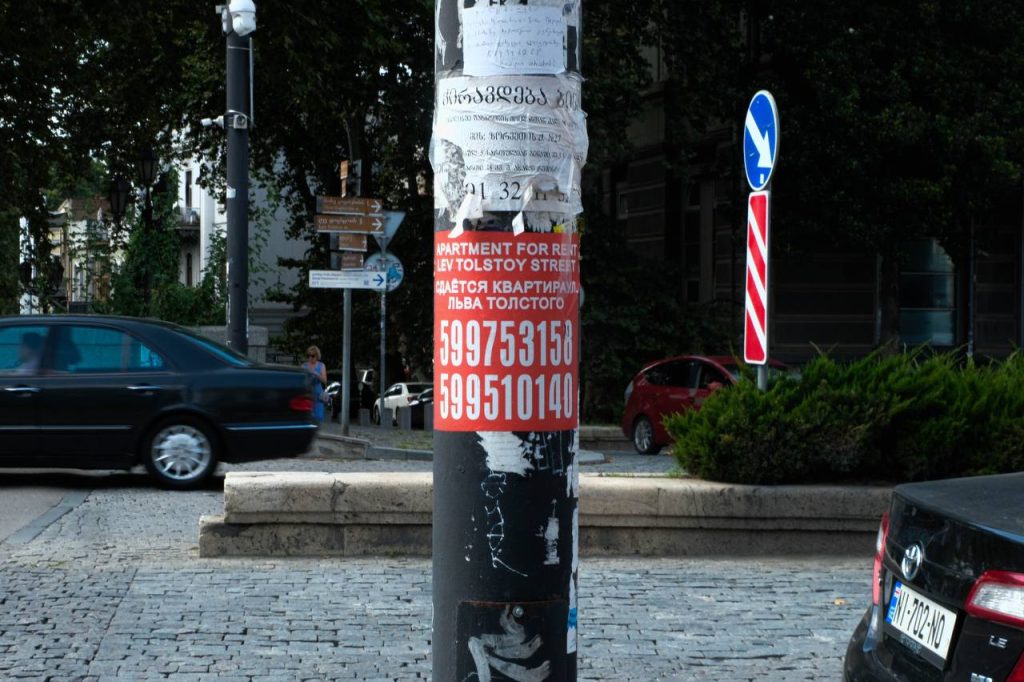
The legal assessment changes when an individual, on account of their origin, is: denied employment; dismissed or restricted in professional opportunities; refused rental housing; denied service; barred from education or medical care; subjected to separate, less favorable terms; or subjected to violence or threats.
Nevertheless, not every requirement to use Georgian or English is discriminatory. An employee at an establishment is under no obligation to know or speak Russian. Georgian is the official language of public and private institutions. The issue arises when speaking Russian or Ukrainian becomes grounds for humiliation, denial of service that could otherwise be provided, or prohibition of individuals speaking among themselves.
Likewise, a business owner is entitled to publicly support Ukraine, condemn Russian aggression, and demand adherence to house rules. However, refusing service to someone solely because they hold a Russian passport—regardless of their conduct and without an objective rationale—bears the hallmarks of direct discrimination based on citizenship or national origin.
The living conditions of Russian relocants were also explored in an article by *The Insider Russia* titled “The New Arrivals: How Relocants Changed the Economies of Armenia, Georgia, and Serbia.”
The article notes that even four years after the outbreak of the war in Ukraine, a substantial number of arrivals remain in Georgia. It cites corresponding data: by 2026, immigrants from Russia, Ukraine, and Belarus constituted 2.6% of Georgia’s population (108,222 people), including 72,000 Russians.
According to the National Statistics Office of Georgia (Geostat), more than 37,000 Russian-founded companies were registered in Georgia by 2024. In 2022, money transfers from the Russian Federation surged by 6.3 times to $2 billion, though the volume dropped by a quarter the following year.
A key byproduct of this migration boom was a more than twofold spike in residential rents. Meanwhile, Russians actively contributed to the real estate market: according to Georgia’s Ministry of Justice, 4,520 Russian citizens purchased 6,062 properties in the country in 2022, with an additional 1,679 Russians buying 2,187 properties in the first quarter of 2023. Direct investment into Georgia from Russians reached an all-time high in 2022, though by this measure Russia ranked only sixth, behind the United Kingdom, Spain, the Netherlands, the United States, and Ireland.
*The Insider* also notes that the majority of émigrés work remotely, frequently for employers outside their host country. While many do not work remotely, these individuals often find employment at establishments opened by fellow émigrés—such as bars or Russian-language private schools.
Lived Experience
To gain a clearer picture of the situation, SOVA spoke with Russians and Ukrainians living in Georgia, as well as Georgians who have interacted with relocants. Their accounts illustrate how differently this reality is perceived.
Timur
“Inappropriate behavior can happen on both sides”
One year in Georgia
Art educator
Timur moved to Georgia about a year ago and has experienced no serious discomfort during that time. He attributes this in part to the fact that people do not immediately associate his appearance with Russia. Additionally, most of his socializing occurs within a Russian-speaking circle, meaning he rarely needs to engage constantly with the Georgian-speaking environment.
Timur sees the main hurdle to integration not so much in language as in differing cultural norms: the same joke, conversational style, or behavior can be interpreted completely differently in Russian and Georgian contexts.
He suggests drawing the line between discrimination and inappropriate behavior based on the specific circumstances of each case.
“If a group of Russian friends is walking down the street chatting among themselves and someone tells them not to speak Russian in Georgia, that is certainly inappropriate. But if a Russian immediately addresses a Georgian in Russian expecting them to understand, that can also be inappropriate on the Russian’s part,” Timur believes.
At the same time, in his professional life, he once encountered a situation where Georgian-speaking colleagues preferred not to share a room with him simply because he was Russian-speaking. Timur, however, is hesitant to treat the incident as serious discrimination, as it did not affect his work or limit his professional opportunities:
“If you look at it as an example of discrimination based on nationality, it was an isolated incident. But it had no impact whatsoever on my professional work.”
Nikolai
“We need to learn to live in the same city”
Two years in Georgia
Marketer
Nikolai’s experience is markedly different. After the war began, he went to study in Canada, visiting Georgia for the first time in 2024. He liked the country so much that he eventually began considering it as a potential long-term home.
At the same time, Nikolai is convinced that hostility toward Russian immigrants in Georgia is far more widespread than other respondents suggest. According to him, it manifests in various ways—from side-eyes to insults and threats—while a sense of insecurity is compounded by reports of such conflicts in the public sphere.
Meanwhile, he views the economic impact of the migration wave positively. In Nikolai’s view, Russians who arrived after 2022 brought disposable income and new consumer demand that spurred business growth, housing development, and urban infrastructure. However, he sees the central issue not in economics, but in the perception of Russians as a potential security risk.
“We need to learn to live in the same city, to live in the same space. Russian relocants pose no threat to Georgians.”
Nikolai finds the idea of collective guilt for the actions of the Russian state and the 2008 war particularly unjust, pointing out that many of today’s relocants were children at the time and had no control over events.
That said, Nikolai does not believe the demand for respect is one-sided. He acknowledges that some tourists do treat Georgia arrogantly, expect locals to speak Russian, and mistake hospitality for an opportunity to dictate their own terms.
“If you intend to live in Georgia long-term, please learn at least ‘gamarjoba’ [hello] and show respect to the people whose guests you are. But one should not conclude from this that all Russians arrive here with inherent disrespect,” Nikolai maintains.
Vladimir
“You take steps forward, but no one meets you halfway”
Three years in Georgia
Software engineer
Vladimir arrived from Russia but identifies ethnically as Ukrainian. He left Russia after the full-scale invasion began because he did not want to “kill or die for the Russian government.” After two and a half years in Georgia, he has yet to feel fully integrated into the local society.
Vladimir identifies a persistent sense of alienation as his main challenge—ranging from job hunting to attempts at speaking Georgian.
“It is hard to look for work, you feel like an outsider, and it is almost impossible to shake off. You take steps forward, but no one meets you halfway,” he shares.
Vladimir views newly introduced labor regulations for foreign nationals as a manifestation of discrimination. These rules, however, apply not specifically to Russians or Ukrainians, but to foreign citizens broadly. As such, perceiving these measures as discriminatory does not necessarily equate to nationality-based discrimination.
Pyotr
“Overall, attitudes are completely reasonable”
One year in Georgia
General laborer
Pyotr has lived in Georgia since August 2025. He socializes predominantly within the Russian-speaking community and admits that he does not actively seek full integration into Georgian society.
Nonetheless, he has not observed any severe discrimination during his time in the country.
“Occasionally I encounter routine rudeness from staff or cashiers, but overall, attitudes are completely reasonable. Many people I have interacted with turned out to be very positive and helpful,” Pyotr recounts.
According to his observations, most Russians and Ukrainians living in the country permanently gradually adapt to local norms. He notices inappropriate behavior far more frequently among tourists.
“Tourists often behave improperly, arrogantly. They speak Russian where it is definitely not spoken, and bring inflated expectations and demands toward Georgians,” he notes.
Marina
“Isolated incidents do not define overall attitudes”
One year in Georgia
PR professional
Marina relocated from Russia in September 2025. Her decision to leave had been brewing for a long time, she says, and recent political events solidified it.
She does not yet consider herself fully integrated: her Georgian is limited, and her social circle remains largely Russian-speaking. Yet she has not faced outright discrimination in shops, public venues, or rental housing.
Marina has occasionally heard derogatory remarks directed at her group, including slurs like “rusnya gathered,” but she does not perceive such episodes as serious threats.
“As long as it doesn’t cross the bounds of basic decency and remains just a snide remark muttered behind our backs, it doesn’t cause me much distress,” she explains.
Marina distinguishes between a hospitality worker declining to speak Russian with a customer and harassment directed at people who are simply speaking Russian among themselves. She considers the former an understandable stance, while the latter is an inappropriate violation of personal boundaries.
At the same time, she believes newcomers also bear responsibility for existing friction. She has personally overheard derogatory comments made in public by Russian- and Ukrainian-speakers toward Georgians, likely assuming the locals would not understand them.
According to Marina, attitudes toward Russian speakers fluctuate alongside the political climate, though she does not observe a steady rise in hostility at present:
“Isolated incidents add fuel to the fire from time to time, but they do not reflect the broader sentiment. In my circle, there are roughly equal numbers of people who welcome newcomers and those who say, ‘Go home, you are not welcome here.'”
Inna
“I was judged by my language, not by my story”
Four years in Georgia
Journalist
Prejudice against the Russian language is reported not only by Russians. Inna is a Ukrainian from Donetsk who was forced to flee her home following the outbreak of the full-scale war and relocate to Georgia.
Over the course of four years, she learned conversational Georgian, became familiar with local traditions, and adapted well to everyday life. However, her Russian speech and Donetsk origin repeatedly led others to ascribe a Russian identity and specific political views to her.
“People sometimes didn’t even bother to ask about my story—hearing Russian spoken or learning that I was from Donetsk was enough for them. Sometimes they called me Russian, and even when I explained that I was Ukrainian, it changed nothing.”
She points to the vetting process before enrolling in a Georgian university as one of the most painful episodes. According to Inna, her official registration in Donetsk prompted suspicions of potential links to terrorism, resulting in a background check that lasted about two and a half months. Later, during her studies, she also faced gender-based stereotypes directed at Slavic women.
Inna acknowledges that negative attitudes toward the Russian language cannot be divorced from the history of Russo-Georgian relations and ongoing Russian aggression. However, she believes historical trauma should not translate into collective guilt for Russian-speaking individuals.
“Georgia has a complex history with Russia, and that pain is real. But it seems unfair to hold individuals accountable simply because they speak Russian or come from a particular region. Every person deserves to be judged by their actions, not by their language or place of birth,” Inna reflects.
At the same time, she does not deny that some newcomers behave arrogantly or disrespect local culture. Still, Inna argues against letting such conduct dictate attitudes toward an entire group.
Over her four years in Georgia, she stresses, she has also met many Georgians who treated her with respect and offered support. Consequently, she does not view her negative experiences as representative of Georgian society as a whole.
Lasha
“Collective responsibility shouldn’t be defined by nationality”
Born in Georgia
Auto sales
Lasha is a Georgian who previously lived in Russia. He considers the scale of post-2022 migration significant for a small country, yet disputes the idea that an overwhelming number of Russians permanently settled in Georgia. In his view, a substantial proportion used the country merely as a transit hub before moving on.
Lasha cites the surge in housing costs as the primary negative consequence of the migration wave. According to him, this hit students and provincial residents especially hard when moving to Tbilisi, where most universities are concentrated.
“In 2023–2024, students from other cities struggled to move. Being unable to afford that kind of rent made the situation considerably worse.”
However, Lasha does not view the migration impact solely in a negative light. The influx of new residents, in his view, injected capital into the economy, spurred new businesses, and generated demand for improved infrastructure and services.
Lasha is cautious regarding concerns over growing Russian political influence. He acknowledges that some arrivals may harbor pro-Kremlin sympathies, but argues that individuals with openly pro-Russian stances find it difficult to remain in Georgian society, where such views face strong pushback.
Lasha defines discrimination as a situation where an individual’s nationality results in worse treatment. At the same time, he emphasizes that resentment toward migrants is not unique to Georgia and exists across many societies.
The Russian language became an especially sensitive topic after 2022. Lasha understands why many Georgians feel protective of their identity, but separates that from placing undue pressure on specific individuals.
“I can understand that side, because the country is small and such societies hold on tighter to their language and culture. But I don’t understand forcefully demanding that people learn the language. Discriminating against someone because they don’t know it yet or are still learning is rather foolish.”
Lasha likewise rejects the concept of collective guilt for modern Russian émigrés over the actions of the Russian state. In his view, divergent political views exist within any society, meaning the decisions of a regime cannot automatically be projected onto everyone of a given nationality.
He is equally wary of the opposite generalization—attributing every conflict between a Georgian and a Russian to ethnic hatred. As an example, Lasha points to the recent incident in Kakheti: an everyday dispute, once publicized, quickly took on political and national overtones.
“This can happen with any nationality, with anyone in a tense situation. But then everything gets escalated to such a political level that the real root cause of the conflict is lost.”
At the same time, newcomers also bear responsibility for fostering healthy relationships, Lasha believes. Conflicts can arise when an individual shows disregard for local culture, traditions, or values cherished by society. Personally, however, Lasha has not encountered such behavior in forms severe enough to consider it widespread.
Gio
“Politics is not people”
Born in Georgia
Professional mountaineer
Gio works in sports and rock climbing and experienced the post-2022 migration wave primarily through his professional network. According to him, the arrival of Russians, Ukrainians, and Belarusians brought valuable expertise that helped develop the local climbing community. While Russian climbers help expand indoor gyms, they face obstacles when bolting natural rock routes—difficulties that are sometimes attributed directly to their origin.
Gio views the economic effects of migration with mixed feelings. On the one hand, the influx bolstered specific sectors and brought new capital into the country; on the other, housing costs skyrocketed. Far more problematic, however, in his view, is holding ordinary Russians accountable for the actions of the Russian state.
“Russian guys aren’t Putin. As a Georgian, am I Bidzina Ivanishvili? That’s just not how it works,” says Gio.
His stance does not stem from an absence of personal experience with the Russo-Georgian conflict. According to Gio, his father was deported from Russia during the crackdown on Georgian citizens in 2006–2007, and his family lost property in Abkhazia. Even so, he believes it is wrong to project that history onto people arriving in Georgia today, particularly those who left Russia precisely because they opposed the status quo.
Gio points to the public reaction to the Russian language as one of the clearest manifestations of prejudice. He experienced this firsthand when speaking Russian with a friend from Kazakhstan, only for someone to approach them and demand they switch to Georgian.
“People approached me and asked: ‘Why are you speaking Russian? Teach him to speak Georgian.’ But he knows Georgian too—it was just more convenient for us to speak Russian. There was no political agenda behind it.”
At the same time, Gio sees it as disrespectful when some newcomers demand to be served in Russian. In his view, anyone planning a long-term stay in Georgia will likely arrive at learning the language naturally, but forcing them to do so or treating a lack of Georgian proficiency as open hostility is wrong.
Gio draws the line between valid criticism and prejudice at an individual’s actual conduct. A negative reaction is understandable if a newcomer openly disrespects local culture, breaks the law, or demands special privileges. Nationality in itself should not be a factor.
According to Gio, the inability to separate political conflict from interpersonal communication continues to drive a wedge between Georgians and Russians:
“I know a lot of great people on both sides. But unfortunately, bridging the gap between them is almost impossible. Many Georgians look down on Russians because of Abkhazia, the occupation, and everything that happened. It saddens me. Politics is not people.”