


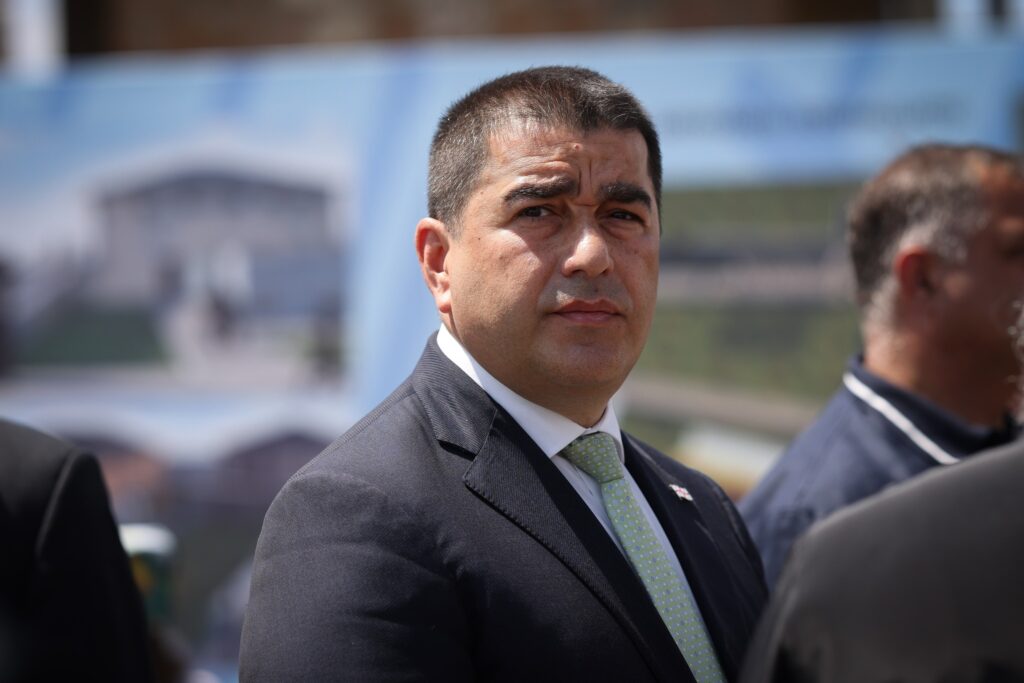
The Speaker of the Parliament of Georgia, Shalva Papuashvili, has referred to individuals convicted for participating in pro-European protests as “prisoners of shamelessness.”
He was referring to the 72 demonstrators who remain behind bars, serving sentences “not only for their own misdeeds.” According to the parliamentary chairman, they remain captives of someone else’s shamelessness—held hostage by those “who first pushed them into committing crimes, then abandoned them to their fate, and are now portraying their very release as a moral betrayal.”
“In connection with crimes committed during the violent demonstrations of 2024–2025, criminal proceedings were initiated against approximately 100 individuals, in addition to the organizers of the violence. Today, 45 of them are free: following guilty pleas, plea bargains were reached with some, while others were pardoned by the president. Seventy-two people still remain in custody. This circumstance raises one key question:
If the authorities’ goal is to lock these people away in prison, as those speaking on their behalf claim, then why are 45 of them free today?
The answer is simple: for the state, these people were never political enemies. They were a blind tool in the hands of irresponsible individuals who first persuaded them that breaking the law in the name of revolution was an act of heroism, then sent them to the barricades, and when the revolution fizzled out and the hour of reckoning arrived, calmly stayed on the safe side of the barricades themselves,” the speaker wrote on his social media accounts.
According to Papuashvili, revolutions require sacrifices, and a failed revolution requires them all the more. And those who ended up as these victims, the parliamentary chairman believes, were precisely those who proved easiest to incite and exploit.
Speaking about the protesters still in prison, the speaker stated that their ongoing detention “benefits precisely those who drove them to the barricades.” These people fell victim to manipulation—first used as “soldiers,” and now as “prisoners.”
“The state’s approach is crystal clear: realize what you were involved in; take responsibility for your own actions; acknowledge the violation of the law, and confirm that this will not happen again. This is not a demand to recant political convictions. It is the acceptance of legal responsibility for specific acts.”
In Shalva Papuashvili’s view, this entails neither humiliation, nor gloating, nor an attempt to demonstrate superiority. “This is a single standard of the rule of law and the principles of a humane state.” What is fundamentally different, however, is the “moral terror currently being waged by those who casually spend their time in Brussels and Tbilisi cafés, lecturing others that they ‘must sit in jail until the bitter end.'” According to the speaker, they need someone in a prison cell to sustain the illusion of external resistance, “stroke their own political egos, and maintain an aura of martyrdom around a failed revolution.”
“Along with the revolution, revolutionary propaganda has also suffered a complete collapse,” Papuashvili added.