


According to the Georgian Young Lawyers’ Association (GYLA), the Council of Europe Commissioner for Human Rights has urged the Georgian authorities, in line with their international obligations, to guarantee a free and safe working environment for the civil society sector.
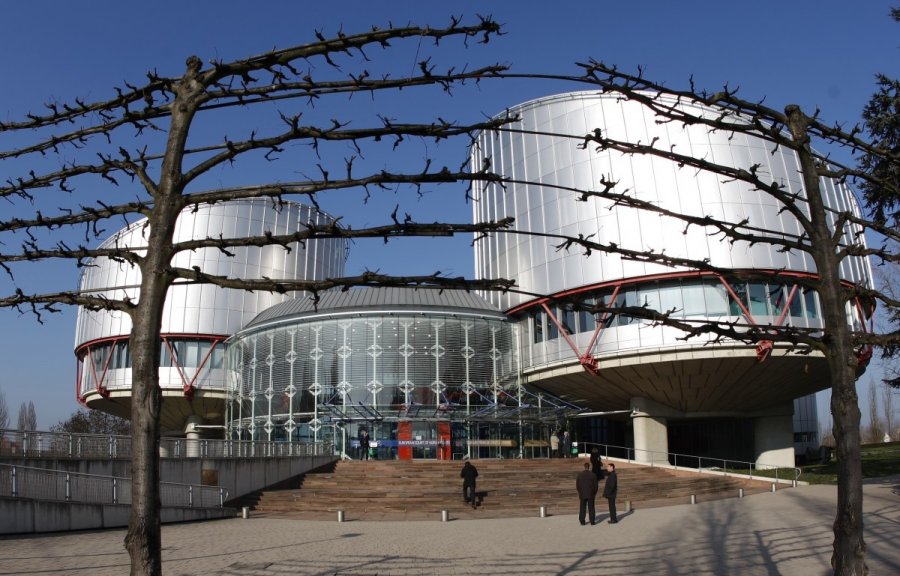
The organization reported that the Commissioner petitioned the European Court of Human Rights (ECtHR) to intervene as a third party in the case concerning the so-called FARA law. He submitted written third-party observations, which, according to GYLA, include not only a legal analysis of the aforementioned legislation, but also a detailed assessment of the legislative developments over the past two years.
GYLA noted that the Commissioner had previously intervened as a third party with his legal position before the ECtHR in the case concerning the so-called “Russian law.”
“The Commissioner considers the adoption of the Law ‘On Registration of Foreign Agents’ to be part of a broader pattern of restrictions targeting civil society, which exerts a detrimental impact on the work of the media and non-governmental organizations operating in the fields of human rights, democracy, and the rule of law. In his assessment, the provisions of the law run counter to the criteria of legality, legitimacy, necessity, and proportionality enshrined in the European Convention (Articles 10 and 11 of the European Convention on Human Rights), as well as the principle of non-discrimination (Article 14). Furthermore, the Commissioner believes that the wording of the law is vague and defines ‘political activity’ overly broadly, blurring the boundary between legitimate international cooperation and covert foreign interference, thereby making it difficult to ascertain who falls within the law’s scope. The Commissioner stresses that the statute establishes a regime of administrative oversight comparable in severity to Russia’s ‘foreign agent’ legislation and provides for criminal liability carrying up to five years of imprisonment for any intentional violation of the established regulations.”
In addition, the Commissioner points out that the use of the term “agent” carries an exclusively pejorative connotation in public perception, and that enacting such legislation leads to the stigmatization of the civil society sector.
The situation is further exacerbated by government rhetoric that portrays non-governmental organizations and human rights defenders as “enemies of the state.” The Commissioner also draws attention to the fact that the law selectively targets specific individuals and legal entities receiving foreign funding, finding such a differentiated approach to be unjustified.
On the basis of these findings, the Commissioner suggests that the Court may regard the enactment of the law as part of extensive restrictions aimed at intimidating organizations critical of the government and discrediting civic activists.
The Council of Europe Commissioner does not view this law in isolation, assessing it in conjunction with other repressive legislative acts. Specifically, approximately six months prior to the passage of the Law “On Registration of Foreign Agents,” the Law “On Transparency of Foreign Influence” (the “Russian law”) entered into force. The latter obliges organizations and media outlets that receive more than 20% of their funding from abroad to register as “organizations pursuing the interests of a foreign power.” The Commissioner underscores that both laws operate in parallel.
Alongside this, it is noted that on April 1, 2025, parliament amended 14 distinct legislative acts, abolishing the mandatory participation of civil society organizations in state decision-making processes. On the same day, amendments to the Law “On Broadcasting” prohibited “foreign powers” from directly or indirectly funding audiovisual broadcasters or procuring services from them, while the National Communications Commission saw its powers expanded to issue warnings, impose fines, and suspend or revoke licenses.
The Commissioner observes that sequential changes have also affected the Law “On Grants”: under amendments adopted on April 16, 2025, foreign donors require government approval to issue a grant, with the receipt of an unapproved grant punishable by a fine equal to double its amount; on June 12, 2025, the definition of a grant was broadened to include technical assistance (the transfer of technologies, knowledge, or expert services); and on March 4, 2026, the definition was expanded to cover any financial or material resources that could be used to influence the government or public, while obtaining permits became mandatory for issuing grants to foreign legal entities whose activities pertain to Georgia. In addition, amendments of March 4, 2026, to the Criminal Code and the Code of Administrative Offences introduced administrative liability for commercial entities engaging in “political activity,” with repeated offenses triggering criminal liability. Penalties of up to six years of imprisonment were established for violations of the Law “On Grants,” and up to 12 years of imprisonment for money laundering aimed at “political activity.”
The Commissioner indicates that parallel amendments also affected the Organic Law “On Political Associations of Citizens”: individuals employed by organizations that derive more than 20% of their annual revenue from foreign sources were barred from joining political parties for eight years following the termination of their employment contracts. Amendments of June 26, 2025, to the Law “On Freedom of Speech and Expression” revised the definition of defamation and shifted the burden of proof from the plaintiff to the defendant, which may encourage self-censorship. Furthermore, against the backdrop of recent protests, parliament rushed through several laws severely curbing freedom of assembly without consultations with civil society or the Public Defender (Ombudsman).
“Consequently, the Commissioner is convinced that robust support for the role and operations of civil society institutions is indispensable for a healthy democracy. The rights to freedom of association and freedom of expression must be firmly protected both in legislation and in the judicial practice of member states. The obligation to uphold and guarantee a safe and enabling environment for civil society and human rights defenders, allowing them to carry out their work without hindrance, was reaffirmed at the highest level in the Reykjavík Declaration in May 2023. The aforementioned legislative changes contradict these principles and pose a threat to democracy. In this regard, the Commissioner calls upon the ‘Georgian Dream’ authorities to guarantee an open and safe working environment for the civil society sector, in accordance with international obligations,” the Georgian Young Lawyers’ Association reported.