


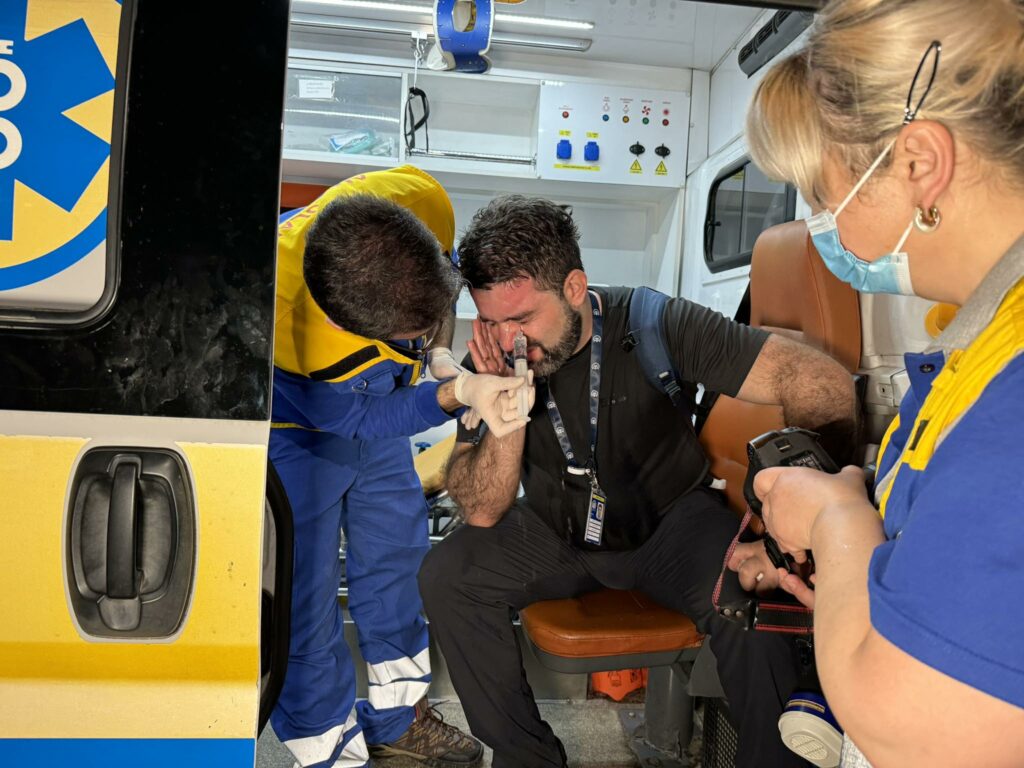
In Warsaw, at the OSCE Human Dimension Conference, a study was presented on the possible use of chemical agents during the November–December 2024 protests in Tbilisi. The study is based on a survey of 523 demonstrators.
Respondents were selected using convenience sampling and snowball sampling methods. Data collection took place in February and March 2026. The survey combined open-ended and closed-ended questions.
The authors of the study asked participants to recall their exposure to chemical irritants, water cannons, and pepper spray during the protests, as well as associated adverse health symptoms.
Only a portion of the respondents possessed laboratory test results or official medical documentation.
The authors also emphasize that the study does not establish a causal link between a specific substance and specific health outcomes, as there was no control group, no independent chemical analysis of the deployed substances was conducted, and it was impossible to determine the exact exposure dose.
65.2% of respondents (341 people) reported attending the protests daily. The highest level of activity was recorded on the night of November 29–30.
As part of the survey, participants detailed the crowd-control weapons used against them:
- 61.4% of respondents (321 people) reported the use of tear gas.
- Direct contact with a water cannon was reported by 33.5% (175 people), and with droplets / water spray by 44.7% (234 people).
- Contact with pepper spray (direct, partial, or a nearby airborne mist) was reported by 53.3% of participants (279 people).
According to the study, 85.6% of those surveyed (448 people) stated that they developed at least one adverse health symptom following exposure.
Respondents drew attention to the residual toxic effects of the substances on clothing and in the environment: for example, when wet clothes were brought home, family members and pets also felt the toxic effects. In addition, protesters noted a greenish-yellow residue left on the streets, which became airborne and caused a recurrent burning sensation in the respiratory tract when people walked past.
33.7% of respondents (176 people) reported that at least one symptom persisted even more than 12 months later.
More than 233 respondents described in detail how their daily lives had changed.
According to their accounts, individuals suffered from reduced productivity and struggled to maintain concentration.
Some lost their jobs or were unable to continue their studies. Among those surveyed were individuals whose career paths suffered directly: for example, a sommelier lost their sense of smell, translators and lawyers were unable to return to their previous work pace, and teachers developed vocal cord problems.
Manifestations of post-traumatic stress disorder, severe depression, and panic attacks were documented. Some respondents noted that the smell of gas, crowds of people, or entering the subway triggered acute anxiety attacks.
According to the study, out of 448 individuals experiencing symptoms, only 149 (33.2%) sought medical care.
Only 63 people (14.0%) had laboratory test results in hand.
Only 53 people (11.8%) obtained an official medical certificate (“Form No. 100” — the statutory medical record extract in Georgia).
The study also reports incidents of violence and mistreatment by law enforcement officers.
According to the data:
- Physical violence / ill-treatment: reported by 39.4% of respondents (206 people).
- Restriction of freedom of movement: affected 56.2% (294 people).
- Administrative fines: imposed on 26.2% (137 people).
- Detention: affected 9.9% (52 people).
The study’s authors point out that the sample was non-random: individuals who suffered more severely from the effects of crowd-control agents or who were more motivated to share their experiences may have been disproportionately represented. Consequently, the findings cannot be extrapolated to all protest participants.
Furthermore, it is noted that the data was collected in 2026, meaning respondents had to recall symptoms and circumstances of exposure more than a year later, carrying a potential risk of recall inaccuracies.
The authors also emphasize that the study does not identify a direct causal relationship between a specific substance and the clinical picture, as there was no control group, no independent chemical analysis of the deployed substances was conducted, and the exact exposure dose received was not established.
The study concludes that the effects of the crowd-control weapons used during the protests are not “short-term or temporary”.
The authors consider it essential to carry out an independent clinical, forensic, and toxicological investigation to determine precisely which substances were deployed against citizens and whether these actions complied with international standards of proportionality and legality.