In recent weeks, complaints from inmates regarding detention conditions and staff treatment have surfaced one after another across Georgia. The allegations involve physical and psychological abuse, unsanitary conditions, and inadequate medical care. The Penitentiary Service denies all accusations, while investigative authorities report finding no evidence of a crime.
The Davitadze Case
One of the most high-profile scandals in recent times centers on the case of Giorgi Davitadze, who alleged sexualized violence at the hands of prison escort officers.
In October of last year, Davitadze was sentenced to 17 years and six months in prison for attempted murder under aggravating circumstances and the illegal purchase, possession, and carrying of firearms. Roughly a year later, media outlets circulated an audio recording of the convict speaking at an Appeals Court hearing: he stated that in December 2025, inside Penitentiary Institution No. 6 in Rustavi, he was subjected to sexualized violence by escort officers in a so-called de-escalation room.
The 36-year-old inmate’s father, Avtandil Davitadze, a former member of parliament from Georgian Dream, demanded an investigation and his son’s transfer to another facility. The family also demands that those involved in the incident be held criminally accountable.
On October 2, Georgia’s Special Penitentiary Service rejected the allegations and released a two-minute, muted video of Davitadze being subjected to a forced search, attributing the use of force to his refusal to comply with staff orders. However, the family stated that the footage was incomplete, noting they had previously been shown approximately 20 minutes of video materials.
Nevertheless, on October 9, the Prosecutor’s Office of Georgia closed the investigation citing the “absence of a crime.” According to the agency, the reviewed video footage, witness testimonies, and forensic reports did not corroborate Davitadze’s allegations.
Allegations of inmate abuse have previously triggered a major political crisis in Georgia. In September 2012, just weeks before parliamentary elections, media outlets aired leaked footage from Prison No. 8 in Gldani showing staff beating, humiliating, and subjecting inmates to sexualized violence.
The release of the footage provoked mass protests, high-level resignations, and became one of the defining symbols of the final weeks of the United National Movement’s rule. Following Georgian Dream’s victory in the parliamentary elections, the new government initiated reforms of the penal system.
Ucha Nanuashvili, who served as Georgia’s Public Defender (Ombudsman) from 2012 to 2017, acknowledges that the reforms yielded tangible results: detention conditions improved, criminal legislation was liberalized, the prison population dropped, and funding for prison infrastructure increased.
However, according to Nanuashvili, the reforms were never carried through to completion.
“Attempts at reform were made, but they were not fully implemented, and soon a rollback began. A few years later, it became evident that the authorities were interested only in cosmetic adjustments rather than systemic transformations—just as happened with the judiciary and other institutions,” says the former ombudsman.
How Georgia’s Penitentiary System Works
Georgia’s penitentiary system consists of facilities with varying regimes and functions. Some are designated for pretrial detainees awaiting court decisions, while others house convicted inmates. At the same time, a single facility can combine both functions. For example, Gldani Prison No. 8 in Tbilisi serves simultaneously as a pretrial detention facility and a closed-type prison, meaning both defendants awaiting trial and individuals already serving sentences can be held there.
Following sentencing, detention conditions largely depend on the facility type and the inmate’s assigned risk category: release preparation units, low-risk, semi-open, closed, and special-risk regimes. Separate facilities are provided for women and juveniles, while inpatient medical care is provided by a specialized medical institution.
The differences between regimes primarily lie in the degree of freedom an individual has to move within the prison and how much time they spend locked in their cells. In facilities with less restrictive regimes, inmates may live in dormitory-style quarters, move within designated areas, work, study, and participate in rehabilitation programs. In closed-type facilities, the cell becomes the primary living space: movement outside is strictly regulated by the schedule and takes place under administrative supervision. The most stringent restrictions apply to inmates categorized as special-risk.
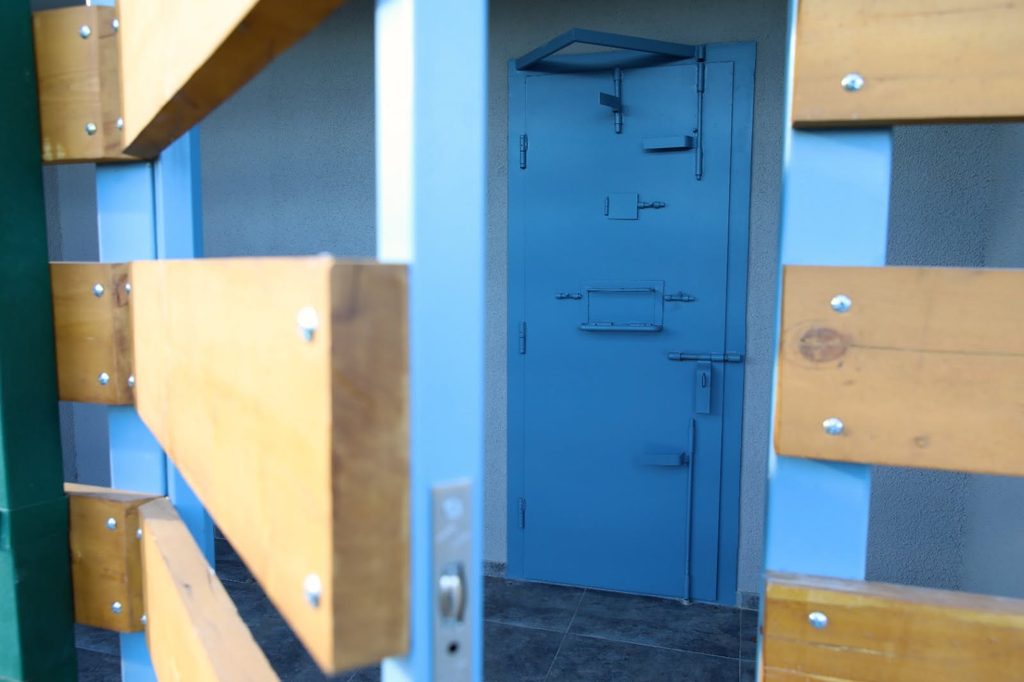
Inside a closed prison, spaces also serve various specific purposes. In addition to standard cells where inmates spend the bulk of their time, there are rooms for medical care, outdoor recreation, visits, and other legally permitted activities. There are also designated rooms for temporary isolation. These can be used as a disciplinary measure or when an inmate poses an immediate danger to themselves or others.
Therefore, the concept of a “solitary cell” requires clarification. Being housed alone in a cell does not automatically constitute disciplinary solitary confinement. It also differs from so-called de-escalation rooms and safe cells—specialized spaces where an inmate may be temporarily placed to prevent violence, self-harm, or other immediate risks. Specific legal grounds and limitations govern each of these forms of isolation.
According to Nanuashvili, one of the primary problems in Georgia remains the informal governance of penitentiary facilities and the influence of the criminal subculture. He also points to the system’s opacity to public monitoring, numerous restrictions on inmates, and inadequate attention to their psychological and social rehabilitation.
The former ombudsman cites personnel policy as a separate issue. According to him, the penitentiary system struggles with staff shortages and low wages, while appointing individuals from the police and other law enforcement agencies to leadership positions can hinder changes in approaches toward inmates.
“It is advisable to avoid appointing officials from the agency responsible for initial detentions to leadership roles in the penitentiary system.”
Nanuashvili also draws attention to the shortage of employment and social integration programs for former prisoners, which, in his view, contributes to recidivism.

What Inmates Are Complaining About
In late September, Archil Muselyants, sentenced to four years for property damage during the 2024 protests, published a letter detailing complaints about detention conditions in Facility No. 8 in Gldani. Similar issues were previously reported by Russian citizen Anastasia Zinovkina, who was sentenced to eight and a half years on drug charges following her arrest amid the protests and is held in Women’s Prison No. 5 in Rustavi.
Sanitary conditions. Muselyants claims that during rain, raw sewage backed up into the quarantine cell through the toilet and sink pipes. According to him, six inmates spent two days in these conditions before being transferred to another room. He also reported dirty mattresses, cockroaches, rats, and inadequate disinfection.
Zinovkina, in turn, wrote of a lack of personal hygiene items, limited access to showers, and the absence of hot water in cells. According to her, inmates suffered from lice, scabies, and fungal infections, while the holding areas where they waited for court transfers were in an unsanitary state.
Nanuashvili notes that similar problems occurred before, notably during the pandemic, when the penal system was virtually closed to external oversight. In his assessment, conditions have been deteriorating again in recent years, and the growing prison population further complicates compliance with sanitary standards.
Medical care. Muselyants recounted running a fever of 38.6°C (101.5°F) and receiving paracetamol only several days later, waiting nearly two months for an ENT consultation, and still not receiving prescribed medications a month later. He cited excessive workloads on medical staff as the primary cause of the delays.
Zinovkina also complained about a lack of necessary medical assistance, claiming that doctors failed to visit her despite repeated requests.
According to Nanuashvili, a shortage of medical and other professionals, including psychologists, existed even during his tenure as Public Defender. While efforts were made to improve the situation, he believes that reforming the medical care system must continue.
The former ombudsman places particular emphasis on retaining qualified personnel, noting that staffing was undermined by politically motivated dismissals.
Restrictions and treatment of inmates. According to Muselyants, following another transfer between cells, he was placed in quarantine for seven days without being informed of the reasons for such an extended stay. He also asserted that de-escalation rooms can be used punitively following conflicts with staff, and that after such incidents inmates face restrictions on phone calls, visits, store purchases, and care packages.
Zinovkina also highlighted how daily living conditions depend on an inmate’s personal finances. According to her, basic essentials such as extra toiletries, food, and stationery must be purchased independently. Following her transfer to a closed-type facility in early 2026, she reported that her phone privileges and visitation rights were curtailed.
Following the publication of Muselyants’s letter, the Special Penitentiary Service stated that his allegations did not reflect reality. The agency attributed the inmate’s frequent cell transfers to conflicts with staff and fellow inmates, and his placement in quarantine to standard procedures.
The agency also rejected claims of unsanitary conditions and inadequate nutrition, asserting that facilities are cleaned and disinfected regularly, and that inmates receive medical care, including referrals to civilian clinics when necessary.
Independent Assessments
On September 28, 2026, the Georgian Young Lawyers’ Association (GYLA) submitted a document to the UN Special Rapporteur on Torture regarding the rising prison population and overcrowding in the country’s penitentiary system.
According to data cited by the organization, in January 2025 Georgia had approximately 232 prisoners per 100,000 residents—one of the highest incarceration rates among Council of Europe member states. By the end of 2025, the prison population reached 11,153 inmates, with marked growth starting in 2024.
At the same time, the system’s overall capacity is formally adequate. The problem is unevenly distributed: according to GYLA data for July 2026, designated capacity was exceeded in four of the 14 facilities surveyed.
In Prison No. 17, overcrowding stood at 1.5%, in No. 2 at nearly 30%, in No. 8 at about 32%, and in No. 15 at nearly 36%. In Facility No. 8, where Muselyants is held, 3,203 prisoners were being detained despite a designated limit of 2,426.
GYLA links the growing inmate population not merely to facility capacity. The organization highlights the extensive use of pretrial detention, insufficient recourse to non-custodial alternatives, and a decline in parole grants and sentence commutations to more lenient measures.
In 2025, pretrial detention accounted for 52.26% of all preventive measures ordered by courts—the highest level since at least 2019. GYLA notes that despite strict legal standards required to justify pretrial detention, judicial decisions frequently rely on generic and abstract reasoning.
Nanuashvili attributes the rise in the inmate population primarily to harsher criminal justice policies, disproportionate sentences, and underutilization of non-custodial measures.
“When the prison population surges and overcrowding emerges, it means substantial shifts have occurred in the country. Above all, this points to tougher criminal justice policies, disproportionate sentences, and a lack of alternative non-custodial penalties.”
According to the former Public Defender, overcrowding carries consequences that extend beyond bed shortages. In large facilities, the grip of the criminal subculture strengthens, pressure on staff mounts, and educational and rehabilitation programs become less accessible.
This takes a particularly heavy toll on sanitary conditions.
“Where 500 inmates were once held, there are now a thousand,” Nanuashvili illustrates, explaining why the existing infrastructure fails to cope with the burden.
He points to the declining rate of parole as another factor. According to figures he cited, 1,279 people were granted early release on parole in 2019, compared to just 195 in 2025.
Nanuashvili also draws attention to the pardon mechanism. He notes that the relevant commission’s operations have become opaque, leaving the public largely in the dark regarding the criteria used to release inmates.
The former ombudsman specifically singles out toughened drug policy. He asserts that more than 5,000 inmates are currently incarcerated for various drug-related offenses. In his view, the state increasingly prioritizes punishment over treatment and addiction prevention.
Nanuashvili stresses that building new prisons will not resolve the crisis without reforming criminal justice policy, expanding alternative sentencing, and restoring viable early-release mechanisms.

Clashes Between Inmates and Prison Administration
Beyond living conditions and overcrowding, relations between inmates and prison staff—including the use of physical force and de-escalation rooms—remain a contentious issue.
In early October, unrest broke out in the Rustavi prison where Giorgi Davitadze is incarcerated. Media reported that inmates protested over his treatment. According to lawyer Daredzhan Sulashvili, six convicts launched a hunger strike in solidarity.
“A commotion erupted in the prison. The facility was literally buzzing…” she said.
The Penitentiary Service, however, denies these accounts. According to the agency, on October 2, an inmate kicked the deputy warden in the stomach. On October 4, two inmates attacked guards following an outdoor exercise session. They were subsequently placed in de-escalation rooms.
In Nanuashvili’s assessment, the mistreatment of prisoners has worsened in recent years. He highlights reports of brutality, intimidation, rights violations, and the alleged misuse of de-escalation rooms.
The former ombudsman pays particular attention to the plight of participants in the 2024–2025 anti-government protests. According to him, mistreatment of detainees took on a systemic character after the events of November 2024, with protesters facing harsher treatment both upon arrest and during subsequent detention.
“Treatment differs both at the time of arrest and afterward. The state shows far greater leniency toward people who do not participate in these protests.”
Comparing the current landscape to his tenure as Public Defender, Nanuashvili notes diminished transparency and restricted scope for independent oversight. In his view, incidents of violence and mistreatment were once largely isolated, whereas in recent years the situation has deteriorated.
Oversight of the Penitentiary System
Inmate grievances, findings from independent organizations, and recent incidents raise a broader question: how effectively do Georgia’s penal oversight mechanisms function?
Prisoners’ rights are monitored by the Office of the Public Defender and its National Preventive Mechanism. Complaints alleging crimes by staff may be investigated by the Prosecutor’s Office, while international evaluations of detention conditions and treatment are conducted by the European Committee for the Prevention of Torture (CPT).
In Nanuashvili’s view, a primary barrier to safeguarding inmates’ rights remains the lack of effective investigations into alleged crimes committed by law enforcement and penitentiary officials.
He recalls that after years of demands from human rights advocates, Georgia established an independent investigative mechanism to examine abuses by law enforcement officers. However, the body was subsequently abolished.
In Nanuashvili’s assessment, this exacerbated the culture of impunity and impeded thorough inquiries into alleged violations.
He considers inmates’ trust in external oversight mechanisms to be equally crucial. When prisoners are confident in the independence of the Public Defender, they file complaints more readily; a lack of trust is directly reflected in fewer submissions.
During his term, the Ombudsman’s Office conducted unannounced inspections, including outside regular working hours. Furthermore, officials could face administrative liability under Article 173⁴ of the Code of Administrative Offenses for failing to comply with lawful requests from the Public Defender. According to Nanuashvili, fines were imposed on penitentiary officials as well.
Ucha Nanuashvili recalls that 10 to 12 years ago, human rights advocates advocated transitioning to smaller penitentiary facilities, categorizing inmates by risk level, and separating members of the criminal subculture to curb their influence over other convicts.
According to him, the state took these recommendations into account during reform planning, yet a complete transition to this model never materialized.
At the same time, the former ombudsman believes infrastructural improvements alone are insufficient. He argues that criminal law must be liberalized, non-custodial penalties more widely applied, and crime prevention, addiction treatment, and social rehabilitation programs expanded.
“The main problem is that the government does not tackle the root causes. It fails to focus on early prevention programs and to address issues such as poverty, unemployment, and social exclusion,” Nanuashvili points out.
In his view, instead of preventing crime and preparing convicts for reintegration into society, the state continues to double down on harsh punitive measures.
Thus, the question of whether the penitentiary system complies with international standards concerns not just detention conditions in individual facilities, but the overarching criminal justice policy: from the grounds for pretrial detention to the pathways for rehabilitation and release.