


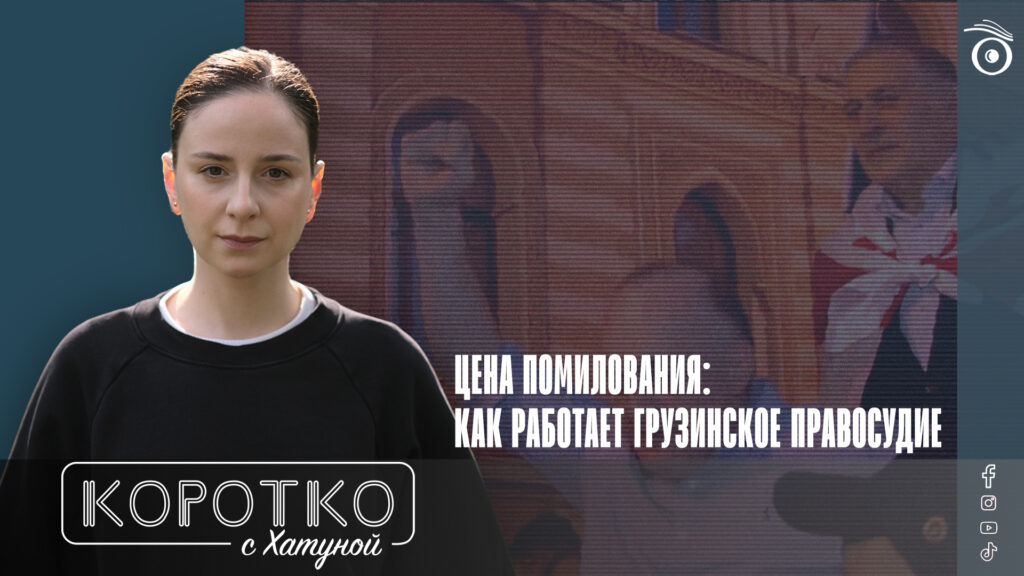
In the coming days, several more defendants in the case concerning the storming of the presidential palace on October 4, 2025, will be released. Those sentenced to prison on charges of an attempted coup d’état continue to sign plea agreements, while the authorities openly declare: repentance is the direct path to freedom. Today, we examine this striking whim of Georgian Themis.
Pro-government media are broadcasting the news: defendants in the October 4 case—Zurab Chavchanidze and Anton Vardanidze—have admitted guilt, expressed remorse, and will soon be free. On Wednesday, Murtaz Zodelava also left a penitentiary facility, and as of the recording of this video on Wednesday, Lasha Beridze is also expected to be released. Activist Nana Sander has likewise entered into a plea bargain. In recent months, such agreements have been concluded one after another.
As a reminder, on October 4, 2025, concurrent with municipal elections, a large-scale protest took place in Georgia, culminating in an attempted storming of parliament, a violent dispersal, and mass arrests. The detainees were accused of an attempted coup d’état and sentenced to prison terms. On the anniversary of these events, the ruling party began cultivating a narrative of humanism. Prompted by the prime minister, who declared that anyone who repents will go free, other members of the ruling party actively joined the chorus.
Levan Makhashvili, Chair of the European Integration Committee, noted that whether the remorse is sincere or not is entirely beside the point; the main thing is that it is formally recorded. Member of Parliament Irakli Cheishvili called the authorities’ decision a “humanitarian act,” while Rati Ionatamishvili, head of the Human Rights Committee, accused the opposition of persecuting its own supporters, alleging that political opponents are pressuring those who have chosen to request a pardon.
Notably, just three weeks ago, the principal defendant in the October 4 case—world-renowned opera singer and opposition politician Paata Burchuladze, serving time for “organizing” the events of October 4—published a letter from prison. In it, Burchuladze took full responsibility upon himself and urged his associates to enter into plea deals. The 71-year-old politician stated: “An agreement with ‘Georgian Dream’ is not repentance, but an opportunity to break free from unlawful detention.”
As SOVA has learned, a similar compromise was proposed to Burchuladze himself. Ivanishvili’s inner circle advised resolving the issue through their wives: Burchuladze’s spouse was recommended to appeal to Ivanishvili’s wife. The opera singer’s wife attempted to persuade him to accept the deal, but Burchuladze took a principled stance, stating that if she ever raised the subject again, their marriage of many years would come to an end.
Observers point to a striking paradox. On the one hand, members of the ruling party cite the rule of law and the inviolability of institutions as their primary goal. On the other, they are willing to release individuals convicted under the gravest charges of an attempted coup d’état in exchange for an apology. This resembles less a system governed by the rule of law and more one where decisions are dictated by the will of a single individual, they add.