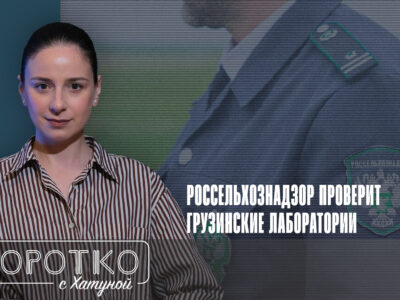


We didn’t ask for it, but it happened anyway. For the first time in his career, Georgia’s fugitive former Prosecutor General has given an extensive interview to a pro-Russian media outlet. For an entire hour, Otar Partskhaladze held forth on why he adopted the surname Romanov, why he went to fight against Ukraine, his stance on Ivanishvili, and who is behind his persecution back home.
To begin with, let us address the evening’s main intrigue.
“As for the choice of surname, I’ll tell you: naturally, I didn’t just choose something out of thin air. My ancestor was Prince Romanov, Saveliy Zakharovich Romanov—my great-grandfather, who served in Georgia. Accordingly, he was a Russian prince, a ‘tavadi’ [Georgian noble title]. I documented and verified everything I could find.”
The interview took place in Moscow, where the former official settled after being placed under U.S. sanctions for collaborating with Russian intelligence services. Back home, he faces multiple open criminal investigations. Late last year, Georgia’s Ministry of Internal Affairs named him the organizer of the murder of Levan Dzhangveladze—the brother of a notorious crime boss—and later charged him with running a protection racket for a network of fraudulent call centers.
Partskhaladze himself denied all allegations during the interview. According to him, he had been on good terms with the murder victim, and the investigation had been fabricated at the behest of “foreign handlers.”
“I wouldn’t say that the state is persecuting me. <…> 4:46 The West didn’t like what I was doing, so they imposed sanctions against me, and that is when everything started. <…> I have no connection to either the murder or the call centers.”
At the same time, the former official openly displays his connections to Moscow. In the interview, he confirmed that he has spent the past four years serving as an expert for the State Duma Committee on CIS Affairs (Commonwealth of Independent States). Furthermore, Partskhaladze spoke about establishing the so-called “Georgievsky” detachment—a unit for Georgian volunteers fighting against Ukraine, formed with financial backing from the Russian Ministry of Defense. Throughout the conversation, he repeatedly urged for closer ties with Russia, describing it as Georgia’s “sole ally.”
A dedicated segment of the conversation was devoted to Bidzina Ivanishvili. The former prosecutor general characterized the oligarch as a “patriot,” adding that they are not currently in communication. Notably, press reports have repeatedly pointed to deep-seated ties of cronyism and godparentage linking the former official to the founder of the ruling party. When the United States placed Partskhaladze on its sanctions list, the National Bank of Georgia retroactively altered its enforcement regulations for international sanctions to shield his accounts and assets.
The hour-long interview with the fugitive prosecutor general aired shortly after the establishment of the “Foundation for the Unity of Russians and Georgians” was announced in Moscow. Its founders include Otar Romanov-Partskhaladze, pro-Kremlin party leader Mamuka Pipia, and head of the Georgian diaspora David Tsetskhladze. The initiative received immediate backing from the Kremlin. Maria Zakharova, speaking on behalf of the Russian Foreign Ministry, voiced readiness to fund and support the foundation’s initiatives, while Vladimir Putin sent Tsetskhladze a personal letter of appreciation.