


This article is part of a partnership with OC Media. You can read the original in English here.
Moscow has recalled its ambassador to Armenia, Sergey Kopyrkin, “for consultations” over Armenia’s relations with the EU. The decision was made the day after the member states of the Eurasian Economic Union (EAEU) urged Armenia to immediately hold a referendum on choosing between the two blocs.
This move comes amid renewed tensions between Armenia and Russia ahead of the parliamentary elections on 7 June.
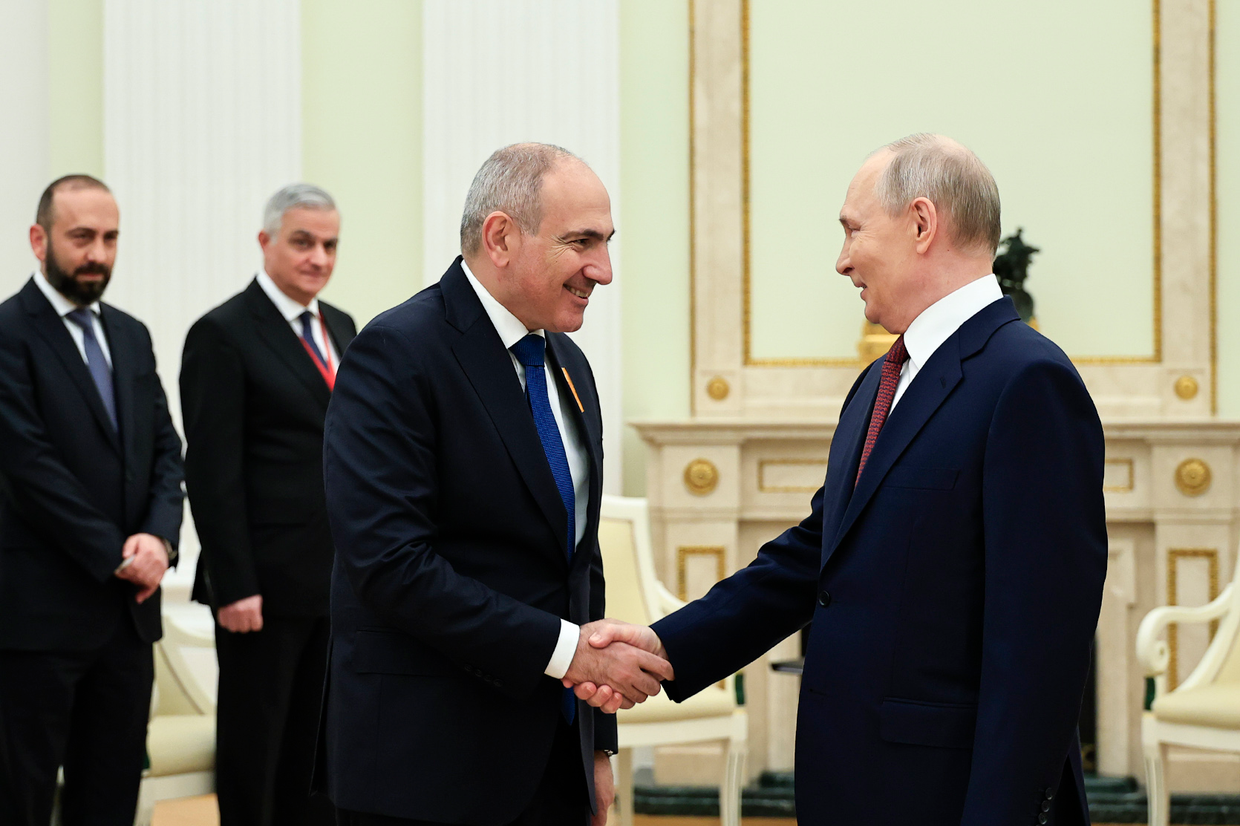
The latest round of friction largely followed a meeting between Russian President Vladimir Putin and Armenian Prime Minister Nikol Pashinyan on 1 April this year, during which Putin expressed a wish for “pro-Russian” forces to be able to “participate in domestic political work during the elections.”
A day before Kopyrkin’s recall, the leaders of Russia, Belarus, Kazakhstan, and Kyrgyzstan adopted a joint statement during an EAEU meeting in Kazakhstan on 29 May, calling on Armenia to hold a nationwide referendum “as soon as possible” on joining the EU or remaining in the EAEU. Armenia was represented at the meeting by Deputy Prime Minister Mher Grigoryan, as Pashinyan was busy campaigning.
The appeal was adopted in light of “significant risks to the economic security” of EAEU member states arising from “Armenia’s preparations for EU accession,” as well as the need to prevent associated damage to the bloc. The leaders also agreed that at the next EAEU meeting in December 2026, member states would present a report on the “possible consequences of suspending” Armenia’s membership.
However, under the bloc’s rules, a country can only be excluded at its own request. This statement came about three weeks after Putin made a similar proposal, suggesting that Armenia’s geopolitical trajectory should be determined by a referendum.
Putin added that if the Armenian people choose the path to the EU, “we will draw the appropriate conclusions and proceed along the path of a soft, reasonable, and mutually beneficial divorce”—remarks that Pashinyan later rejected.
On the same day as the EAEU meeting, Kremlin spokesperson Dmitry Peskov stated that Armenia “cannot and should not” deepen relations with the EU “at the expense of the finances of EAEU countries.”
Armenia rejects call for referendum
On 1 June, Pashinyan rejected the need for an early referendum, noting that his government would continue to work within the EAEU bloc “until a choice between the EU and the EAEU becomes inevitable.”
He stressed that the choice between the two blocs must be made through a referendum, but he saw no grounds for holding one now, as at this stage such a choice remains “theoretical.”
“Until Armenia either officially applies for EU membership or is very close to obtaining candidate status, holding any referendum would be unreasonable,” Pashinyan said. 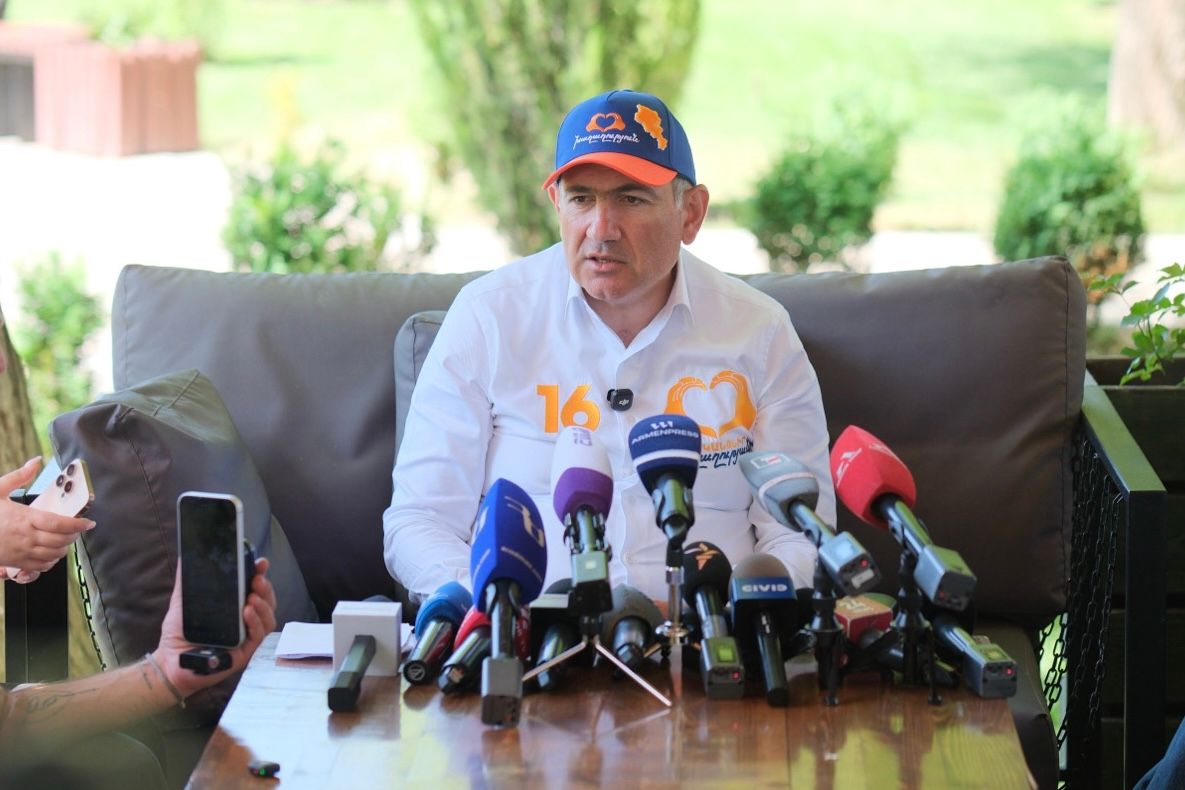
He added that they would continue to work “quietly and steadily, without disputes” within the EAEU.
Pashinyan also confirmed that bilateral relations with Russia are undergoing a “transformation,” while emphasizing that they are “significantly developing and attaching importance to” these relations.
“I consider the transformation stage positive because, yes, in the context of this new situation, we are establishing a new relationship with Russia, and I am sure we will succeed in this,” Pashinyan said.
Pashinyan and Putin later held a telephone conversation during which the Armenian leader “thanked the Russian president for his balanced position on a number of issues of concern, for his friendly tone, and for his support.”
According to the Armenian readout, the interlocutors agreed to “continue discussions at an appropriate opportunity in a meeting format.”
Speaking after the EAEU meeting on 29 May, Putin stated that Russia and Armenia, as well as their peoples, share a “special relationship.” He recalled telling Pashinyan that “whatever is good for Armenians is acceptable to Russia,” adding that any future decision “will not spoil our humanitarian ties, it will not spoil our political ties.”
“But in this case, we are talking about purely economic issues. Everything needs to be calculated, carefully studied, and decided upon,” Putin said.
He also warned of the potential consequences of Armenia leaving the EAEU, including changes to migration conditions, higher railway tariffs, and increased energy prices. According to Putin, such a development could “lead to the loss of at least 14% of Armenia’s GDP.”
His comments came after Russia suspended imports of several Armenian goods, including fruits and vegetables, alcoholic beverages, Jermuk mineral water, and flowers, citing alleged violations.
The restrictions were widely seen as Moscow applying economic pressure on Armenia ahead of the elections, a tool Moscow has repeatedly used. These concerns were further heightened by reports based on an apparent leak of documents alleging that Russia was trying to influence the vote.
The latest such article was published on 29 May. Reuters, citing five Western intelligence officials and leaked documents, reported that Moscow’s plans included “disinformation campaigns in favor of pro-Russian candidates” as well as busing “tens of thousands of Russian Armenians” to Armenia to influence the outcome of the election.