
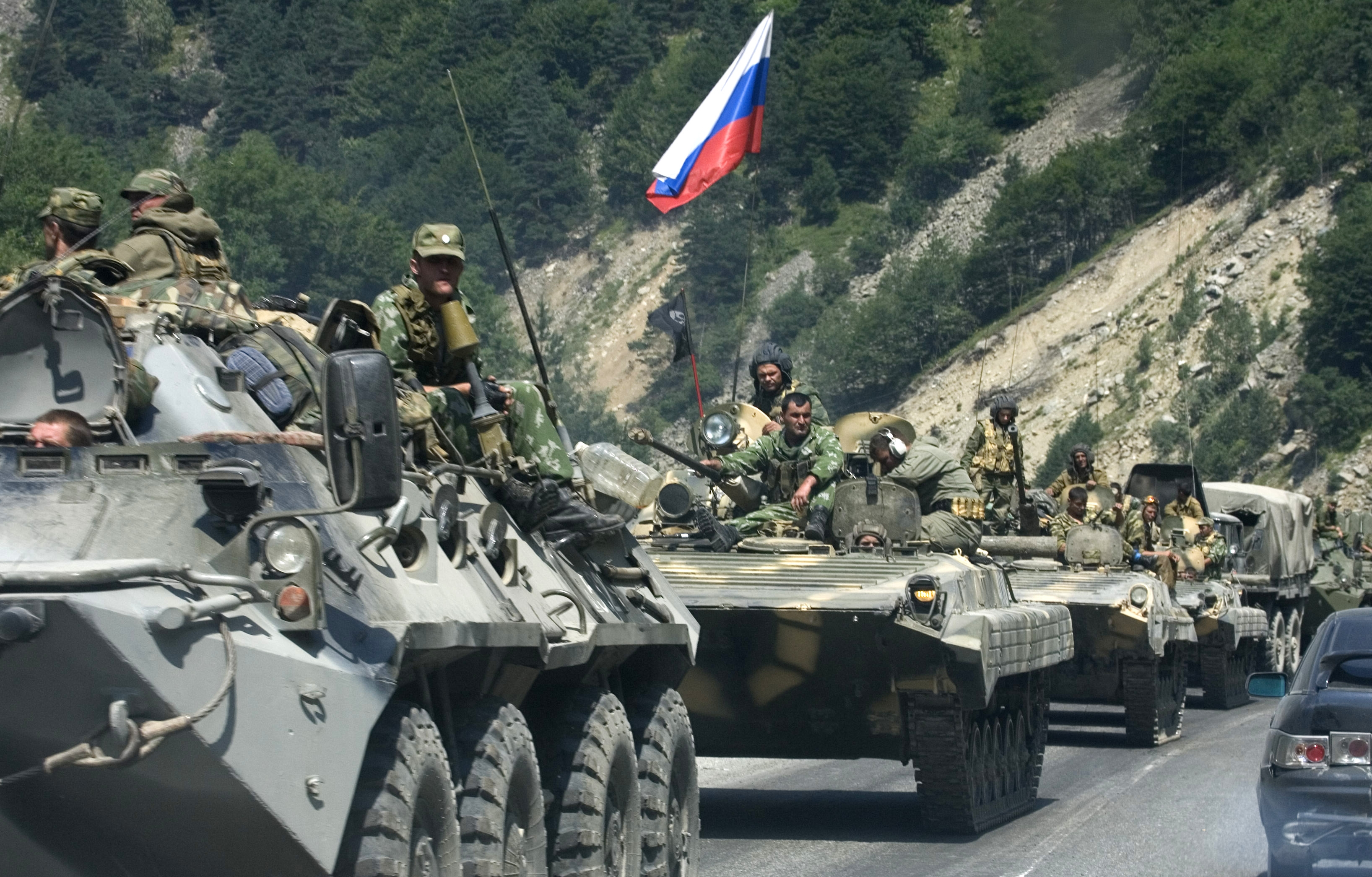

The Georgian Young Lawyers’ Association (GYLA) has submitted 53 complaints to the European Court of Human Rights (ECHR) regarding violations by the Russian Federation of various rights guaranteed by the European Convention during the August 2008 war, according to a statement released by the organization to mark the 18th anniversary of the start of the war.
According to the association, it represents the interests of nearly 400 people affected by the “August War” before the ECHR.
Rulings have already been issued in three of the cases considered, with the European Court establishing human rights violations by the Russian Federation.
The ruling dated 7 October 2025 in the case of Storimans-Verhulst and Others v. Russia examined the killing of Dutch TV cameraman Stan Storimans in Gori.
“The European Court established that the Russian Federation failed to conduct an effective and independent investigation into the circumstances of the journalist’s death and, accordingly, violated the procedural aspect of Article 2 (right to life),” GYLA stated.
The judgment of 23 June 2026 joined two cases: Chikviladze and Antsukhelidze v. Russia and Malachin and Others v. Russia. These concern the torture and murder of Georgian military personnel during the 2008 war. As the Young Lawyers’ Association noted, this decision is of particular significance, as it marks the first time Strasbourg has established a violation of the Convention in connection with events that took place during the active phase of the conflict.
At the same time, GYLA notes that Russia refuses to execute the court’s rulings. On 3 August 2026, the organization appealed to the Committee of Ministers of the Council of Europe, proposing specific mechanisms for the enforcement of ECHR decisions.
The authors of the statement suggest two complementary mechanisms: the creation of a Trust Fund and the application of the principle of “collective enforcement.” The fund could draw on confiscated or otherwise seized Russian state assets, while the second mechanism proposes allowing Council of Europe member states to enforce Strasbourg rulings against Russian state assets within their national legal frameworks.