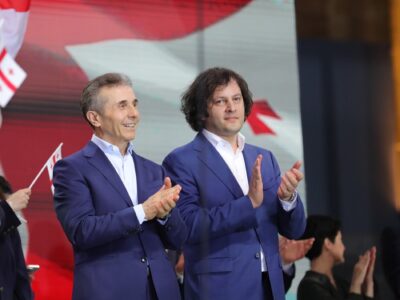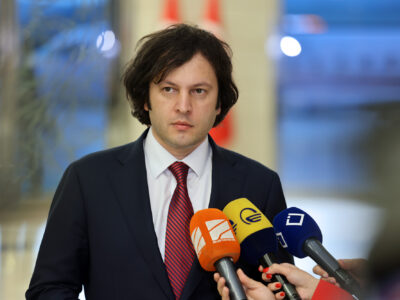

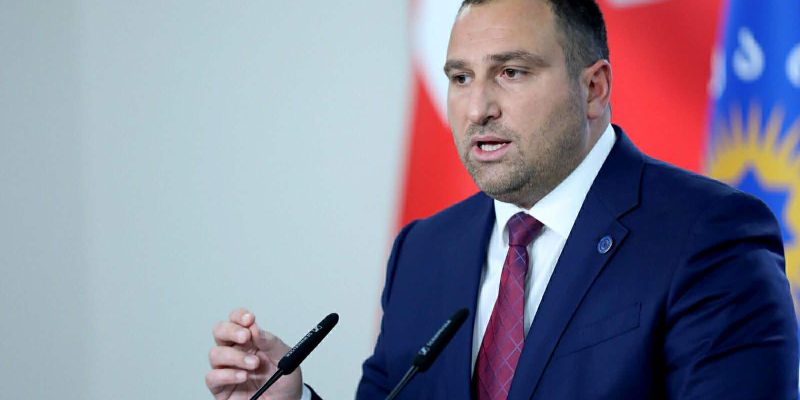

Irakli Kirtskhalia, the leader of Georgia’s parliamentary majority, stated that following the Russian invasion of Ukraine, agents scattered across various parties and NGOs “united and emerged before us as uncompromising fighters against the Russian occupation, Russian tourists, Russian money, and products — in short, against everything that could be associated with Russia.” By posting this statement on social media, he expressed support for the recent open letter by Prime Minister Irakli Kobakhidze.
“Exactly a week ago, the Prime Minister published an extensive analysis highlighting one specific pattern, according to which—for the ‘National Movement’ [United National Movement], its affiliated political forces that colluded with it at various times, and wealthy Georgian NGOs that ultimately turned into a unified agency of the ‘Deep State’—the 2008 war, the occupation of 20% of the country’s territory, the separation of more than 120 villages behind the occupation line, the recognition of the independence of Abkhazia and the Tskhinvali region, approximately 30,000 internally displaced persons in their own homeland, hundreds of dead, and thousands of wounded Georgians were not enough to stoke radical anti-Russian sentiment.
Moreover, shortly after the end of the war, the government of that time began talking about restoring cultural and humanitarian ties with Russia, facilitated the influx of Russian capital into Georgia’s economy and strategic sectors, their leader personally welcomed Russian tourists at the border, after which the visa regime for Russian citizens was unilaterally abolished, and Saakashvili boasted about all of this from international platforms,” Kirtskhalia wrote.
According to the MP, those who today are distinguished not only by anti-Russian sentiment but also directly spread Russophobia did not criticize the National Movement back then. Yet now they fight against everything that might be connected to Russia.
“In his letter, the Prime Minister also asked a rhetorical question: why did these people become Russophobes now, and not when it concerned Georgia? This seemingly illogical situation has a very simple answer that puts everything into a logical framework: neither the National Movement and its allies, nor NGOs, nor specific individuals hiding behind civic activism or academia, were independent in 2008–2012, nor are they today; they are agents left without room to maneuver and slaves obedient to the whip who blindly carry out orders from abroad,” Kirtskhalia wrote.