

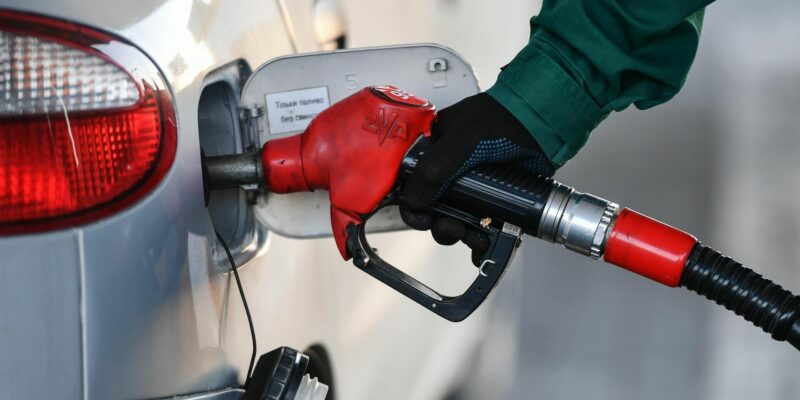

Solidus, a company supplying gasoline to occupied Abkhazia, is negotiating fuel purchases with Georgian suppliers. “Negotiations are ongoing,” the company’s owner, businessman Giorgi Arveladze, told Radio Free Europe/Radio Liberty (RFE/RL).
On August 15, Repsol LLC (Connect), from which Solidus had been purchasing gasoline, stated that it no longer planned to provide “additional supplies” to the company. Like other firms, Connect imports gasoline into Georgia from European countries.
“It is difficult to obtain gasoline on the domestic market. There is no surplus of fuel here either, so finding it is not easy,” Arveladze noted.
According to the businessman, the company has delivered 680 tons of gasoline to occupied Abkhazia to date. Georgian Prime Minister Irakli Kobakhidze also cited this figure during a briefing on August 18.
At the same time, Arveladze called reports claiming that the delivery volume to Abkhazia had reached 3,000 tons a “disservice.”
On August 13, Georgian Dream MP Rati Ionatamishvili wrote on Facebook that 3,000 tons of fuel had been sent to Abkhazia. On the same day, Solidus clarified that the actual amount was 300 tons.
“The press reports about 3,000 tons caused a stir, including in the Gali district. People are asking: where are those 3,000 tons? Creating such false expectations is unacceptable,” Arveladze emphasized.
According to the businessman, the fuel delivered to Abkhaz companies was distributed among Gali, Ochamchire, and Tkvarcheli; however, this proved insufficient to resolve the shortage, as the gasoline was “bought up instantly.”
Sources from RFE/RL’s Georgian Service also confirm the ongoing acute fuel shortage in the Gali district. On social media, some users have suggested that only a minor share of the gasoline transported across the Enguri River bridge actually remained in Gali.
“Daily consumption in Abkhazia is 430 tons. Open sources show how much is coming in from Russia. 680 tons is only a 2–3 day reserve. Abkhaz companies cannot purchase fuel in Russia, which is why the word ‘alternative’ has emerged,” Giorgi Arveladze noted.
He added that it is unknown how long the deficit will persist, meaning efforts to supply gasoline could “continue on a daily basis.”
On August 18, Prime Minister Kobakhidze stated that “the transportation of additional volumes of fuel toward Abkhazia is planned in the coming days, which will allow us to make up for the deficit and completely resolve the humanitarian issue.”
One of the companies in the occupied region supplied with fuel by Solidus is Azid. On August 17, the company released a statement describing the situation on the fuel market as “difficult.” According to their data, gasoline supply volumes via “traditional channels” (namely, from Russia) “do not cover the current market demand.”
“Work is underway on a daily basis to secure additional volumes of gasoline, including from alternative sources. All incoming supplies are dispatched to filling stations as swiftly as possible, with distribution organized to minimize waiting times and shorten queues wherever feasible,” the statement said.
According to Azid, they have managed to secure “additional volumes of gasoline, including from alternative sources.” The company asserts that it is not only operating without a profit, but is also selling gasoline below purchase cost.
As reported by RFE/RL, Solidus is also cooperating with two other Abkhaz companies: Alkhan LLC and the so-called state enterprise AGTK (Abkhazian State Fuel Company).