
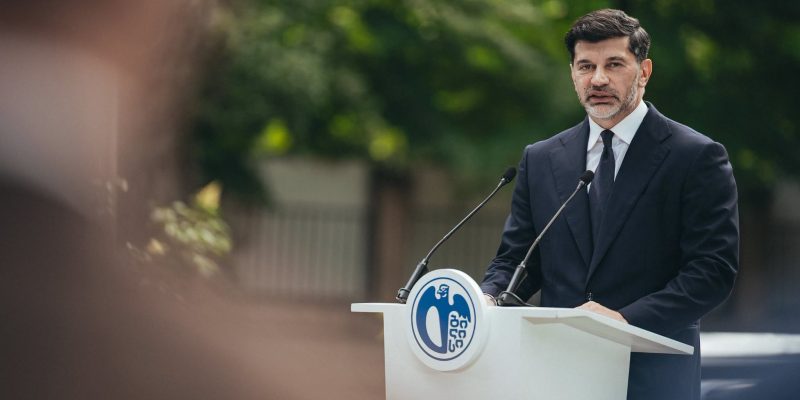

Tbilisi Mayor Kakha Kaladze has apologized to the capital’s residents for the inconvenience caused by the ongoing rehabilitation of Rustaveli Avenue. In a video address, the mayor stated that due to the large-scale nature of the project, Tbilisi faces a challenging period in terms of citywide transit starting in September, which will last for about two months.
“The work we are carrying out here today is extensive and fundamental. We are not merely replacing the asphalt surface, but completely renewing worn-out underground utilities and infrastructure that had remained untouched for decades. I fully understand that all of this comes with serious inconvenience, primarily for the people living in the adjacent area: transit disruptions, noise, dust, and temporary utility interruptions.
In this regard, I want to apologize to each and every one of them and express special gratitude for their patience. The most difficult period is yet to come. Starting in September, most residents will return to the city, the academic year will begin, and vehicular traffic will increase significantly. To be blunt: in terms of transit, Tbilisi is in for a tough period lasting about two months.”
Kaladze “asked every resident of Tbilisi in advance to show patience and understanding toward the ongoing process.” According to him, this is not discomfort “arising from municipal inaction,” but rather “temporary hardships so that in the coming decades we will have a fully modernized Rustaveli Avenue and state-of-the-art infrastructure.”
According to the mayor, city authorities are actively working on optimizing alternative traffic management schemes to minimize traffic congestion as much as possible. He also added that urban development always demands tough decisions, hard work, and patience.
“I want to say candidly: it is impossible to carry out a project of this scale without the city feeling any disruption at all. Therefore, our request is for everyone to be patient together for these two months so that we achieve a result we will all be proud of for years to come,” Kakha Kaladze stated.