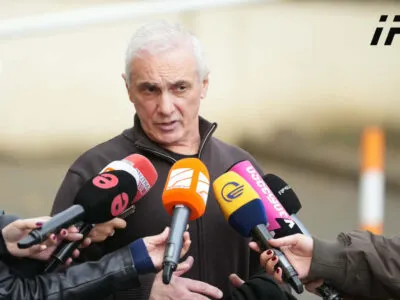

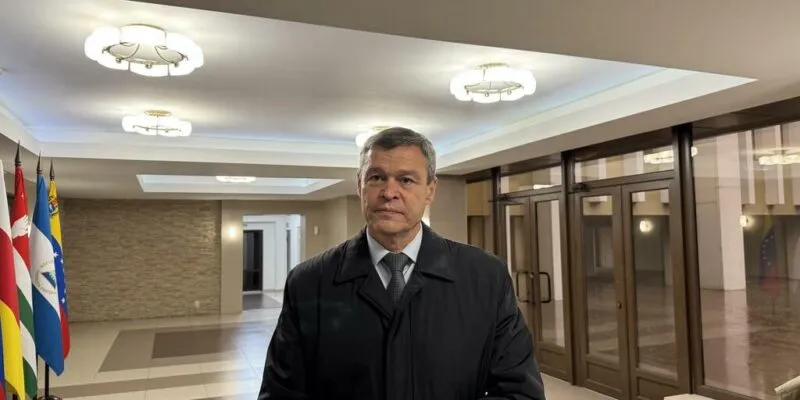

The de facto authorities of South Ossetia continue to seek information regarding the health and fate of local university student Tamaz Goloev, detained by Georgian special services on espionage charges. This was reported to journalists by the head of the Tskhinvali delegation, Yegor Kochiev, summarizing the outcomes of the 135th meeting within the Incident Prevention and Response Mechanism (IPRM). The talks took place today, October 22, in the village of Ergneti.
“At this stage, we are not being given specific answers. We are only informed that court hearings are underway, but the results of these proceedings remain unknown,” Kochiev noted.
According to him, the Georgian side claims that Goloev’s state of health is satisfactory.
“The Georgian side’s assurances regarding Goloev’s good health do not inspire confidence,” said the head of the South Ossetian delegation.
Kochiev expressed hope that representatives of the International Committee of the Red Cross (ICRC) would be able to visit Goloev in the near future.
As a reminder, Tamaz Goloev is a 27-year-old resident of occupied Akhalgori. He studied in Tskhinvali and regularly visited Tbilisi. On April 21, 2026, he crossed into government-controlled Georgian territory through the Razdakhan crossing point, and on April 22, he was detained by officers of the Counterintelligence Department of Georgia’s State Security Service (SSG). On April 23–24, he was charged with espionage, and a court ordered pre-trial detention for two months as a measure of restraint.
According to the SSG, Gagloev was recruited by a foreign intelligence service, operated under an alias, and collected information contrary to Georgia’s national interests in exchange for remuneration—specifically regarding the deployment locations and assets of law enforcement agencies and the positioning of strategic sites, complete with photo and video documentation.
The head of the Social Justice Center, Tamta Mikeladze, previously stated that members of civil society were familiar with Goloev: he maintained ties with Georgian society and was perhaps the only Ossetian from Akhalgori who actively sought such connections. The NGO director noted that, given Goloev’s vulnerable position and past pressure from security agencies in the Tskhinvali region, she finds it difficult to believe he could have carried out serious assignments for foreign intelligence services.