

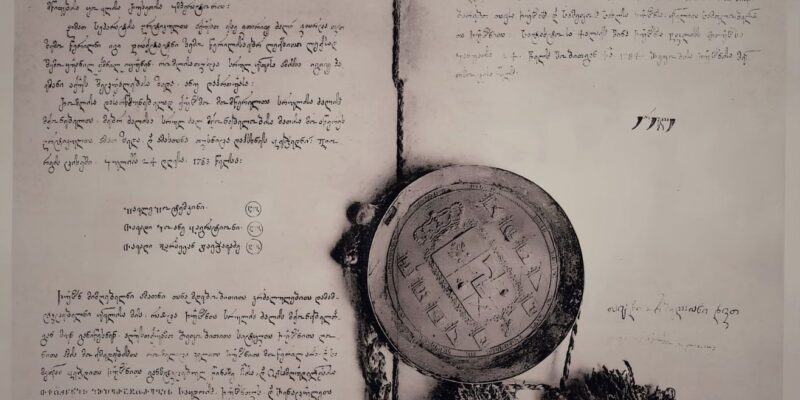

Politicians often turn to contentious chapters of history to justify their present-day decisions. In Georgia, the Treaty of Georgievsk of 1783 has unexpectedly emerged as one such argument. The treaty established a Russian protectorate over the eastern Georgian Kingdom of Kartli-Kakheti, which was annexed by the Russian Empire less than two decades later. The treaty is now being cited by the ruling Georgian Dream party, whose political course is viewed as pro-Russian by sections of the Georgian and international political elite.
Georgia: A Treaty That Never Lost Its Relevance
“A civilisational choice” is how Georgian Prime Minister Irakli Kobakhidze described the 1783 Treaty of Georgievsk. According to his account, surrounded by Muslim states, the ruler of one of the kingdoms of Christian Georgia made a conscious turn toward coreligionist Russia.
These events took place nearly two and a half centuries ago. Yet for modern Georgia, which endured a Russian invasion in 2008 and lost control over 20% of its territory, these words carry a distinct political resonance—especially as diplomatic relations between Tbilisi and Moscow remain severed.
“The fact that today we are an independent, sovereign state founded on traditional European values and traditional European culture is precisely the result of this pragmatic decision made by Irakli II,” the Prime Minister stated.
The Price of Protection
The Treaty of Georgievsk was signed in 1783 between the Russian Empire and the Kingdom of Kartli-Kakheti—an eastern Georgian state ruled by King Irakli II. At the time, Georgian lands were divided among several kingdoms and principalities under constant pressure from more powerful neighbours, Persia and the Ottoman Empire.
Under the terms of the treaty, Kartli-Kakheti became a Russian protectorate. The kingdom’s autonomy in foreign policy was curtailed; in return, the empire pledged to defend it.
According to historian Beka Kobakhidze, subsequent events demonstrated just how unreliable Russian guarantees were. When the army of the Avar ruler Omar Khan invaded Kartli-Kakheti, Russia failed to provide the expected assistance. In 1795, during an invasion by the Persian ruler Agha Mohammad Khan, Tbilisi was sacked.
“The commitments meant to ensure the kingdom’s security proved to be a fiction,” says the historian.
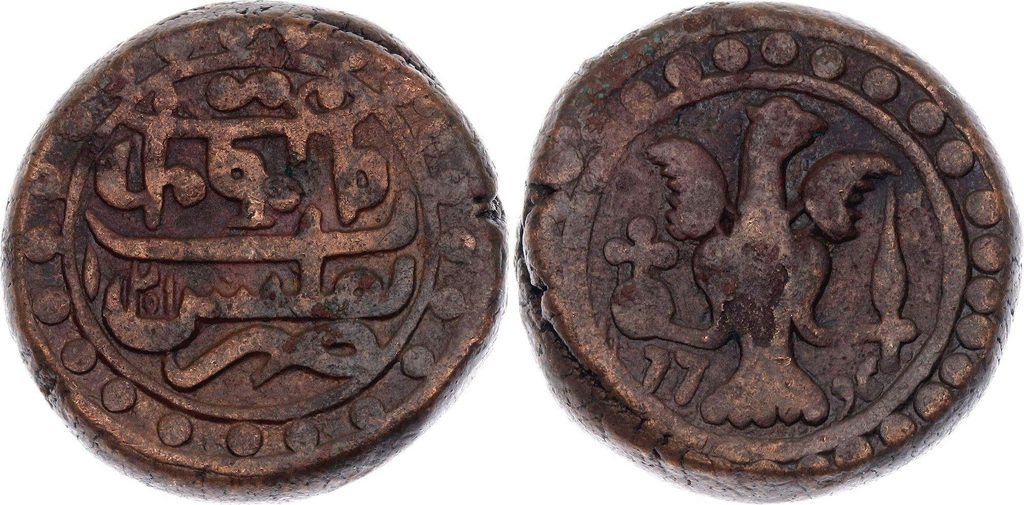
Notably, history has preserved King Irakli II’s own reaction to this betrayal. In 1796, a coin was minted at the Tbilisi Mint depicting a single-headed eagle instead of the familiar double-headed eagle of the Russian imperial coat of arms. Historians interpret this numismatic gesture as a political protest by the Georgian king against Russia’s breach of its obligations.
However, Irakli II died in 1798, and in 1801 Russian Emperor Alexander I issued a manifesto abolishing the Kingdom of Kartli-Kakheti. Instead of the promised protection and preservation of the royal line, eastern Georgia was directly annexed into the Russian Empire. Over the following decades, Russian rule expanded across the remaining Georgian lands.
Propaganda: From Imperial Past to Present Politics
In September 2026, the Hate Speech Department of the Ministry of Internal Affairs (MIA) of Georgia opened an administrative case against activist and blogger Tornike Razmadze. The formal grounds were an insult directed at the Prime Minister.
In the video, the blogger highlighted, among other things, the similarities between statements made by Russian propagandist and editor-in-chief of the state media holding RT Margarita Simonyan, and the head of the Georgian government, Irakli Kobakhidze.
Margarita Simonyan: “After that, King Irakli petitioned on his knees—on his knees—to be taken into Mother Russia. <...> And if there were only 50,000 of the entire ethnic group of Georgians back then, <...> by the time we let them go their own way, into freedom, <...> there were already a million, several million of them. <...> It’s time for everyone to come home, it’s time to be friends with us. And we will yet see new kings named Irakli on their knees again, begging Mother Russia to take them home.”
Irakli Kobakhidze: “Ultimately, the step taken by Irakli II was not merely justified, but the only right and non-alternative decision. <...> Taking into account the Christian factor and several other factors, including the demographic one, Georgia gained a fundamental benefit by concluding the treaty.”
Both statements rely on a common historical premise: an alliance with Russia is framed as a prerequisite for the survival of the Georgian people, while the surrender of political independence is relegated to secondary importance.
As historian Giorgi Ugulava explains, for centuries Russian propaganda sought to adapt Georgian history to serve its own interests.
“Propaganda persuaded Georgians that survival under the protection of a ‘coreligionist’ and ‘more European, more advanced Russia’ was the best possible option,” notes the historian.
Meanwhile, the debate over the treaty has moved beyond re-evaluating the past. Pro-Kremlin political forces in Georgia have begun openly calling for the signing of a “Treaty of Georgievsk 2”.
Thus, an 18th-century accord that promised security to a Georgian kingdom has resurfaced on the political agenda as a potential blueprint for future relations with Moscow.
The Imperial Matrix
Prominent postcolonial theorist María do Mar Castro Varela notes that the notions of “protection” and “salvation” represent a classic colonial discourse. The 1783 Treaty of Georgievsk fits squarely into this global pattern. The Russian Empire, the British Empire, France, the United States, and other colonial powers routinely used such accords with local elites and tribes as legal instruments to establish control. The pattern was consistently replicated: a treaty was concluded at a point when a nation was vulnerable; over time, its terms were rewritten, and commitments were broken.
“When we talk about protectorates during early colonisation, nation-states did not exist; there were territories. <…> We have a very interesting example in New Zealand. It is one of the last countries where a treaty signed in the past still holds legal force.”
In 1840, Great Britain signed the Treaty of Waitangi with Māori chiefs; its English and Māori texts diverged significantly on the transfer of sovereignty. This led to decades of disputes over land rights, resources, and indigenous autonomy. In 2024, efforts to redefine the treaty’s principles sparked mass protests across New Zealand.
“All other known protectorate treaties boiled down to the same thing: ‘we will save you,’ and then [the colonisers] simply took the land. This is a true betrayal—you are betrayed by means of a treaty,” says María.
International law and colonial history feature a concept describing territorial expansion achieved through legal covenants. In critical literature, it is referred to as “legal deception” or “colonialism by agreement.” The term denotes a practice whereby empires expanded their domains not through immediate military conquest, but through the formal signing of treaties, concessions, and protectorates with local rulers.
A Chronicle of Repeated Mistakes
The unreliability of international commitments remains an urgent issue in the 21st century. In 1994, under the Budapest Memorandum, Ukraine received assurances from Russia, the United States, and the United Kingdom respecting its sovereignty and territorial integrity in exchange for relinquishing its nuclear arsenal. Twenty years later, Russia annexed Crimea and launched armed aggression in eastern Ukraine, escalating to a full-scale invasion in 2022.
Although the Budapest Memorandum and the Treaty of Georgievsk differ markedly in substance and legal character, both cases demonstrate the perilous consequences when a stronger state reneges on its obligations.
Yet historical narratives are deployed not merely in political rhetoric. The war against Ukraine has become another arena in which Russia attempts to present Georgians as its allies and weaponise Georgian national symbols in support of its military campaign. While some volunteers fight on Ukraine’s side, Russian state media actively promote the narrative of ethnic Georgians fighting for Moscow.
Prominent in this information campaign is the “Georgievsky” unit, commanded by former Prosecutor General of Georgia Otar Romanov-Partskhaladze, whom US intelligence has identified as an FSB (Federal Security Service) staff officer. Another detachment was named after the Georgian Saint Gabriel. Against the backdrop of talk surrounding a “Treaty of Georgievsk 2,” this public display of Georgian support carries significant political utility for Russian propaganda.
The controversy surrounding the 1783 treaty in Georgia has long moved beyond academic debate. For many Georgians, the Treaty of Georgievsk stands as an enduring cautionary tale of dangerous dependence on an overbearing neighbour. However, figures within the ruling Georgian Dream party increasingly offer an alternative reading—framing it as a pragmatic compromise that ensured the survival of the Georgian nation. Here, security considerations take precedence: the perceived necessity of accommodating a stronger neighbour’s interests to preserve peace. In this light, the contemporary reinterpretation of an 18th-century treaty aligns directly with the current political trajectory of the Georgian authorities.