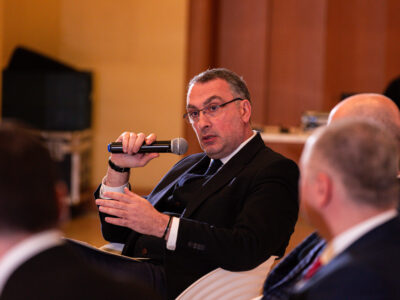

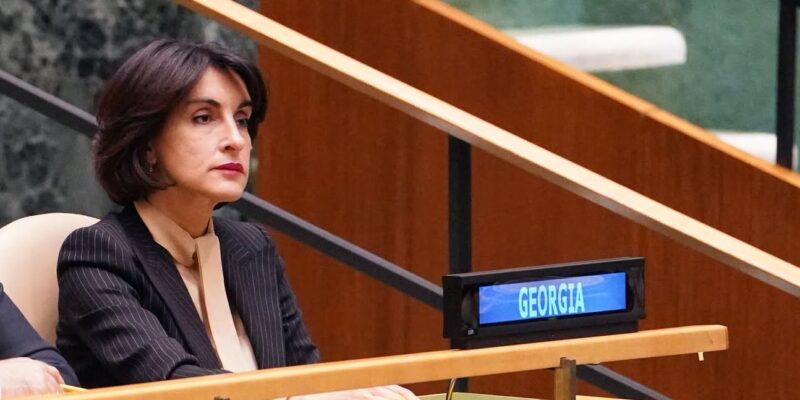

According to Georgian Foreign Minister Maka Bochorishvili, the United States, Ukraine, Russia, Turkey, neighboring states, and the majority of European countries do not oppose Tbilisi’s bid for the chairmanship of the Organization for Security and Co-operation in Europe (OSCE). At the same time, according to the head of the Foreign Ministry, a number of European nations do oppose Georgia’s OSCE chairmanship.
“The issue of the OSCE chairmanship is entering an active phase. The OSCE Ministerial Council meeting is approaching. The organization has no chair for next year, and a corresponding decision has not yet been made. As for Cyprus, last year a decision could not be reached due to Turkey’s position, and everyone is well aware of this. However, we see that certain European states are once again trying to use this matter to stake out a position against Georgia,” Bochorishvili stated.
According to her, Georgia continues to work toward achieving a consensus regarding next year’s OSCE chairmanship.
“Even though a concrete process is underway, we continue working to ensure that a consensus on next year’s OSCE chairmanship is reached. Notably, the countries that play a decisive role in building consensus—such as the United States of America, Ukraine, Russia, Turkey, neighboring countries, and essentially most European nations—are not opposing Georgia’s candidacy. This once again demonstrates that the European Union lacks a unified position even on the issue of disagreement.
Consequently, we have a viable opportunity to continue our work so that the OSCE—an organization of critical importance to us, especially for a country facing severe security challenges—secures a chairing state for next year. And so that this chairing state, should it be Georgia, can contribute effectively to the organization’s work,” Maka Bochorishvili added.
As a reminder, the Georgian authorities have declared their interest in holding the OSCE chairmanship in 2027. In late September, the publication Rapporteur reported that EU member states did not support its candidacy.
The Organization for Security and Co-operation in Europe comprises 57 participating States, including 27 EU member countries. The election of an OSCE chairing country is conducted unanimously (by consensus). Furthermore, all 57 participating States hold veto power. Consequently, if even a single nation objects to a proposed candidacy, the decision cannot be adopted.
The formal decision on the chairmanship is adopted by the OSCE Ministerial Council (which convenes annually, typically in December, at the level of foreign ministers).
When a country is selected to chair the OSCE, that state’s foreign minister assumes the role of OSCE Chairperson-in-Office. The Chairperson-in-Office coordinates the organization’s ongoing political affairs, oversees conflict prevention and crisis management, and represents the OSCE on the international stage.