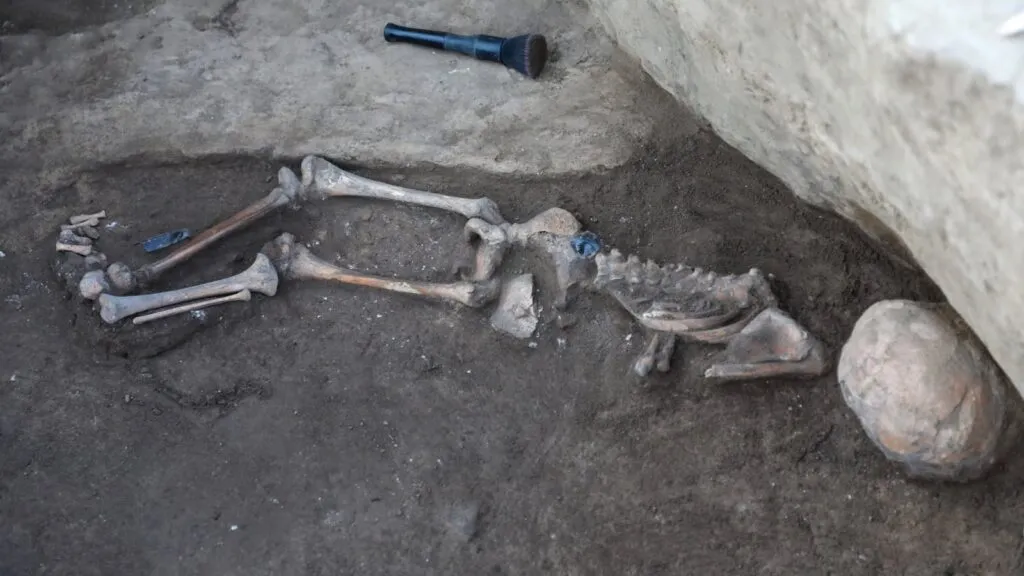


During excavations at the Mashaveras Gora archaeological site, located in Georgia’s Bolnisi Municipality, researchers have unearthed what is believed to be a Neolithic burial containing the remains of a young child.
The discovery holds particular scientific significance, as no burials from this era had previously been found at sites from this period in Georgia. The recovered material requires further scientific analysis, which will help determine the precise significance of the find.
The archaeological work is being carried out by an expedition from the Georgian National Museum, with financial support from the National Agency for Cultural Heritage Preservation of Georgia.
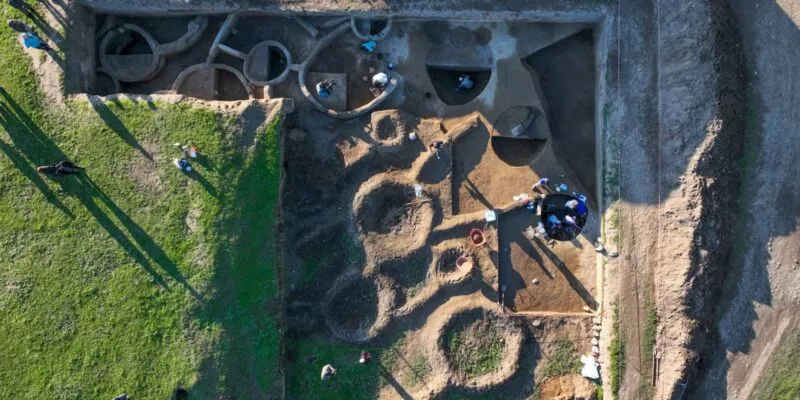
Mashaveras Gora is a settlement belonging to the Shulaveri-Shomu culture (6th millennium BCE), well known in the scientific community. Alongside Neolithic strata, medieval cultural layers have also been identified at the site, testifying to a long-standing human presence in the area.
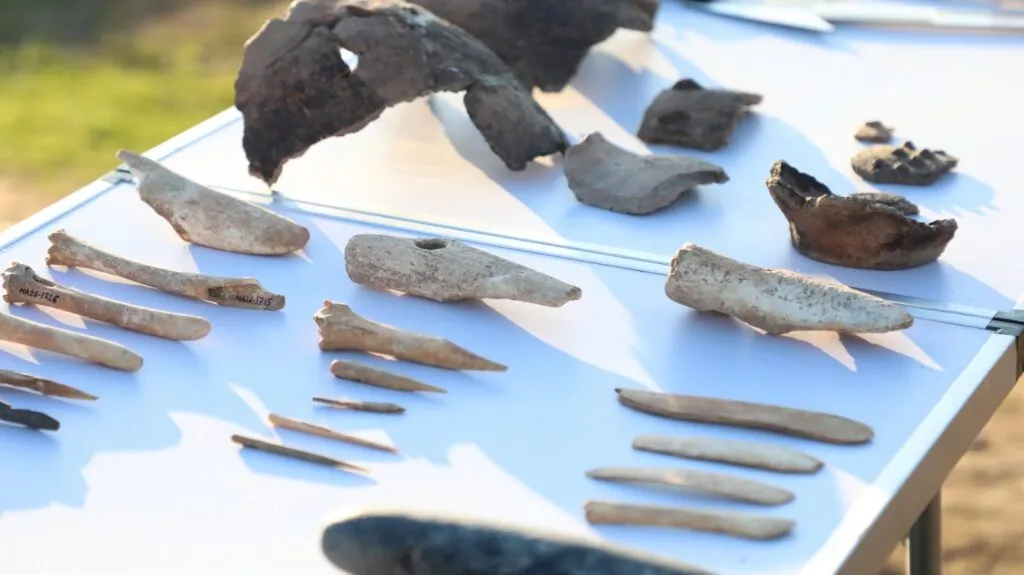
Archaeological excavations at the site have revealed residential and utility structures built of mudbrick (sun-dried clay bricks), characteristic of the 6th millennium BCE and featuring circular and oval layouts. The unearthed artifacts vividly illustrate the daily life and technological sophistication of this ancient farming society.