
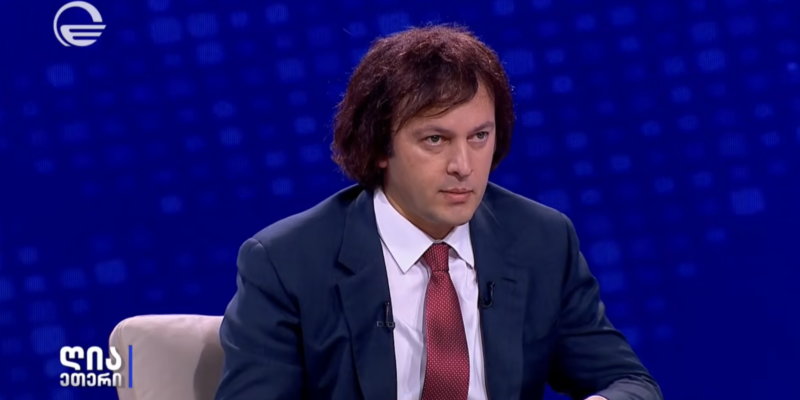

On November 28, marking the second anniversary of his statement freezing the process of European integration, Georgian Prime Minister Irakli Kobakhidze gave an interview to the pro-government television channel Imedi. Appearing on the program “Open Air,” he explained the rationale behind the authorities’ decision, once again accused European bureaucracy of exerting political pressure on Georgia, and stated that over the past two years the government had succeeded in ridding the country of constant “blackmail” over the issue of EU integration.
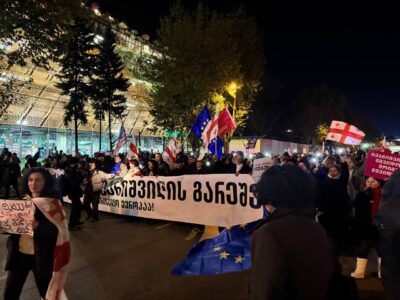
One of the primary topics of the interview was the law “On Transparency of Foreign Influence” (the foreign agents law), enacted in 2024, which triggered mass protests across Georgia. Kobakhidze once again dismissed comparisons between the legislation and Russian laws, asserting that its sole objective was to require non-governmental organizations receiving foreign funding to report to the state.
“Today, everyone already understands that the transparency law had nothing to do with Russia, nor did it violate any legal standards. It stipulated only one thing: NGOs—that is, foreign-funded non-governmental organizations operating in Georgia—were required to submit annual declarations to the Ministry of Justice.”
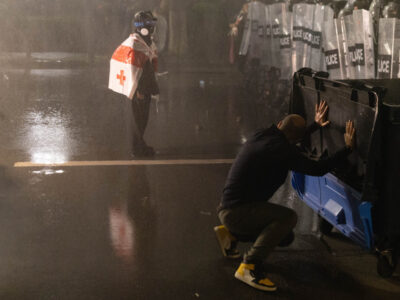
According to him, a campaign based on “completely shameful lies” was orchestrated against the bill. Kobakhidze also linked the protests against the legislation to attempts at revolutionary regime change, characterizing them as two violent attempts at revolution.
Turning to European integration, Kobakhidze claimed that EU candidate status had been used by European officials as an instrument of political pressure on Georgia. According to his account, the struggle to secure the status lasted nearly two years, and the initial refusal to grant it in June 2022 was entirely unjustified and subsequently provoked revolutionary processes.
“Candidate status was used to blackmail the country. This struggle went on for nearly two years, and we managed to secure the status. Once candidate status lost its value as an instrument of blackmail, they granted it to us,” Kobakhidze stated.
The head of government also noted that after Georgia received candidate status, the opening of EU accession negotiations became, in his assessment, the new point of leverage.
Separately, the prime minister addressed his statement of November 28, 2024. Kobakhidze emphasized that this decision did not signify an abandonment of the European path; rather, the government merely declined to unilaterally place the opening of talks on the agenda, seeking to deprive the European bureaucracy of the leverage to pressure Georgia.
“We stated that we would not raise the issue of opening negotiations on our end until 2028. At the same time, we immediately clarified: if they make the decision to open negotiations, we will sign the relevant document immediately. That statement was crystal clear and unequivocal.”
According to Kobakhidze, the authorities’ objective was to stay the course toward EU membership by 2030, while bringing an end to a dynamic where European institutions, as he claimed, could use the accession talks every few months to foment domestic instability.
“We could no longer allow European bureaucracy to exploit the issue of European integration for blackmail. First, it was candidate status, which was used to wear the country down for more than a year and a half. Attempts at revolution were tied to it, and the next tool was the opening of negotiations.”
The prime minister also likened the campaign against the suspension of European integration to the campaign against the foreign influence law. In the five days following his November 28, 2024 statement, highly volatile events unfolded, which Kobakhidze described as yet another violent bid to overthrow the government.
“However, in the end, they gave us the opportunity to calm the country down,” the prime minister said, adding that over the past two years the situation had been significantly calmer than in 2020–2024, directly attributing this stabilization to the government’s decision.