
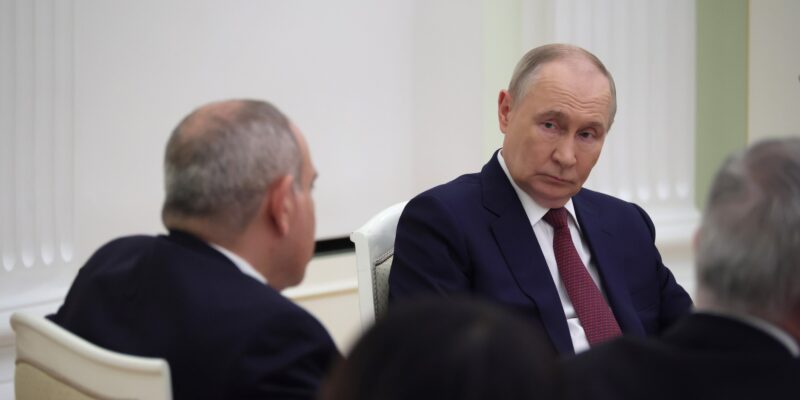


“I assess my visit to Moscow very positively!” Pashinyan said a week after the trip. According to him, during a one-on-one meeting with Vladimir Putin, they agreed on “our future meetings and our events.” In particular, high-level negotiations are scheduled for the “second half of June”—shortly after the elections, in which Nikol Pashinyan clearly does not plan to lose.
Speaking with journalists, the Armenian Prime Minister added that relations with Russia are currently “at a stage of constructive transformation,” and he views this process positively. Separately, Pashinyan commented on his high-profile speech at the Kremlin, emphasizing that he said nothing new there—“you have heard this from me many times.”
Earlier, media outlets assessed the atmosphere of the meeting between Putin and Pashinyan as extremely tense. The Prime Minister touched upon sensitive topics for Moscow, notably emphasizing that there is “a lot of democracy” in Armenia and that social media is “100% free.”
In response to Putin’s request to ensure the participation of pro-Russian forces in the upcoming elections, including those under arrest and holding Russian citizenship, Pashinyan stated that, according to Armenian legislation, individuals with dual citizenship cannot run for parliament or the post of prime minister, and this restriction applies to everyone without exception.
This issue became relevant against the backdrop of the arrest of Samvel Karapetyan—a Russian-Armenian businessman from the Forbes list and head of the Tashir Group. His supporters have formed the “Strong Armenia” party and declared their intention to participate in the elections, viewing Karapetyan as a potential candidate for prime minister.
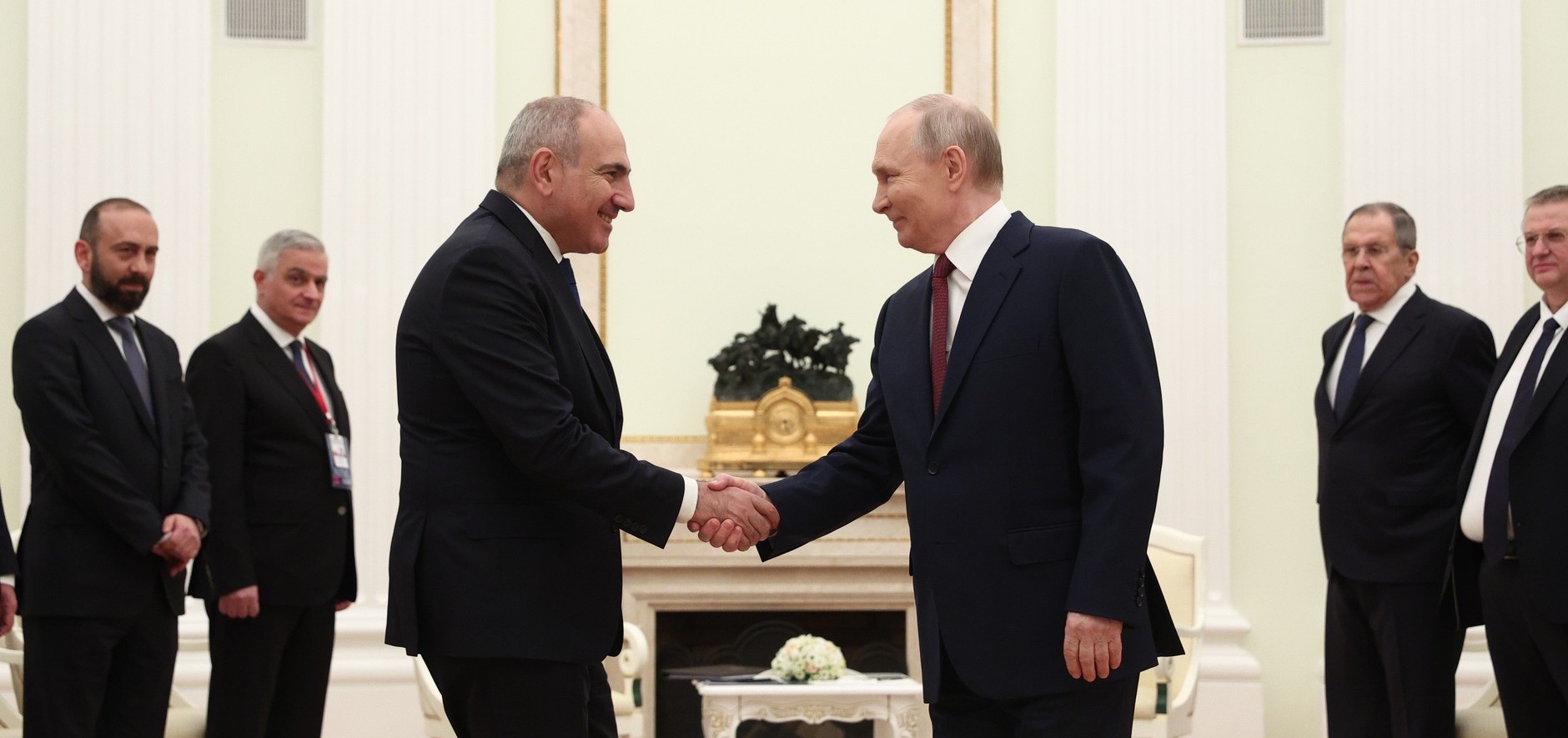
According to the Armenian opposition publication Hraparak, a tougher conversation took place behind closed doors after the official part of the negotiations between Pashinyan and Putin. It is noted that Moscow might exert pressure on Yerevan, as it considers it impossible to reach stable agreements with the current Armenian leadership. Specifically, this could involve potential restrictions on businesses and even cultural organizations.
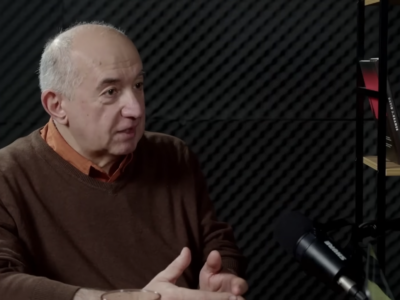
Political scientist Robert Gevondyan notes that some in Yerevan consider the meeting with Putin necessary to adjust the Kremlin’s behavior in Armenia’s internal political processes and to “be able to predict Russia’s relations in the next two months leading up to the elections”:
“There are other people who fear that the visit to Moscow could mean Pashinyan and his government returning to the track of former relations with Russia, which meant that Armenia, in all its foreign policy, would still orient itself more toward the North than the West.”
Tigran Khzmalyan, leader of the European Party of Armenia, belongs to the second group. He metaphorically calls the visit to Moscow “a trip to receive a yarlyk (a mandate to rule).” According to him, what was perceived as “Pashinyan putting Putin in his place” was nothing more than a “staged performance.” Khzmalyan claims that during the time the Civil Contract party has been in power, Yerevan’s dependence on Moscow has only grown:
“Armenia has nearly tripled its dependence… well, it’s called trade turnover with Russia and the EAEU (Eurasian Economic Union). Compared to the pre-Pashinyan period, these figures have tripled. Armenia has not closed a single Russian institution of a well-known nature. That is, Rossotrudnichestvo (Federal Agency for CIS Affairs), all those Houses of Books, culture, and science, which are actually dens for the FSB, GRU, and Russia’s Foreign Intelligence Service, and so on. Armenia doesn’t even mention closing the Russian military base in Gyumri.”
Khzmalyan also added:
“For eight years, Pashinyan has been proving to Putin that he is not an Armenian Saakashvili. <…> Now he is doing a lot to become an Armenian Ivanishvili.”
Political analyst Tigran Avakyan, in turn, believes that Yerevan is not currently in a position where the Prime Minister can choose whether to go to Moscow or not. According to him, Armenia’s dependence on Russia remains significant, largely because previous authorities handed over a substantial part of economic and industrial assets to Moscow, and now Pashinyan has to deal with these issues. At the same time, the expert notes that the Prime Minister’s actions cannot be classified as purely pro-Russian or entirely pro-Western.
“Undoubtedly, there are a number of very serious dependencies on Russia, but Pashinyan works largely within a globalist European and American discourse.”
According to Avakyan, today structures such as the CSTO (Collective Security Treaty Organization) and the Russian military base in Gyumri do not play a decisive role in Armenia’s security, and the Kremlin’s influence will gradually weaken. The expert considers this process natural against the backdrop of the strengthening role of the United States.
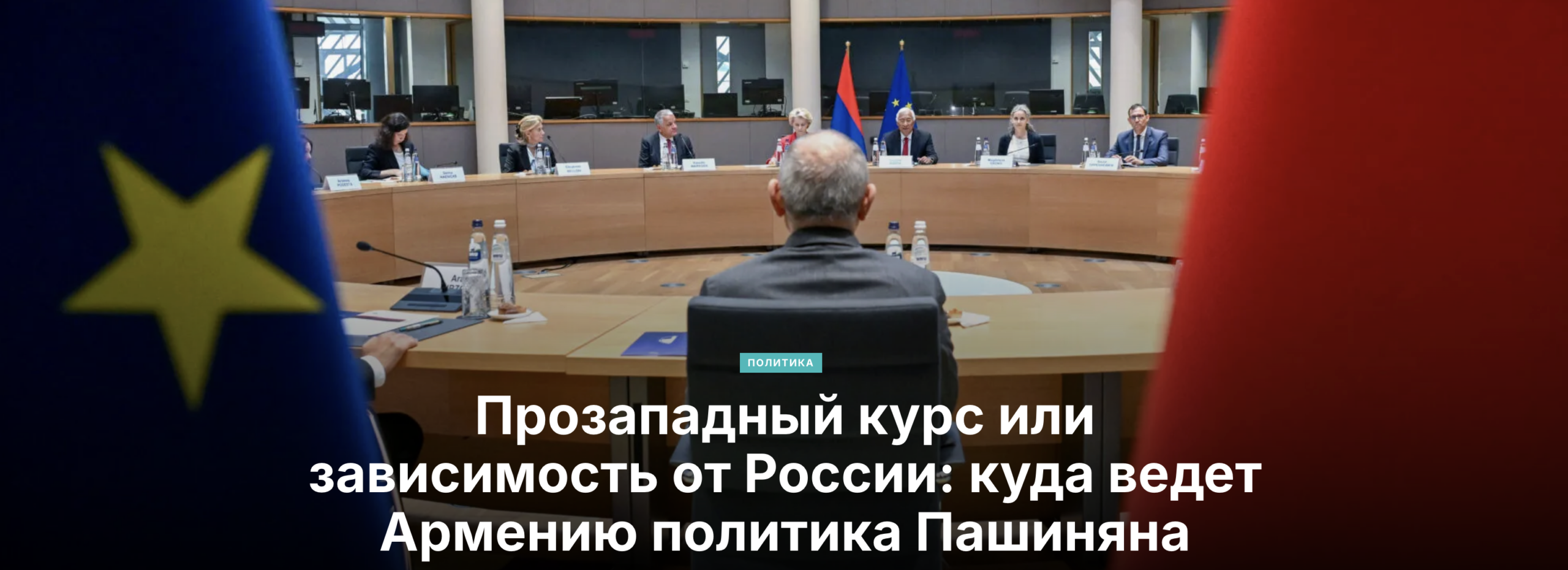
Regarding the EU factor, Avakyan notes that the European Union is not monolithic today: Western, Southern, and Eastern Europe differ in their interests, threat assessments, and political approaches. Therefore, the analyst believes, Brussels itself needs to decide on a unified course.
The expert identifies another problem on Armenia’s path to European integration: the “frozen state of political dialogue between the EU and Georgia.”
Nikol Pashinyan himself, speaking in the European Parliament in March, explicitly stated that the road to the EU for Yerevan passes through Georgia. He called for the restoration of a constructive process between Brussels and Tbilisi.
Tigran Avakyan supports this point of view:
“Any future decisions that give Armenia the opportunity to live, develop, and prosper are exclusively linked to Georgia—and this is interconnected. Armenia and Georgia can only be of interest and survive as a common package. This is the current status quo—with the current control of territories, within current borders, and with current demographics. Therefore, a great deal will depend on changing the format of relations between Armenia and Georgia.”
In Avakyan’s opinion, further European integration for Yerevan is possible only with the deepening of Armenian-Georgian cooperation based on pragmatism and shared historical experience, as no single country in the South Caucasus can ensure its development in isolation.
The political scientist insists that the key condition for any progress toward the EU remains the reduction of external pressure, primarily from Russia. Without the weakening of this factor, it is impossible to speak of full European integration for either Armenia or Georgia:
“For any European integration processes, it is exceptionally important for both Armenians and Georgians to rid themselves of Russian pressure.”
Tigran Khzmalyan, leader of the European Party of Armenia, also believes that Brussels perceives Yerevan and Tbilisi as a single regional case rather than completely autonomous directions:
“Purely pragmatically, neither Armenia without Georgia nor Georgia without Armenia is needed.”
At the same time, Tbilisi’s current political trajectory complicates things (“Georgia is now a vassal, an absolutely undisguised province of Russia; this does not make our life easier”), although it does not completely block Yerevan’s European prospects.
“When people say that Armenia has no border with the European Union without Georgia—geographically, yes. But Armenia has no border with the Eurasian organization or with Russia either.”
Unlike Khzmalyan, political scientist Robert Gevondyan believes that Yerevan’s movement toward the EU inevitably hinges on the issue of physical connectivity with the European space. Here, the choice of route becomes a key factor. Gevondyan notes that theoretically, Armenia has two paths: either through Turkey or through Georgia. But the Turkish direction remains unstable and politically ambiguous:
“Armenian-Turkish relations… are not the relations of the best neighbors.”

At the same time, the expert believes that even a hypothetical opening of the border between the countries does not guarantee accelerated European integration, given Turkey’s own complex and protracted relationship with the EU.
In this context, the Georgian direction is perceived from Yerevan as more predictable and practical. This, according to Gevondyan, explains Pashinyan’s emphasis on the need to synchronize processes:
“Georgia’s prospects are seen as more likely from Yerevan.”
He emphasizes that despite current political deviations, Armenia maintains a calculation that Georgia will return to its European course—primarily based on public sentiment within the country. According to Gevondyan’s assessment, the factor of public demand in Georgia is viewed as a long-term guarantee:
“If not now, then after some time, Georgia will still return to the path that corresponds to the expectations of the people.”
At the same time, the expert believes that Armenia itself will not make any sharp pivots for now and will not go for a complete break with Moscow: “There are red lines that Civil Contract will not want to cross.”
Simultaneously, Gevondyan notes that after the events of 2020-2023 (the Second Karabakh War and Azerbaijan’s incursion into Armenia’s sovereign territory), a steady anti-Russian demand has formed in Armenian society, and its political capitalization is becoming a key resource in the struggle for power:
“The party that can turn these sentiments into votes will have more support in the elections.”
This means that even if Pashinyan retains power, the course toward rapprochement with the West will be gradual and limited. The speed of this process, as Gevondyan emphasizes, will depend not so much on internal decisions as on external factors—from regional security to EU policy and Russia’s actions. Potential pressure from Moscow—from economic measures to political interference—remains one of the key deterrents:
“Whether there will be sanctions, an increase in gas prices, or the closure of Upper Lars—all of this must be taken into account.”
Tigran Avakyan, in turn, notes that Moscow is trying to maintain and expand its influence in Armenia by supporting loyal political forces. According to him, Putin actually used the meeting with Pashinyan in the Kremlin for pre-election campaigning.
Avakyan also warns of a broader set of tools of influence—from economic pressure to working with pro-Russian networks within the country:
“Russia will use all available tools to maintain control.”
At the same time, according to his assessment, this is not about total dominance, but an attempt to secure a critical level of influence that will allow Moscow to block Armenia’s further rapprochement with the West.