

Speaker of the Slovak Parliament Richard Raši stated that Slovakia supports the sovereignty and territorial integrity of Georgia within its internationally recognized borders. The politician made this statement during a joint briefing with the Chairman of the Parliament of Georgia, Shalva Papuashvili. Speaking on Georgia’s European integration, Raši stated that Slovakia is ready to share its own experience of joining the EU and to support Tbilisi in the European integration process at the expert level. He emphasized that Slovakia’s official approach is based on supporting strategic dialogue, which he described as a more effective tool than sanctions, as sanctions, in his words, worsen people’s lives. “We believe that the best path is dialogue, not sanctions, regardless of […]
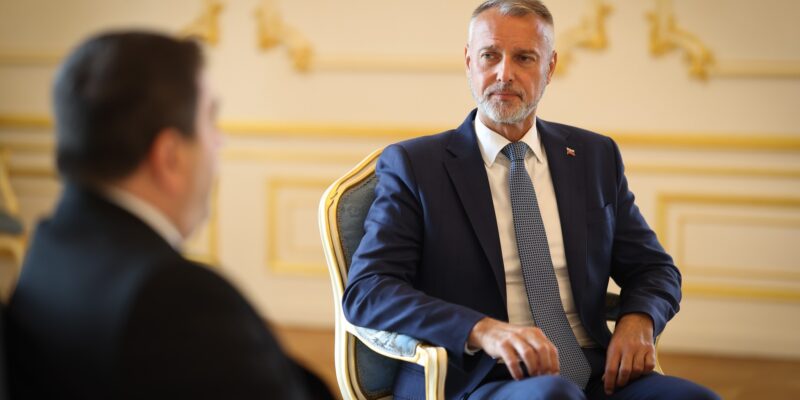
Speaker of the Slovak Parliament Richard Raši stated that Slovakia supports the sovereignty and territorial integrity of Georgia within its internationally recognized borders. The politician made this statement during a joint briefing with the Chairman of the Parliament of Georgia, Shalva Papuashvili.
Speaking on Georgia’s European integration, Raši stated that Slovakia is ready to share its own experience of joining the EU and to support Tbilisi in the European integration process at the expert level.
He emphasized that Slovakia’s official approach is based on supporting strategic dialogue, which he described as a more effective tool than sanctions, as sanctions, in his words, worsen people’s lives.
“We believe that the best path is dialogue, not sanctions, regardless of the field the issue concerns. Dialogue helps, whereas sanctions damage people’s lives. We want to continue supporting your country and strengthening cooperation,” the Slovak politician stated.
The Speaker of the National Council of Slovakia noted that Georgia plays an important strategic role in the region and serves as a significant transport corridor—Georgia is vital as a transit country for energy resources and international shipping, especially amidst the war in Ukraine and instability in the Middle East.
According to him, Slovakia is interested in reliable and secure transport routes and values Georgia’s efforts to diversify resources.
Raši confirmed that Bratislava will continue to support Georgia through various grant programs, with the volume of cooperation between the countries totaling approximately 1 million (the currency was not specified in the statement). The politician noted that relations between the countries have intensified thanks to high-level visits, ministerial work, and the establishment of an intergovernmental commission.
The politician also noted the development of direct air links, which has simplified travel between Slovakia and Georgia, as well as existing programs for Georgian students, which are planned to be expanded. According to him, the potential for cooperation remains significant, particularly in the fields of education, culture, and youth exchanges.
In conclusion, Richard Raši noted that Slovakia is interested in further strengthening cooperation with Georgia, especially in the spheres of culture, youth, and the economy.
It should be noted that Bratislava is considered a less pro-Russian ally of Moscow than the Hungarian authorities under the rule of Viktor Orbán. However, the Slovak authorities also maintain a more lenient and “pragmatic” position regarding the Kremlin.
Within the country, part of society supports a hard line against the Russian Federation, while another part favors a “realistic dialogue” and reduced confrontation. This is why the words of Slovak politicians stating that “dialogue is better than sanctions” are seen today as a reflection of the current course of Robert Fico’s government.
Regarding relations with Georgia, there is no particularly close strategic alliance between the countries, such as Georgia has with some Baltic states or Poland. Relations with Bratislava are stable, friendly, and gradually developing.
Bratislava advocates for Georgia’s rapprochement with the EU.
For Tbilisi, Slovakia is among the EU countries that do not take the harshest line toward the Georgian leadership.