






As Yerevan prepares for the elections scheduled for June 7, Moscow is actively working to influence the outcome of the vote. It is all following a well-worn playbook: economic sticks, threats, fake news, a disinformation campaign against the undesirable Pashinyan, and, of course, soft power. The Insider has published a new investigation detailing the Kremlin’s large-scale special operation in Armenia and its perpetrators.
Following the high-profile failures of Kremlin political strategists in Moldova and Hungary, Moscow has thrown all its remaining resources at Yerevan. The main goal is to derail the victory of the *Grazhdansky Dogovor* (Civil Contract) party of incumbent Prime Minister Nikol Pashinyan, who has set a firm course toward the EU and the US. This interference has four distinct pillars: handlers in the presidential administration, diplomatic pressure from the MFA (Ministry of Foreign Affairs), an intelligence spy network right in Yerevan, and a reliance on pro-Kremlin oligarchs.
According to The Insider, the information campaign against Pashinyan is coordinated by a specially created Presidential Directorate for Strategic Partnership. It is headed by Vadim Titov, a protégé of Sergey Kiriyenko. The direct handlers for Armenia are career *siloviki* (law enforcement and security officials): Valery Chernyshov, a GRU (Main Directorate of the General Staff) officer who previously trained saboteurs in military intelligence special courses, and Dmitry Avanesov, an FSB (Federal Security Service) colonel and specialist in national security threat assessment.
Through the MFA, the operation is led by Mikhail Kalugin, a highly notable figure: he was once expelled from Lithuania on suspicion of espionage, and his name later surfaced in the US in connection with the investigation into interference in American elections.
In Yerevan itself, an entire intelligence network is allegedly operating under diplomatic cover. It is headed by Alexey Myshlyavkin, who officially holds the post of trade representative. According to the investigation, compromising material is being gathered on Pashinyan, who has been assigned the codename “Boroda” (Beard) in Moscow.
Other notable participants include GRU officer Vyacheslav Proshkin, seconded to the Metsamor Nuclear Power Plant from Rosatom; FSB General Sergey Kivachuk, who not only spies on the Armenian authorities but also conducts operational surveillance on Russian emigrants (*relokanty*) who fled the country; and FSB officer Sergey Kucheruk, who was caught gathering compromising material on Kristinne Grigoryan, the head of Armenia’s Foreign Intelligence Service.
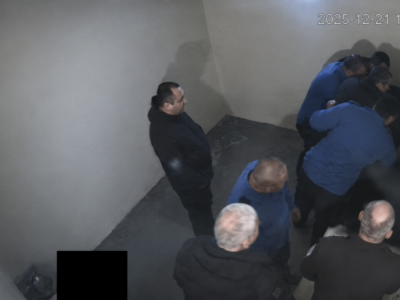
Whom is the Kremlin betting on? The Insider reports that Moscow is promoting its own candidates as a counterweight to Pashinyan. The first is billionaire Samvel Karapetyan, founder of the “Strong Armenia” bloc. Journalists discovered that in leaked databases of the Russian Ministry of Internal Affairs (MVD), his archived file lists “IC FSB” (Information Center of the Federal Security Service) in the “place of employment” column—a designation typically used for agents or foreigners under Lubyanka’s control. Currently, Karapetyan is under arrest in Armenia for calling for a seizure of power. Moscow’s second candidate is the leader of the “Prosperous Armenia” party, Gagik Tsarukyan—a character with a highly colorful past: in the Soviet era, he was convicted of robbery and rape. Today, his party officially cooperates with *Yedinaya Rossiya* (United Russia), and journalists found budgets for funding his past election campaigns in Kremlin archives.
According to other reports, another Moscow proxy is the head of the so-called Karabakh clan, former Armenian President Robert Kocharyan.
By all appearances, for the Kremlin, the elections in Armenia are a “final battle” for influence in the region. Meanwhile, some experts note that for the majority of the Armenian population—whose interests the Kremlin classically claims to defend—Moscow’s frantic efforts provoke nothing but irritation.