

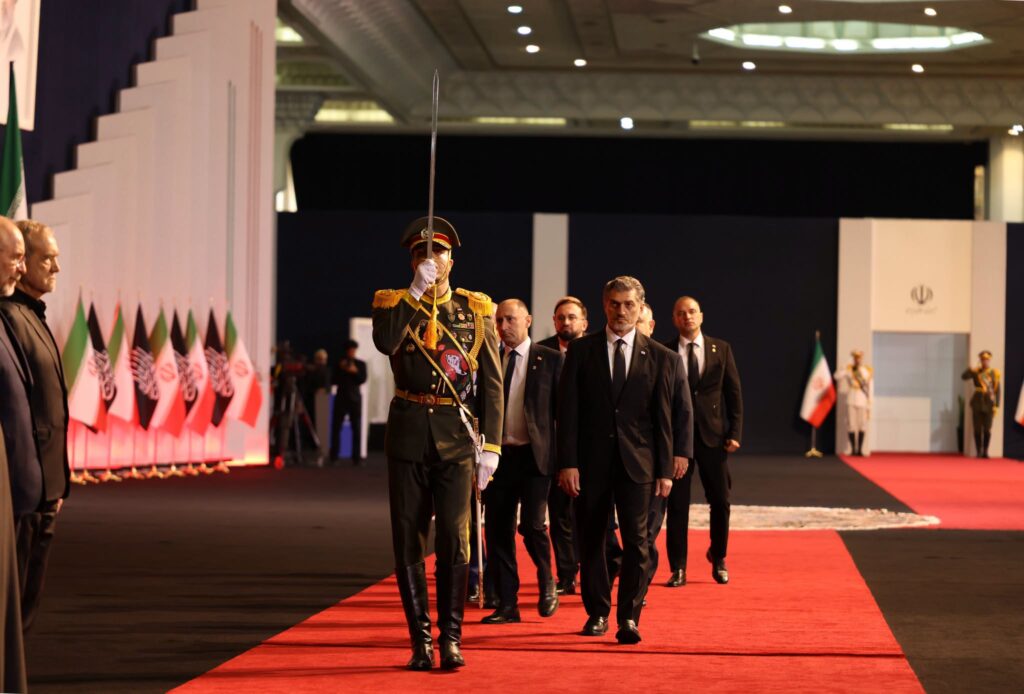
The funeral of Iran’s Supreme Leader Ali Khamenei was more than just a mourning ceremony. For Tehran, it was one of the largest political events since the war with the US and Israel – a moment when the Islamic Republic sought to show the world that, despite a blow to the very center of power, it had not lost control, was not isolated, and remained capable of gathering allies, partners, and neighbors around itself. Among the latter was the President of Georgia.
International media are paying attention not only to the scale of the farewell ceremony, but also to its political significance. Reuters describes the funeral as a demonstration of national unity and resilience in the face of US and Israeli pressure, as well as a signal that Iran intends to participate in shaping a new regional order after the war. The Guardian writes about the processions of thousands and millions in Tehran as a combination of mourning, mobilization, and a political message: the state sought to show that Khamenei’s death was not the beginning of the system’s collapse, but rather an occasion for consolidation.
For Iran, the list of foreign guests was no less important than the ceremony itself. Al Jazeera reported that representatives from more than a hundred countries were expected at the funeral, while Euronews highlighted the absence of Western leaders and the presence of delegations from countries that maintain or develop relations with Tehran. This turned the ceremony into a kind of diplomatic map: who is ready to stand publicly alongside Iran after the war, and who prefers to keep their distance.
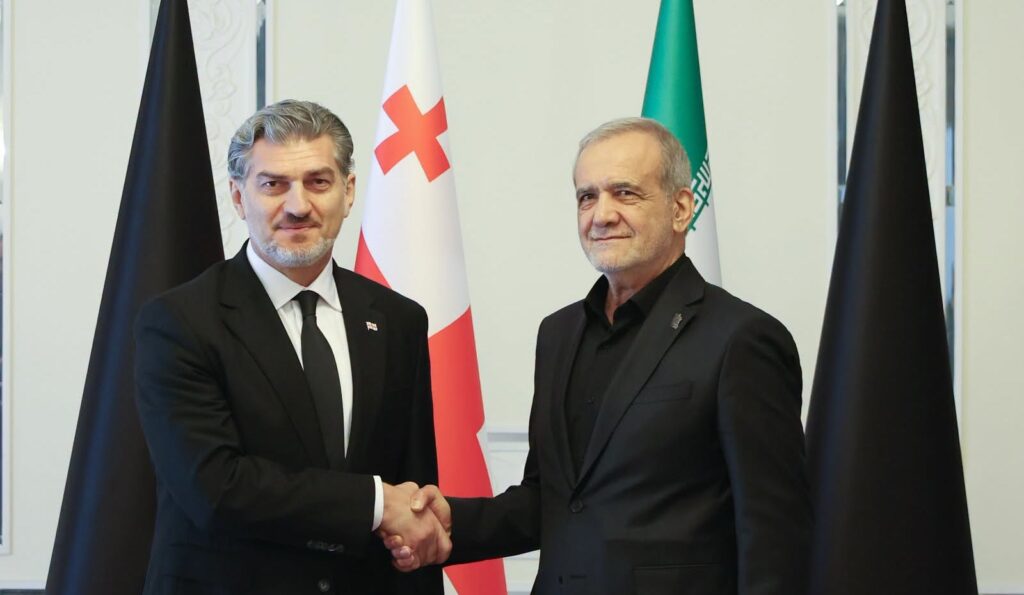
Against this backdrop, the participation of Georgian President Mikheil Kavelashvili in the farewell to the Iranian Ayatollah attracted particular attention in Tbilisi. He took part in the mourning ceremony and met with the President of the Islamic Republic, Masoud Pezeshkian. For official Tbilisi, this was presented as part of regional diplomacy: Georgia, as a neighbor of Iran and a South Caucasus nation, maintains channels of communication with a key regional player.
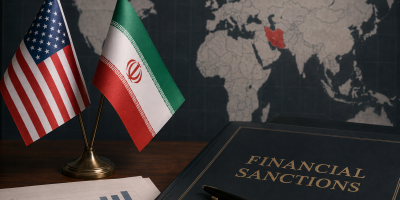
However, domestically, the trip drew sharp criticism from pro-Western political forces and parts of the expert community. The reason was not just the fact of attending the funeral itself. The visit took place against the backdrop of a sharp cooling of Georgia’s relations with the US and the European Union, accusations of backsliding from a pro-Western course, and Washington’s growing attention to Tbilisi’s ties with undemocratic regimes. In June, US Secretary of State Marco Rubio, responding to a question from Congressman Joe Wilson, spoke of the need to change the trajectory of relations with Georgia and Tbilisi’s “behavior.” Wilson himself had previously called the Georgian Dream government a “pro-Iranian regime” and accused it of helping Tehran evade sanctions—characterizations that Tbilisi rejected as groundless.
It is also important that Georgia was not the only South Caucasus country represented at the farewell ceremony. Representatives from Armenia and Azerbaijan also arrived in Tehran. This is precisely how the Georgian authorities justified the legitimacy of the visit: Georgian Dream MP Zviad Shalamberidze stated that the leaders of the South Caucasus and the Vice President of Turkey were traveling to the funeral together, and there was “nothing unusual” about it. For the ruling party, this was an argument that Tbilisi was not acting in isolation, but in accordance with regional protocol.
But for critics, the problem lay elsewhere: when Western leaders are effectively absent from the ceremony, and the President of Georgia is among those publicly paying respects to the Iranian leadership, this gesture is inevitably read not just as diplomatic protocol, but as a political signal. This is especially true at a time when Georgia officially continues to declare European integration, but in practice increasingly finds itself in the same information bracket as states antagonistic to the West.
To understand why the visit became so sensitive, it is important to look at the dynamics of Georgian-Iranian relations over the last two decades. After the Rose Revolution, Tbilisi’s foreign policy was clearly oriented toward the US, NATO, and the EU. Under Mikheil Saakashvili, Georgia sought to integrate as much as possible into the Western security system, while Iran was perceived primarily as a complex but inevitable regional neighbor. At the same time, contacts with Tehran were never severed.
Moreover, even then, experts argued that the country needed to conduct a pragmatic dialogue with the Islamic Republic, moving beyond stereotypes. In 2007, the publication Civil.ge wrote about a discussion at the Georgian Foundation for Strategic and International Studies (GFSIS), where analysts emphasized the need for more pragmatic relations with Iran as an “important neighbor” in the region.
Following the August 2008 war, Tbilisi gained another major motive to maintain relations with Tehran: Moscow-aligned Iran did not recognize the independence of Abkhazia and South Ossetia. For Georgia, facing the new reality of Russian occupation, this was of fundamental importance. The Islamic Republic, despite its own conflict with the West and complex relations with the US, did not support the Kremlin’s line on recognizing Sukhumi and Tskhinvali. This factor remains one of the arguments of Georgian diplomacy in favor of keeping a working channel open with Tehran.
The most active period of rapprochement occurred in the early 2010s. At that time, a visa-free regime was introduced between the countries, the number of Iranian tourists surged, business activity picked up, and Georgia began to be viewed by Iranians as an accessible destination for trade, investment, and travel. However, this phase quickly hit limitations. Amid international sanctions against Iran and Western concerns that Georgia could be used to bypass the sanctions regime, Tbilisi began to adjust its policy. In 2013, the visa-free regime was suspended, and the Georgian Dream authorities began to show greater caution in their relations with Tehran.
Following the 2015 nuclear deal, relations began to recover once again. Georgia reinstated visa-free travel, economic contacts resumed, and energy, transport, and transit appeared on the agenda. Yet even then, Tbilisi tried to maintain a balance: on the one hand, supporting pragmatic relations with its neighbor, and on the other, avoiding provoking Western partners, for whom Iran remained a sanctions and political issue.
A new phase of cooperation began after 2022. Against the backdrop of Russia’s war against Ukraine, the deterioration of Georgia’s relations with Western partners, and the growing multi-vector nature of Georgian Dream’s foreign policy, contacts with Iran became more prominent. Transparency International Georgia wrote explicitly in 2025 that Tbilisi was drawing closer to Tehran politically and economically. The organization pointed out that in 2024, bilateral trade reached a record $322 million. However, this was less about a growth in Georgian exports and more about an increase in imports from Iran: out of the total trade volume, $285 million was accounted for by Iranian goods. The main items were ferrous metals, construction materials, plastic products, and food products.
Strengthening trade contacts does not necessarily mean that Georgia is turning into a political ally of the Islamic Republic. However, it shows that economic ties are tightening at the exact moment when Tbilisi’s relations with the West are going through one of the deepest crises of the last two decades. Consequently, any gesture toward Tehran—be it the Prime Minister’s attendance at the Iranian President’s inauguration, diplomatic meetings, or the President’s trip to Khamenei’s funeral—is no longer perceived in isolation, but as part of a broader picture.
At the same time, this picture appears contradictory. On the one hand, Georgia indeed has rational reasons to maintain relations with Iran. It is a major regional neighbor, a key player in the South Caucasus and the Middle East, and a country that has not recognized Abkhazia and South Ossetia. For a small nation squeezed between major powers, completely refusing dialogue with such a player would be foreign-policy irrationality.
On the other hand, the issue is no longer just about the dialogue itself, but about the political context and symbolism. When Georgia is simultaneously losing trust in Washington and Brussels, toughening its rhetoric against Western partners, deepening relations with China, and demonstrating a readiness for high-level public contacts with Iran, it raises a question: is this a matter of pragmatic regional diplomacy, or a gradual shift in foreign policy orientation?
This is precisely why Khamenei’s funeral became more than just a matter of protocol for Georgia. For Iran, it was a demonstration of resilience after the war. For the region, it was a review of who, and at what level, is ready to maintain relations with Tehran. And for Georgia, it was yet another test of how its foreign policy is read from the outside: as a careful balancing act, or as a departure from a course that for decades was described as European and Euro-Atlantic.