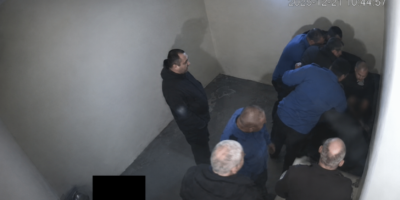



“Don’t leave me, I beg you!” A barely audible voice in a 12-year-old video has once again drawn the attention of Georgian society to the unsolved case of the disappearance of teenager Guram Dadianidze. Archival footage filmed in June 2014, which resurfaced on social media, has prompted investigators to resume the search. Yet the main question remains unanswered: what happened to 17-year-old Guram? The dramatic story has only sparked new contradictions and become mired in conspiracy theories.
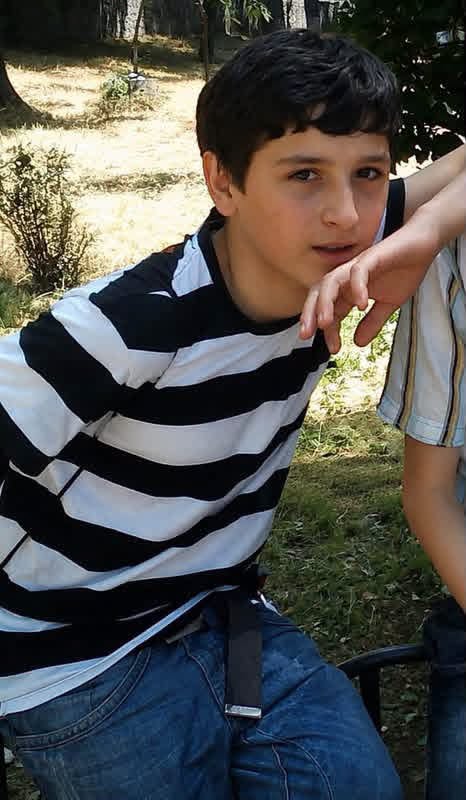
In June 2014, 17-year-old Guram Dadianidze set off for Lomisoba, a traditional festival near the Lomisa shrine in the mountains not far from the highland village of Kvemo Mleta. He never returned to Tbilisi.
According to the account currently detailed in Ministry of Internal Affairs (MIA) case files, approximately 400 to 500 meters from the minibus left below, the teenager sat down to rest, asked his companions to go on ahead, and promised to catch up with them. A few minutes later, he was gone.
The case was particularly complicated by the fact that Guram did not have a mobile phone with him. As a result, it was impossible either to contact him or to reconstruct his possible routes using electronic data. No signs of violence were found at the scene, nor was there any indication that the teenager could have vanished due to a landslide that had occurred several days prior to the incident.
Guram could not be found that night, nor in the following 12 years. Throughout this time, his mother, Sofio Bibilashvili, continued searching for her son.
Guram’s family lives in the village of Mejvriskhevi in Gori Municipality. In the past, his mother frequently traveled abroad for work. According to Bibilashvili, she first brought her son to Turkey when he was around 14 years old, after which he visited several more times. In August 2026, these circumstances fueled numerous rumors on social media, including attempts to link Guram’s disappearance to an entirely unrelated episode—the death of a young man in Turkey. Bibilashvili categorically denies any connection.

The Version of Guram’s Mother
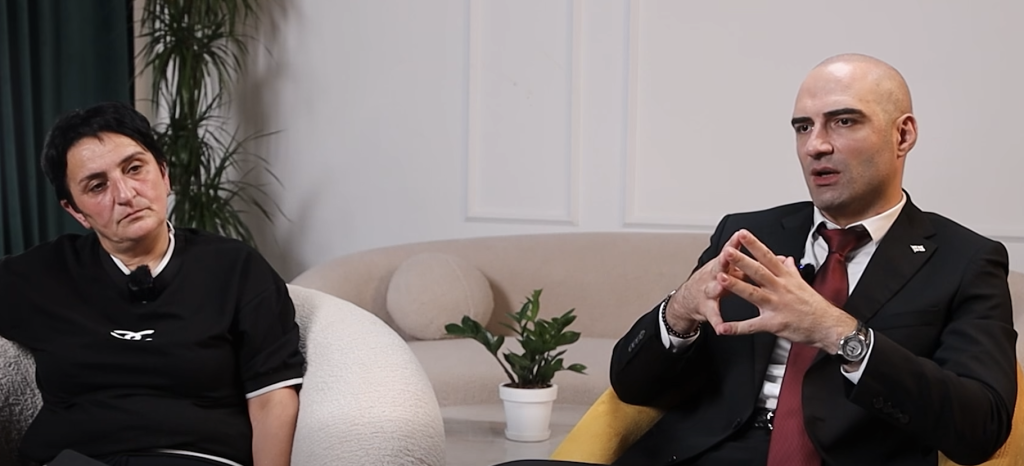
Even before the renewed wave of attention to the case, Sofio Bibilashvili had publicly questioned the circumstances of her son’s disappearance. On July 30, twelve years after the incident, she stated on the program “Your Story” that she did not trust the account of the young men who were with Guram: according to her version, he could have gotten lost much higher in the mountains, fallen, and subsequently ended up buried beneath displaced earth.
Bibilashvili pushed for excavation work in that area and claimed that she had previously been misled by investigators, who falsely claimed that search operations using heavy machinery had already been conducted there. In recent years, the family has regarded this specific area as one of the plausible locations where traces of Guram might remain.
Later, the mother and her lawyer, Tariel Kakabadze, leveled even harsher criticism at the investigation. Kakabadze stated that over the past years, in his assessment, “not only was the investigation ineffective—there was no investigation at all.”
Bibilashvili, in turn, shared that for a long time she had communicated about the case with a man named Jumberi, whom she believed to be one of the investigators. Later, she was informed that he had never formally served as an investigator on Guram’s case.
“In other words, they were pulling the wool over my eyes for years,” she stated.
The family cites these circumstances as one of their key arguments that the initial versions of Guram’s disappearance went without adequate scrutiny for many years.
The Ministry of Internal Affairs’ New Reconstruction
After the archival video circulated widely on social media, the MIA issued a detailed statement on the case, presenting its own reconstruction of events:
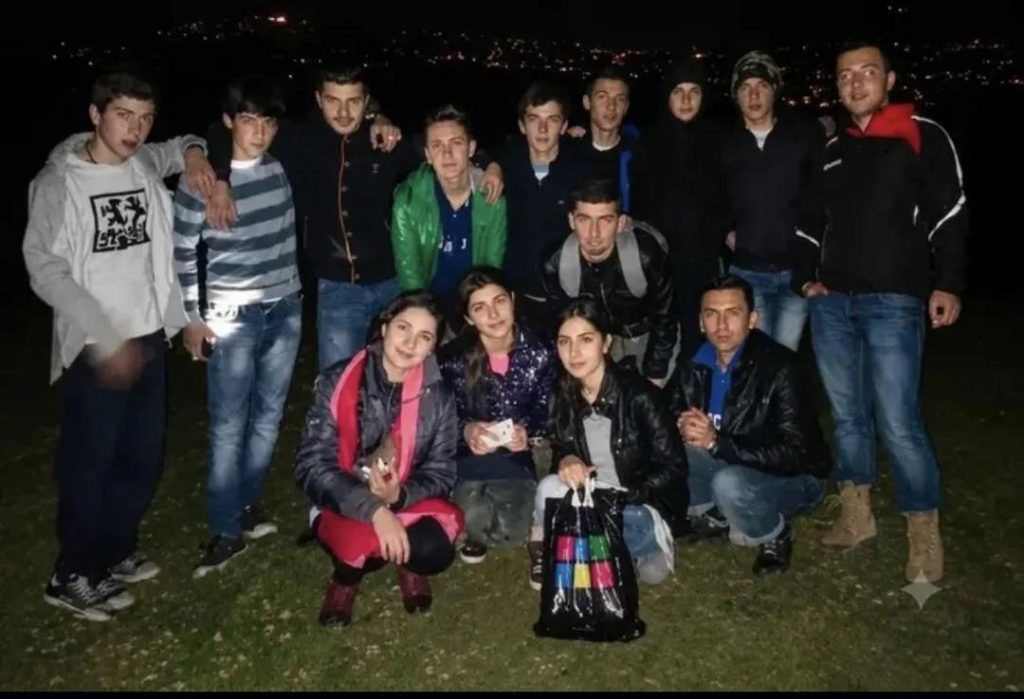
On June 10, 2014, Guram set off for Lomisoba as part of a group of 16 neighbors traveling from Tbilisi in a minibus. Due to difficult road conditions, the vehicle was left in the village of Kvemo Mleta, after which the group hiked up to the shrine. They spent some time there and began their descent at around 2:00 AM.
During the descent, Guram was walking alongside a relative. At one point, the teenager stopped to rest and sat on a rock. Along with the relative, two other neighbors—a father and son—allegedly witnessed this. According to investigators, they were 300 to 500 meters away from the parked vehicle. Guram asked the others to continue walking and said he would catch up. Since the difficult section of the trail was already behind them, his three companions moved on.
When Guram failed to appear after some time, one of the neighbors returned with a flashlight to look for him. The teenager was no longer at the spot where he had last been seen. According to testimony from Guram’s companions, this occurred at around 4:00 AM on June 11.
This reconstruction is noticeably more detailed than the one released to the media immediately following the teenager’s disappearance. On June 15, 2014, the news outlet Ambebi, citing the head of the Mtskheta rescue service, reported that Guram was in Mleta with classmates and separated from them at the edge of the village, where the trail to the shrine began. At the time, rescuers mentioned neither the nighttime descent from the shrine, nor the rest stop, nor the three individuals who were near the teenager shortly before he vanished. It was even suggested that the boy might have returned to Tbilisi on his own.
It is precisely these discrepancies that now lead the family to question the effectiveness of the investigation. Lawyer Tariel Kakabadze believes that for years, investigators operated on the theory of an accident and a possible landslide without adequately probing the contradictions in the statements of those who accompanied Guram.
“The case has been investigated so well that it contains everything except the truth,” Kakabadze said.
According to him, investigative procedures were flawed from the very beginning, raising questions about whether the case was deliberately shelved and whether attempts were made to shield certain individuals. The lawyer emphasizes that the witness testimonies were mutually exclusive and contradictory, failing to clarify the situation over the course of 12 years.
Meanwhile, the video circulating in 2026 has introduced a new contradiction into this timeline. According to the MIA, the individual who recorded the footage stated during questioning that the recording was made around 3:00 PM on June 11, 2014. Guram’s mother, Sofio Bibilashvili, insists she hears her son’s voice in the video. However, the companions place his disappearance at around 4:00 AM on the same day—nearly 11 hours before the recording was made.
If the voice indeed belongs to Guram, it calls into question the timeline and circumstances of his disappearance established by witnesses. Disputes surrounding the recording have spilled into the public sphere. Bibilashvili claims that some individuals from Guram’s social circle have not only rejected her version but openly ridiculed her for recognizing her son’s voice in the footage.
“The person who was next to my child when he went missing is now laughing at me and writing: what kind of mother are you if you couldn’t recognize your own son’s voice,” she recounted.
The MIA itself stated that its investigation had revealed no suspicious circumstances surrounding the teenager’s disappearance. Nevertheless, following the surge in public interest, investigative efforts intensified considerably: in the past month alone, police questioned over 20 people, and on August 10 began a secondary sweep of the territory where Guram’s trail was lost according to current witness testimonies. Approximately 50 MIA personnel, including forensic specialists and rescue workers, took part in the large-scale search.
Following the secondary search, the theory that Guram’s remains might be buried under displaced earth in the surveyed area was not substantiated.
“The Time Has Come”: Posts on Guram’s Page
Amid renewed attention to Guram’s disappearance, another notable development caused widespread reverberations. On August 18, a post written in Ossetian appeared on Guram’s Facebook page: “The time has come.”

Relatives noticed other suspicious activity as well. Cousin Ani Dadianidze recounted that a message she sent to her brother was marked as read. “Who are you? What is happening?” she wrote in the chat.
The appearance of the posts fueled speculation that Guram himself, or someone possessing information about his fate, may have accessed the old account. The relatives appealed to the MIA to identify who was managing the page.
The incident also exposed underlying problems: mistrust and divisions within the family. Guram’s paternal aunt had previously voiced the theory that the young man might still be alive. “Perhaps he left on his own accord,” Nino Dadianidze said in a recent interview. At the same time, she refuses to meet with the lawyer and evades journalists’ questions, raising further doubts and suspicions.
The Facebook post on Guram’s page aligns neatly with the theory that he is alive: that the teenager might have crossed into territory controlled by the de facto authorities of South Ossetia (the village of Kvemo Mleta is just 2 km from the occupation line of the Tskhinvali region) or was abducted and taken there. Many, however, believe that the social media post was intended to confuse investigators and the family, leading them down a false trail.
A statement by the Georgian Ministry of Internal Affairs introduced even more confusion into the case. Police reported that the Facebook post had been discussed in advance in a Telegram group that included a close relative of Guram’s mother and other interested parties. One participant allegedly obtained the boy’s phone number, making it possible to regain access to his account. According to the MIA, the post itself was published from the account by another individual located outside Georgia.
Both Guram’s mother and the lawyer categorically denied having any prior knowledge. Sofio Bibilashvili claimed there was an effort to smear her, taking place against the backdrop of a wave of negative comments on social media. Tariel Kakabadze also viewed the MIA statement as an attempt to discredit him, calling the police’s claims “a complete lie and utter absurdity.”
Meanwhile, the teenager’s disappearance has given rise to conspiracy theories. Users in the Georgian segment of social media actively debate why witnesses describe Guram’s disappearance differently, why relatives on his father’s side refuse to cooperate with the lawyer, and whether investigators might be covering for those withholding information. Speculation has even emerged suggesting that the 17-year-old could have fallen victim to illicit organ traffickers and was abducted for organ harvesting, which supposedly explains the superficial nature of the investigation.
One way or another, twelve years on, Guram’s story still lacks the most critical answer: where he is and what happened to him. The renewed search yielded no results, and the archival video has only generated fresh doubts over whether the voice truly belongs to Guram and who he is pleading with for help.