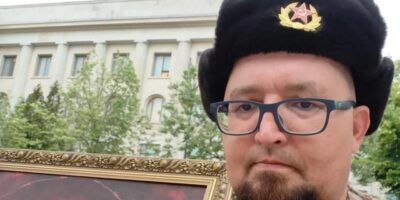



Russian national Denis Kulanin spent one year and four months in a Georgian prison after smashing the window of a police car during pro-European protests. In August, he was unexpectedly pardoned by the president, despite having previously submitted a written refusal of the pardon. Immediately upon his release from prison, Kulanin was detained by migration police. In an interview with SOVA, Denis Kulanin spoke about why he took part in the protests in Georgia, how he endured his imprisonment, and how he ended up free.
– Let’s start with how you are feeling, where you are right now, and whether you are safe.
– To be honest, psychologically, I can’t yet say that I fully grasp everything right now. I probably haven’t completely processed it yet, but it’s already getting easier.
Right now, good friends and mutual acquaintances are helping me. For now, I feel safe.
Everyone says that Armenia is currently not very safe for people like me. But so far, I certainly don’t feel here the way I did in Russia. It’s quite calm. There are still various anxieties because I haven’t fully recovered yet.
It’s still unclear what will happen next, so there are concerns. I think this will all pass in time, but for now, life is tense, and nothing is certain yet.
– Let’s go back to when and why you began participating in protests in Georgia.
– My first protest was in 2022. It was a rally organized by peaceful, anti-war Russians who had arrived in the country. The demonstration took place near the parliament, by the monument to Shota Rustaveli.
Prominent Russian political figures came there. I attended because I felt I had to go—I had to support this European, anti-war movement.
I shouldn’t just sit at home; I should be present at peaceful rallies.
Then the protests began in Tbilisi in 2023. Those were rallies against the “Russian law”—on foreign agents, as far as I remember.
I decided to take part in those as well because I know what such a law entails. I know that this law means authoritarian governance and the persecution of opposition figures and people who disagree with the authorities. Laws like that are currently in effect back home in Russia.
I am familiar with them, so I knew these laws had to be repealed and that the people who opposed them needed support.
Our subsequent rallies were anti-war. In 2024, more serious clashes with the police began.
I felt that I could not stand aside; I had to support peaceful people. I had seen how people are beaten in Russia. And here, when people realize that all of this is happening at Russia’s instigation, I understand that this responsibility is mine as well. My country is exerting pressure on Georgia right now.
I still feel that responsibility, and I made the decision that I had to be at every subsequent rally and help peaceful people in Georgia—at the very least, help them fear the police less.
I went out again in 2025. That was on a larger scale; it was a rougher rally, and I fell in love with it. I fell in love with it because I realized what kind of people were coming out. I realized what I had missed so much in Russia, and I saw it in Georgia.
What I sorely missed in Russia was seeing people of left-wing views, right-wing views, and centrist, neutral views uniting. I saw that in Georgia.
I saw that on the front lines of the protests stood people from both the left and the right. You could see nationalists and liberals standing together. Together, they understood that there was one shared threat and that we had to confront it as one.
I really liked that about Georgia; it resonated with me. I said to myself that this is right. We all need to be out there.
At a peaceful rally in 2025, I smashed a window. It was at the moment when they started arresting everyone, spraying pepper spray, and beating people.
And at that moment, I smashed the window of a police car. That was it—I ended up in prison.
– What turned out to be the hardest part of spending a year and four months in prison?
– The people locked up in that cell with you, of course, don’t provide much inspiration. But the hardest part was accepting that your peaceful life had been taken away and your usual comfort was gone.
You are now eating food you dislike. You aren’t taken where you need to go. You ask for what you want, and they don’t give it to you.
And you realize how difficult that is.
You could have been at protests ten or twenty times, supporting people and feeling fearless, but when you end up in prison for it, the initial period is tough.
I think even the strongest person goes through that with great difficulty.
– While in prison, did you follow the continuation of the protests?
– Sometimes you sit in a cell and people have nothing in there—no television—and you can’t see anything.
Later, activists began helping us, transferring money to my card, and we managed to buy a TV. We tuned into Georgian channels.
Naturally, it was impossible not to follow what was happening. We managed to observe it even from inside prison.
– How significant was the support from activists, and how soon did it appear after you were jailed?
– When letters from people started arriving—those first letters are something indescribable.
I think it’s a wonderful feeling when a complete stranger sends you a letter in Georgian, and you, not knowing what is written, try to find a Georgian inmate to translate it for you.
And you realize that there are so many interesting, wonderful things written in it.
– Were you able to meet other convicted protesters?
– Yes, of course. Mostly with Russians. I formed the strongest connection with Artyom Gribul and Anton Chechin. Later, I met Insaf Aliyev—also a wonderful person, very strong, positive, and very accepting of the people we were locked up with. His positive attitude and confident mindset were a great distraction from everything that was happening. I would particularly highlight Insaf as someone who is exceptionally tough and admirable.
I didn’t get to share a cell with anyone else. I only shared a cell with Insaf Aliyev, Artyom Gribul, and Anton Chechin.
However, I managed to talk to and get to know Zviad Tsetskhladze and Vepkhia Kasradze. I also managed to speak with Zurab Menteshashvili—a great guy, very strong, who expressed very interesting ideas that I also supported.
The rest of the information probably reached us through letters. I also wrote letters to other people through volunteers, and they forwarded them to other prisons, because direct communication between facilities is not possible.
– Regarding recent events: you mentioned that you were handed a document to sign that subsequently turned out to be a pardon petition. How did that happen? Was a translation provided, and was a lawyer present?
– No, of course not. Nothing was provided at all.
There is a cell, there is a door, and in the door, there is a large opening colloquially known as the kormushka [food flap].
Once or twice a week, a social worker comes to see you. She comes without an interpreter, without a lawyer, and brings you what you need: envelopes, letters. Usually, she also brings any documents that arrive for you.
This time, it was in July. I don’t remember the exact date. The social worker came and brought a document where everything was written in Georgian, with a place for a signature.
I asked: “What is this?”
She said: “Do you want to leave earlier? Do you want an early release?”
I said: “Well, let’s say, possibly, yes. What do you need?”
She said: “This document is an amnesty.”
That is, the word “pardon” was never mentioned at all. She said it was an amnesty, that I could participate, and that amnesties are granted once a year by the president.
Out of ignorance, and driven by my own hopes—because everything was so difficult back then—I decided: fine, I’ll sign it. And I signed.
The social worker left. A couple of days later, Insaf Aliyev was moved into our cell. We didn’t know each other back then; that was when we first met.
I told him that a couple of days earlier a document had arrived and I had signed an amnesty.
He asked: “What kind of amnesty? What document?”
I started explaining, saying that in reality, I couldn’t fully understand what that document was.
He said: “You signed a suspicious document. Let’s call the social worker back.”
We called the social worker. She only came back the next day. In total, maybe three to five days had passed.
The person arrived and said: “You signed a pardon.”
I asked: “What kind of document did I sign?”
She said: “You signed a pardon petition to the president.”
I said: “You told me it was an amnesty. If you had told me it was a pardon, I wouldn’t have signed it. I am not going to accept a pardon from a president who put me in prison and put other people in prison. I don’t want to sign it.”
She said: “You are the first person to refuse. If you want to refuse, I will give you a sheet of paper, you will write in Russian and sign that you decline.”
I wrote in Russian that I was refusing the pardon. It was very brief, addressed to the prison warden, if I am not mistaken. And I signed it.
I also demanded that it be written in Georgian. She wrote it in Georgian herself, handed it to me, and I simply signed it.
And that was it; we relaxed. I was certain that my refusal had been submitted.
In August, either the amnesty or the pardon for that year was supposed to take place. I saw that it passed and I was not on the list. That meant everything was fine, all was good. I didn’t need a pardon anyway.
A year went by, and on August 27, I stepped out of the cell for the routine evening roll call, and they told me: “You’re free.”
At first, I didn’t believe what was happening at all and didn’t want to leave the cell. I thought it was some kind of provocation by the administration, that they wanted to drag me out somewhere, maybe transfer me to another cell.
So I said: “I demand a lawyer, and I won’t go anywhere without a lawyer. I need a phone call.”
The duty officers left and returned half an hour later. They told me to pack my belongings. I didn’t pack anything; they are still there, left behind in the cell—I left them to Anton.
Then, roughly another half hour later, the prison warden himself came and said: “I will take you out to make a call. Step outside, bring your notepad with you.”
I came out and went with the guards toward the phone. They began talking to the warden over the walkie-talkie.
From their faces, I immediately understood that they were looking at me and trying to speak in a way so that I wouldn’t hear anything or understand what was going on.
I already realized that they were hiding something from me and that, most likely, nobody was going to let me make a call.
In the end, they led me downstairs to the quarantine block.
On the way there, I was already saying: “Guys, there is no phone in quarantine. I’m wearing shorts, I’m wearing a T-shirt. You know I haven’t packed any belongings. You are definitely not going to let me make a call. How do you intend to release me if I left all my things behind? Take me back to the cell. I want to pack my things and wait for the lawyer you promised I could call.”
Ultimately, they locked me in the quarantine cell.
When they were leading me out of the cell, my cellmates—Anton Chechin and two other inmates—and I protested. We clearly stated that we understood what would happen if they released me: they would deport me.
I said that they would deport me to Russia. We were certain that if they released me now, I would be in serious trouble.
Despite these objections, they still didn’t let me call anyone. When they sent me to quarantine, they promised: “You will be released, no migration police will take you, calm down, everything is fine, everything is okay.” Naturally, I no longer believed any of it.
Apparently, the guys from my cell packed a small bag of clothes and important documents for me, worried that I would leave with nothing at all. They sent down jeans, sneakers, and a small packet of documents.
By then, I understood that this was it—I had to go out and deal with whatever came next on the outside, whether it was the Migration Department or something else.
I walked out of the prison, the police met me, and they handcuffed me.
I immediately demanded a lawyer. They refused to provide one. I did not sign any documents. They put me in a car, and for nine hours, I sat with my hands cuffed behind my back outside the Migration Department building.
That was the journey following the pardon.
– You ended up at the migration center. Was deportation to Russia explicitly discussed, and how did events unfold regarding the choice of country where they intended to send you?
– The critical moment in this situation occurred when I had already been sitting in the car for three or four hours. It was just me and a police officer inside, with another officer stationed outside.
Two men in civilian clothes approached our car, opened the door, and said:
“We know who you are, we know everything. You have only one road ahead—to Russia.”
I said: “First, provide me with a lawyer, and only then will we talk about any roads.”
At first, they gave me a choice, asking where I wanted to go. There were no overt threats at that moment; those came a bit later.
A man approached and said: “We are the Migration Department; I am your case manager. What do you want to do next?”
I said: “I should be free right now. Either I should be free, or I should be deported to a third country.”
He said: “You will not be free, that’s one hundred percent certain. You will be deported.”
I said: “Then, if I am to be deported, give me a lawyer. I have grave concerns; I do not want to end up in Russia. I have valid fears. Everyone understands perfectly well why.”
He said: “You have 48 hours. If within 48 hours you don’t find your passport and buy tickets, you are going to Russia.”
And they kept saying they would ensure that happened, one hundred percent. The psychological pressure began. I was terrified that no one would manage to do anything in two days—it was impossible. Then the men walked away. Until nine in the morning, nobody touched me again. I just sat in the car.
In the morning, they took me inside the Migration Department. Again, I requested several times: “Give me a lawyer. It’s morning now, I can make a call, let me make a phone call.” In the end, they processed me and put me in a cell with six other people. They promised I would be allowed to make a call that day. I waited. It was around noon by then, and I waited for that call until five in the evening.
At five in the evening, they took me out to make the call. I phoned my human rights defenders and was told they could only visit me tomorrow, possibly on Sunday, because they weren’t being let in right now: Friday was a holiday, and there were no visiting hours. That triggered immense anxiety and anger in me. This was a matter of life and death, and the Migration Department was claiming they had a holiday and couldn’t admit anyone.
That same day, once they let me make the call, I saw the full picture and announced that I was going on a dry hunger strike because I was being denied any opportunity to defend myself.
They had told me I needed to have a passport and tickets within 48 hours, yet I couldn’t reach anyone or get through to anyone. I had no ability to meet even those harsh demands.
I declared a dry hunger strike and remained on it for two days, until the court hearing.
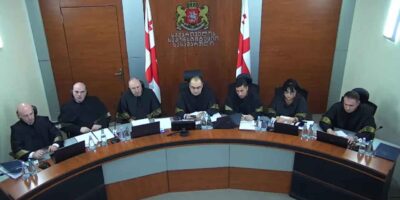
Then came the court hearing. We had bought tickets for September 1, and the court hearing took place, I believe, on August 30. In court, everyone was in favor of my departure. We were essentially granted permission, and the judge said: yes, you will leave.
However, they did not grant me the opportunity to spend those two days in freedom with friends, say goodbye, and leave on my own. I was permitted to leave voluntarily, but they said: “You remain in migration detention and fly out on September 1.”
Everyone was relieved and said: great, everything is fine, nobody is going to Russia. But on August 31, if I recall correctly, my lawyers were informed that the judge had not approved my voluntary departure on September 1. At that moment, I realized something was brewing. Something had clearly happened, someone wanted something. It seemed someone genuinely wanted to send me to Russia.
Human rights advocates began sounding the alarm; local lawyers, the people who supported me, my friends—everyone grew deeply worried, perhaps at one point even more worried than I was. Because initially, one thing was said—the court ruled one way—and in reality, the opposite occurred.
A person is supposedly pardoned, supposed to be released, yet they are being deported to a country where everyone understands they cannot be sent. This should never have happened.
From that moment, public outcry began, which apparently helped me immensely. A massive wave of support followed. Either the people who wanted to carry through what they had started realized the situation was slipping out of control, or they decided to follow procedure and the law after all: not to send me to Russia and to allow me to leave.
In the end, on September 4, I was given the opportunity to board a flight to Armenia.
– Later, in your farewell letter, you wrote that with all your heart you would have loved to stay in Georgia. How painful was the fact that you had to leave the country?
– It was so painful that I am still deeply saddened by it. Even now, I can barely put my phone down, staying in touch with the people from whom I was separated.
Of course, I wanted to stay in the country. To stay with the people who supported me from the very beginning, most of whom I didn’t even know before I was imprisoned. Over that period, over a year and a half, they became very close friends to me.
I think I realized the most important thing while in the migration detention facility. I had feared that I would be sent back to Russia. I was genuinely terrified at the time. All kinds of dark thoughts were already creeping in about how it would all end and what to do next.
But when the court hearing took place, when I entered the courtroom and saw that it was packed with people—most of whom I didn’t know at all, yet they had come to support me—it rescued me completely from those dark thoughts and very personal struggles.
At one point, I didn’t even want to live anymore, honestly. But the people sitting in that courtroom, simply by their presence, brought me back to my senses.
I realized then, in the courtroom, that my fears had vanished. I stopped being afraid, stopped thinking about the worst. Fears and anxieties were replaced by the realization that having these people was enough. What would happen to me next—whether they sent me to Russia or not—no longer mattered as much.
What mattered to me was that I had found a Georgian family that achieved simply incredible things, provided unbelievable support, rallied around me, and refused to let my life be destroyed. They didn’t let me be sent to Russia; they didn’t allow them to deport me back there.
I will be grateful to these people for the rest of my life. And I promised that I will do everything possible to return to this country as soon as I can.
People ask me: “Do you want to go to Europe?” I say: “No. I want to go back to Georgia. I want to go back to those people, to everyone. And work.”