






The death of an inmate, allegations of sexual assault by another, and a prisoner riot: in a matter of just a few days, Georgia’s penitentiary system has been rocked by a series of scandalous incidents, and the controversy continues to mount.
“I was taken to a de-escalation cell and raped with fingers and hands. <…> Ten men raped me; an escort guard was present, and all of this is visible on camera.” This testimony was delivered by 36-year-old Giorgi Davitadze during a court hearing, with a recording of his statements aired by TV Pirveli. According to the man, the incident occurred in December of last year, and his request for a forensic medical examination was denied. Davitadze said the perpetrators were never brought to justice and that, unable to endure being around them, he even attempted suicide.
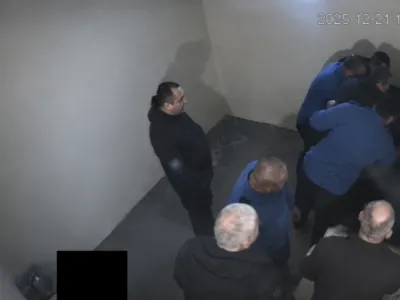
After the case triggered widespread public outrage, Georgia’s Special Penitentiary Service released prison surveillance footage in an attempt to refute the accusations. However, the video—showing 10 men escorting Davitadze into the so-called de-escalation room, with some forcing him down onto a medical couch while others block the camera’s view—only raised further questions. Nevertheless, the agency maintained that no violence had been used against the inmate, least of all sexual abuse.
It later emerged that Davitadze had swallowed a small metal object and refused a hospital transfer, demanding that disciplinary actions against fellow inmates who had shown solidarity with him be rescinded. Shortly thereafter, official agencies published another recording showing several inmates clashing with prison staff. Furthermore, an activist serving a sentence in the facility reported that at Rustavi Prison No. 6, “inmates are being provoked and having 10 to 12 years added to their sentences; one inmate slit his wrists, and several have launched a hunger strike.” The Penitentiary Service, for its part, “categorically denies” all of these allegations.
Meanwhile, in another correctional facility located in Rustavi, an inmate has died, according to confirmed reports. Available information indicates that Iakob Guledani was found hanged in his cell. He was just a few months away from release.
Notably, in May of last year, 46-year-old Ioseb Gorgadze died in a hospital after being admitted from Gldani prison with catastrophic injuries. His body bore 47 separate injuries, including approximately 30 facial fractures and signs of strangulation. Human rights advocates emphasized at the time that the man had sustained the fatal trauma while under the absolute custody and control of the state. Earlier still, 52-year-old wheelchair user Davit Gudzhedjiani died under similar circumstances at Gldani Prison No. 8 after being hospitalized beaten and unconscious. Giorgi Bachiashvili, a former financier to billionaire Bidzina Ivanishvili who ended up behind bars amid a multi-million-dollar feud with his former patron, also complained of coercion and mistreatment by prison staff during his detention.
Experts point out that the events unfolding in the penal system point to a profound institutional crisis. Closed facilities are once again confronting allegations of brutality and official cover-ups. What adds particular political sensitivity to the situation is that the ruling Georgian Dream party originally swept to power in 2012 on the back of widespread protests and public fury ignited by reports of systematic prison torture. Years later, the party now finds itself facing an eerily similar crisis within a system entirely under its own control.