
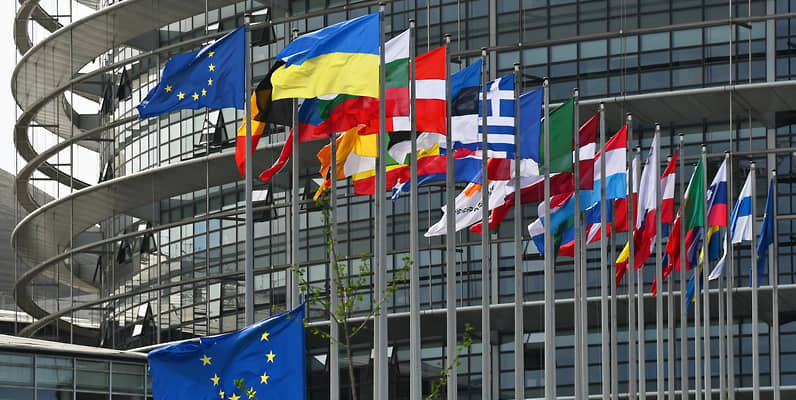

The European Parliament’s Committee on Foreign Affairs has adopted a report on Georgia. Fifty-three MEPs voted in favor of the annual document, while 14 voted against.
An explanatory note to the draft report states that this is the second report on Georgia as an EU candidate country, prepared in light of the European Commission’s 2025 report—addressing the EP’s core concerns regarding the state of democracy, the rule of law, and European integration in Georgia.
The EP expresses full solidarity with the Georgian people, “who continue their struggle for a European and democratic Georgia amidst democratic backsliding, increasing repression, relentless hostile rhetoric, disinformation, and threats.”
It is noted that “Georgian Dream” (the ruling party) has not only suspended but effectively reversed Georgia’s course toward European integration.
Targeted personal sanctions imposed by the EU and member states against the party’s founder, billionaire Bidzina Ivanishvili, “Georgian Dream” leaders, judges, prosecutors, and other officials are deemed essential.
As stated in the document, these individuals are responsible for the democratic backsliding in Georgia, election fraud, human rights violations, and the persecution of political opponents and activists; thus, sanctions serve as a vital tool in the fight against impunity.
The EP welcomes the fact that, in the absence of EU-wide consensus, an increasing number of member states are imposing individual sanctions against Georgian officials. The European Parliament calls on other member states to follow suit.
The document also notes that the European Parliament welcomes the invocation of the “Moscow Mechanism” at the initiative of 24 OSCE member states, which will allow for an expert mission to assess Georgia’s compliance with its OSCE commitments.
Furthermore, the European Parliament:
- notes the Commission’s proposal to suspend the visa-free regime for holders of Georgian diplomatic, service, and official passports in all EU countries as a direct consequence of the “Georgian Dream” regime’s violations of fundamental values;
- regrets that the introduction of an EU-wide visa ban on Georgian officials responsible for democratic backsliding and repression was made impossible due to resistance from Hungary and Slovakia;
- warns that continued inaction by the Georgian authorities could lead to the suspension of the visa-free regime for the entire population, for which “Georgian Dream” would bear full responsibility.