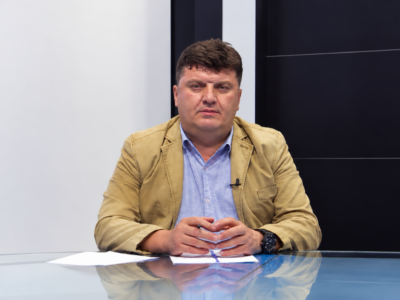



Russian opposition activist Vladimir Dubovsky has claimed that during his detention in Tbilisi’s Gldani prison, officers from the State Security Service of Georgia (SGB) allegedly tried to recruit him and used the threat of deportation to Russia as leverage. He reported this to the Georgian service of Radio Free Europe/Radio Liberty (RFE/RL).
Dubovsky said that security service representatives met with him several times in prison and offered to help legalize his status in Georgia in exchange for establishing contact with participants of pro-European protests. Specifically, he was asked to gain the trust of several civil activists, invite them to his home, and discuss politics. The information obtained in this manner could then be used against the participants of the protest movement.
In return, according to Dubovsky, he was promised assistance in obtaining asylum in Georgia, housing, and eventually permanent residency. However, he refused, after which, the activist claims, they began hinting at his potential deportation to Russia, where he faces criminal charges.
The State Security Service of Georgia did not comment on the allegations, while the Special Penitentiary Service of the Ministry of Justice categorically rejected the reports of SGB officers meeting with Dubovsky in prison, stating that all inmate visits are logged and no such visits had been recorded.
The 34-year-old Vladimir Dubovsky is a Russian opposition activist and the former coordinator of the Vladivostok headquarters of the late opposition politician Alexei Navalny. In Russia, he has been placed on a wanted list and added to the registry of “terrorists and extremists” due to his public support for Ukraine.
Dubovsky and his wife, Alina Savelyeva, have lived in Georgia since 2021. In 2022, they illegally crossed the Georgian border after being denied entry through an official checkpoint. The couple did not deny this, explaining their actions by concerns for their safety if they were to return to Russia.
In the autumn of 2025, the couple was detained in Tbilisi on charges of illegal border crossing. Dubovsky spent two months in Gldani prison, while Savelyeva was held in the Rustavi women’s prison.
Later, the European Court of Human Rights (ECHR) applied interim measures, barring Dubovsky’s deportation to Russia. Following their release, the couple left Georgia for Europe on humanitarian grounds.
Several Georgian activists whose names, according to Dubovsky, were mentioned during his conversations with the alleged security officers, confirmed to RFE/RL that they had previously heard his accounts of the recruitment attempts.