

This article is part of a partnership with OC Media. You can read the original in English here.
The Azerbaijani authorities have restricted the use of TikTok in schools, according to Deputy Minister of Science and Education Firudin Gurbanov.
The law will apply to Instagram, Facebook, TikTok, X, Snapchat, and other similar social networks. These platforms will also be required to open a representative office or branch in Azerbaijan. Platforms that fail to comply will face fines ranging from 100,000 manats ($59,000) to 300,000 manats ($180,000), as well as measures such as blocking.
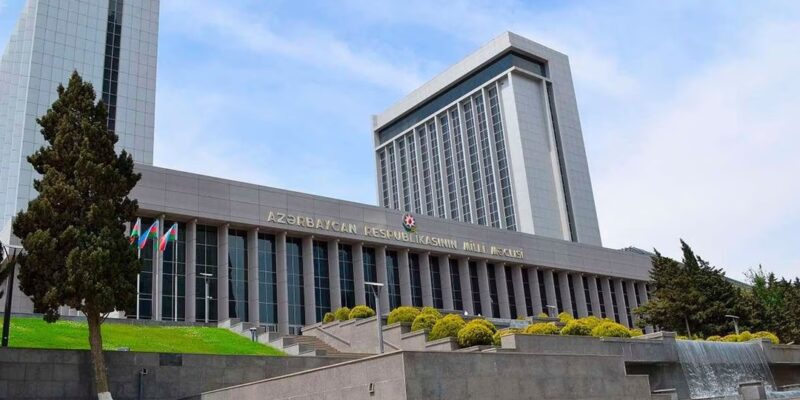
The statement was made on 8 June during a parliamentary discussion on a draft bill on information, informatization, and protection of information.
The pro-government news agency APA reported that during the discussion, Gurbanov emphasized that the ministry is trying to “introduce certain restrictions in schools.”
“Currently, children’s access to TikTok in schools is blocked. In general, internet access in schools is filtered, and videos related to more than 200 dangerous topics are restricted,” Gurbanov stated.
Information and communication technologies expert Osman Gunduz wrote on social media that the new bill bans children under 16 from creating accounts on state-designated social platforms.
Gunduz noted that once the law comes into force, existing accounts will also be verified, and “if the age is not confirmed, they will be deleted.”
“A separate regime is provided for users aged 16–18. This age group will be subject to requirements for parental consent, parental control, special security measures, as well as restrictions on content, advertising, and geolocation,” Gunduz highlighted.
He criticized the high age threshold, stating that in international discussions, the main consensus is built around protecting children under 13.
“Currently, many 17-year-olds in Azerbaijan are already starting businesses with European countries, programming, launching startups, earning money, and participating in international competitions, hackathons, and global projects,” Gunduz said.
“Now the question arises: will these young people use social media with parental consent?”
Human rights lawyer Yalchin Imanov told OC Media that while protecting children’s rights is natural, “we do not know exactly what topics are banned, specifically what is meant by dangerous topics. It is unclear what the phrasing ‘more than 200 dangerous topics’ means, and this could be used by the authorities.”
Imanov emphasized that such bills could be used to restrict alternative sources of information.
“The Azerbaijani authorities are generally intolerant of freedom of expression and alternative sources of information, so it cannot be ruled out that alternative sources of information will also be included in the list of prohibited content inaccessible to minors,” Imanov said.
He also noted that the Azerbaijani authorities do not hold discussions with the public, and “draft bills are generally not put up for public discussion.” In conclusion, he stated that “this is where the danger lies.”