
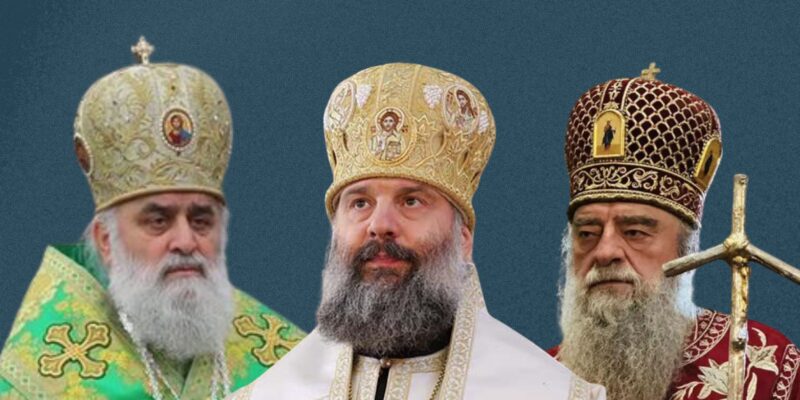


The 142nd Catholicos-Patriarch of All Georgia will bear the name Shio, Iov, or Grigol. These are the three candidates from whom the participants of the expanded council will make their choice.
Following the death of Ilia II, a clear procedure for electing the new primate of the Church was initiated within the Patriarchate. The Locum Tenens (temporary representative of the patriarchal throne) plays a key role in the first stage—it was he who had to initiate the election process and convene the meetings of the Holy Synod. Since Ilia II had appointed Metropolitan Shio (Mujiri) as his Locum Tenens during his lifetime, he became the central figure in all decisions.
Every member of the Synod had the right to nominate a candidate for the patriarchal throne, including nominating themselves. At the first meeting, held in a narrow circle, three hierarchs who received the most votes were elected. The next meeting is held in an expanded format. According to the charter of the Georgian Orthodox Church (GOC), it must take place no earlier than 40 days after the death of the Patriarch and no later than two months.
This meeting involves not only members of the Synod but also representatives of dioceses, monasteries, theological academies, and seminaries, as well as delegates from academic circles. However, despite the broad composition, the right to vote in the decisive ballot is reserved solely for the bishops. It is they who make the final decision, discussing the candidates and choosing the future Patriarch.
Other participants in the expanded meeting may express their opinions but do not directly influence the outcome of the vote. This emphasizes that the election of the Patriarch is an internal process of the Church.
The winner is the candidate who receives more than half of the bishops’ votes. Given the current composition of the Holy Synod, at least 20 votes are required for victory. If none of the three candidates gains a majority, a second round is held between the two leading candidates from the first vote.
Thus, the process ensures that the new Catholicos-Patriarch is elected by a majority of the GOC’s highest clergy.
A candidate must be “Georgian by nationality,” between 40 and 70 years of age, a hierarch of the Georgian Orthodox Church, possess a theological education and experience in church administration, and have taken monastic vows. The Patriarch is elected for life.
The Three Candidates
Following the secret ballot during the first meeting of the Holy Synod, the top three leaders were Metropolitan **Shio (Mujiri)** of Senaki and Chkhorotsku, Metropolitan **Iov (Akiashvili)** of Urbnisi and Ruisi, and Metropolitan **Grigol (Berbichashvili)** of Poti and Khobi. Shio received 20 votes, while the other two candidates received 7 each.
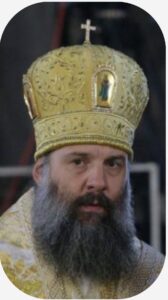 Even before the names of the favorites were announced, the Metropolitan of Senaki and Chkhorotsku was cited in Georgian society as the most likely contender for the patriarchal throne. Born Elizbar Mujiri, he is 57 years old—the youngest of the contenders. In 2017, amid declining health, Ilia II appointed him Locum Tenens of the patriarchal throne. Since then, Shio’s influence within the ecclesiastical hierarchy has noticeably increased, and the Church’s tougher, more power-oriented rhetoric has often been linked to his role.
At the time, critical media outlets noted that the Metropolitan was elected Locum Tenens shortly after a visit to Tbilisi by Hilarion Alfeyev, the former head of the Department for External Church Relations of the Russian Orthodox Church (ROC). Assumptions were made in the press about possible ROC influence on this process, and some sources labeled Shio as a figure loyal to the Moscow Patriarchate, which subsequently fueled discussions about external influence on internal Georgian Church processes.
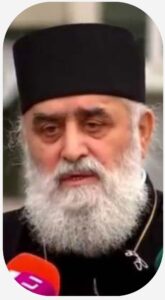 Another candidate, Grigol Berbichashvili, is 69 years old, which formally meets the age requirements for electing a Patriarch. In the public sphere, he has repeatedly spoken out on sensitive ecclesiastical and political issues: he supported the granting of autocephaly (independence) to the Orthodox Church of Ukraine and criticized the restrained position of the Georgian authorities. He also drew attention to the influence of Russian propaganda, stating at the 2019 Disinformation Alert conference in Tbilisi that it “purposefully destroys various segments of Georgian society” by exploiting religious and socio-political themes.
Metropolitan Grigol’s name also appeared in the 2021 leaks in the context of intra-synodal groups and possible scenarios for the redistribution of influence. Within church circles, Berbichashvili is often associated with the more reform-minded wing of the clergy, which advocates for a collegial model of church governance and a revision of the traditional role of the Patriarch.
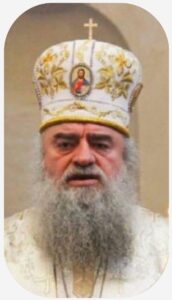 Closing the list is the 66-year-old Metropolitan of Mroveli-Urbnisi, Iov, born Elguja Akiashvili. He hails from the high-mountain village of Sno in the Kazbegi district—the ancestral village of Ilia II. An economist by his first education, he began his career at the Patriarchate with administrative work in the financial and economic sector before transitioning to clerical service. He took monastic vows in 1988, receiving the name Iov.
Today, Metropolitan Iov heads the Urbnisi diocese and the commission for the study and editing of liturgical books, indicating his involvement in theological and liturgical activities. In 2007, he was awarded the Order of Saint George, the highest degree.
In church circles, Iov is often associated with the more conservative wing: the Urbnisi diocese is frequently called one of the centers of hardline monastic opposition, which played a significant role in the Georgian Orthodox Church’s refusal to participate in the ecumenical movement in the late 1990s. Iov’s public statements are characterized by criticism of the authorities and a tendency toward interpretations that some observers classify as conspiratorial.
The Candidate Without a Diploma
During the race for the patriarchal throne, a minor scandal erupted around Metropolitan Iov. Reports surfaced that he lacked a diploma of theological education—or rather, that someone had stolen it.
According to official information, Akiashvili graduated from the Mtskheta Seminary in 1988. The corresponding document was kept at the hierarch’s episcopal residence. However, when he was asked to present the diploma at a meeting of the Holy Synod, it turned out that it had “disappeared under unclear circumstances.”
Later, the Tbilisi Theological Seminary confirmed that the candidate for the patriarchal throne did indeed have a religious education. However, the Metropolitan himself drew attention to the circumstances of the incident:
“The diploma was stolen, although it has now been restored. It was definitely stolen because I saw with my own eyes that both my secular and spiritual diplomas were missing.”
The Age Limit
Amid the anticipation of candidate nominations, there was public discussion regarding a possible revision of the Charter of the Georgian Orthodox Church, as the age limit excluded several potential contenders.
An attempt to change the rules was indeed made: at the Holy Synod meeting on April 3, this issue was brought up for discussion, but it did not receive sufficient support. As a result, the current charter was maintained, and the selection of candidates proceeded under the old rules.
The question of the need to revise the regulations was raised by Metropolitan Iov after the disappearance of his theological education certificate:
“I wanted both Bishop Daniil and Bishop Isaia to participate in the vote. The charter did not provide for this, but I think we should make changes to it in the future so that there is no confusion regarding either age or the theological diploma.”
Amid these disputes, Metropolitan Isaia of Nikosi and Tskhinvali became a popular figure on social media. Users posted photos of him on horseback and shared stories of his modest lifestyle, personal involvement in social initiatives, and parish life.
Several significant episodes stand out in the Metropolitan’s biography: during the 2008 war, he remained in his diocese despite the bombings, which affected monastery grounds. In the early 1990s, he also remained in Abkhazia, where he was performing his obedience amid the armed conflict. However, Isaia does not have a completed theological education, which also disqualifies him from the race for the patriarchal throne.
The hierarch himself, after the selection of the three contenders, publicly addressed the Patriarchate, announcing his intention to nominate his candidacy. He pointed out that while the current charter requires a mandatory theological education, in his opinion, considering this criterion solely formally does not reflect the full depth of ecclesiastical experience. Isaia emphasized that his consecration as a bishop in 1995 with the Synod’s consent already testified to the recognition of his readiness for service.
From Isaia’s perspective, many years of management and service experience could be considered equivalent to academic education. Restricting the right to participate in elections based on a formal attribute, Isaia believes, diminishes the significance of the episcopal office itself.
Unofficial Restrictions
According to the Formula TV channel, during the first vote of the Holy Synod, Metropolitan Andria Gvazava of Gori and Ateni also expressed his intention to nominate his candidacy. Supporters of the Locum Tenens Shio allegedly pointed out a “certain moral violation” to him and warned of the risk of publishing information in the media that could affect the Church’s reputation. Ultimately, Gvazava withdrew his candidacy.
Metropolitan Andria is 58 years old, which would have allowed him to compete for the post of Patriarch. He is viewed as a representative of the more restrained and institutionally oriented wing within the Church. Unlike Metropolitan Iov, who is associated with the conservative line, Gvazava is more often characterized as a moderate and educated hierarch: he holds a Candidate of Theology degree from St. Tikhon’s Orthodox University.
Born in Sukhumi in 1968, Andria followed a classic ecclesiastical hierarchical path—from taking monastic vows in 1995 to episcopal consecration in 1998, later receiving the rank of Metropolitan in 2010. For the past several years, he has headed the Gori and Ateni diocese, and after the death of Bishop Damian in 2022, he also temporarily managed the Samtavisi and Kaspi diocese, combining spiritual and administrative leadership.
Forecasts
Despite the strong lead of Locum Tenens Shio in the race, experts urge against jumping to conclusions. Theologian and Church researcher Levan Sutidze emphasizes that the current alignment is not final. Analyzing the results of the first Holy Synod vote, he points out that although Shio received 20 votes, 18 participants of the meeting essentially did not support his candidacy.
According to Sutidze, if the Metropolitan loses even one vote, he will be unable to overcome the necessary threshold, which would automatically lead to a second round of voting. In such a scenario, the undecided members of the Synod would play a key role, and the campaign would effectively move into a stage of active internal church lobbying.
The expert also indicates that this configuration of votes leaves room for maneuver by the Locum Tenens’ opponents, who need not only to consolidate their own support but also to convince some of the bishops of the possibility of changing the outcome.
Against this backdrop, any public statements about the results being “predetermined” may, according to Sutidze, conversely influence the voting dynamics—creating a sense of inevitability among some participants and reducing their readiness for alternative scenarios.
Analyst Gocha Mirtskhulava also draws attention to the risks and possible scenarios, viewing the patriarchal elections as a process marked by political and intra-synodal competition. In his assessment, the key line of confrontation lies between the conventionally “pro-Russian” and the alternative wing within the Church, with both sides using different tactical approaches.
Mirtskhulava believes that the election of the Catholicos-Patriarch could have been a competition between different approaches to governing the Georgian Orthodox Church; however, the current balance of power makes such a scenario unlikely.